
 Search Articles


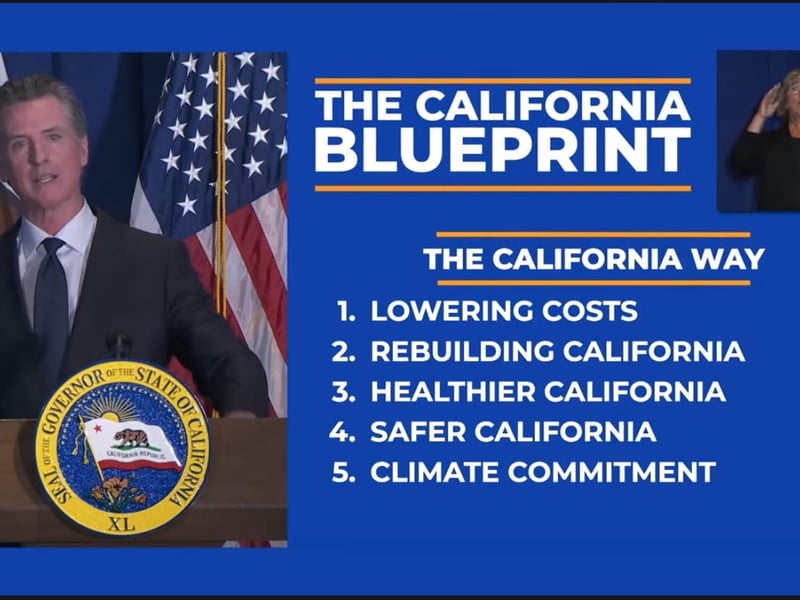
SACRAMENTO, Calif. (CN) — The revised $300 billion state budget announced by California Governor Gavin Newsom on Friday is the largest spending plan in state history. And while it may look good on paper or sound nice in a speech talking about more public school funding, the state’s legislative analyst has concerns.
The spending package contains a plethora of initiatives proposed by Newsom, who stated that 94% of the state budget would be spent on one-time projects. These include bonuses for health care workers, relief for people struggling with rent and utility bills, and cash payments to compensate vehicle owners slammed by skyrocketing fuel prices. The budget comes amid a $97 billion surplus, $33 billion of which must go to schools and community colleges under the California Constitution.
This week, the nonpartisan Legislative Analyst’s Office began publishing comments and recommendations regarding the budget proposal. The office makes a point to explain that California may be headed toward recession in the next two years — though predicting exactly when a recession would hit is not possible.
The analyst also indicated Newsom’s spending plan comes up short when it comes to constitutional obligations under the state appropriations limit. Newsom’s plan fails to address $3.4 billion in required spending, according to the legislative analyst, which predicts the shortfall in constitutionally required spending will balloon to over $20 billion in the next fiscal year.
“The governor’s May revision does not have a plan to address this roughly $25 billion requirement. As a result, the state would very likely face a significant budget problem next year, which could require reductions to programs,” the legislative analyst said in its report, calling the shortfall “a fiscal cliff.”
The 13-page analysis calls on the Legislature to think about Newsom’s proposals critically, and says blanket refunds and stimulus payments may not be the most effective way to help Californians after two years of the Covid pandemic. According to the legislative analyst, refunds would be best targeted to Californians with the least resources — though putting more money toward sustainable support for residents is the better option, the analyst said.
Meanwhile, the legislative analyst reminded lawmakers of the myriad other problems facing the Golden State — drought, wildfire threats and energy reliability.
With the primary election looming and citizens still working on pulling themselves out of quarantine-induced financial stress, Newsom’s bid to provide checks to all Californians, give back to health care workers and provide rent relief may seem sensible. But the legislative analyst fears the governor’s well-intentioned initiatives aren’t sustainable in the long term, and suggested the Legislature might be better off handing out money in smaller batches over several years instead of all at once.
“The advantage of this approach is that it could allow the Legislature to allocate a significant amount of resources to a particular need (or set of needs) now, but would allow the benefits of that appropriation to be spread over many years,” the report states.
“Moreover, with mounting signs that the economy is approaching the peak of its current expansionary cycle, delaying the infusion of these fiscal resources to when conditions most likely have softened could enhance the economic benefit of this policy.”
 Follow @smolestwriter
Subscribe to our free newsletters
Our weekly newsletter Closing Arguments offers the latest about ongoing trials, major litigation and rulings in courthouses around the U.S. and the world, while the monthly Under the Lights dishes the legal dirt from Hollywood, sports, Big Tech and the arts.