
 Search Articles


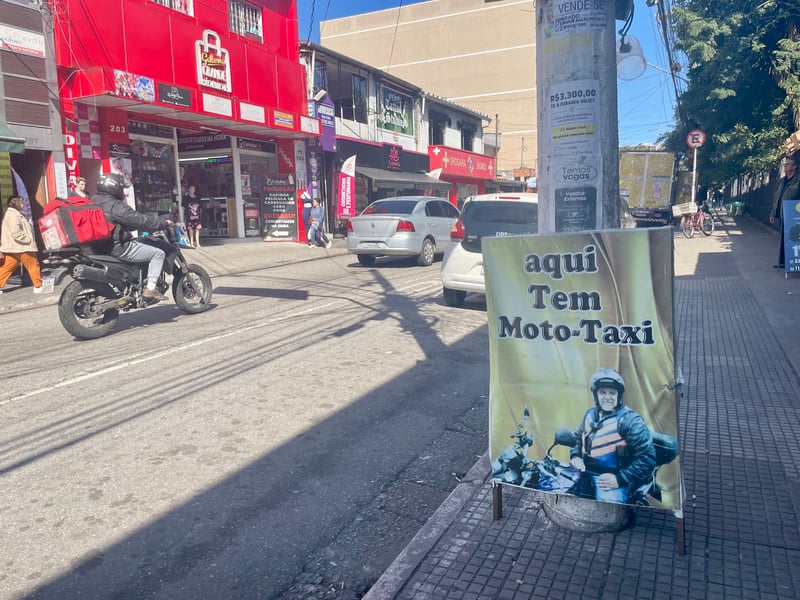
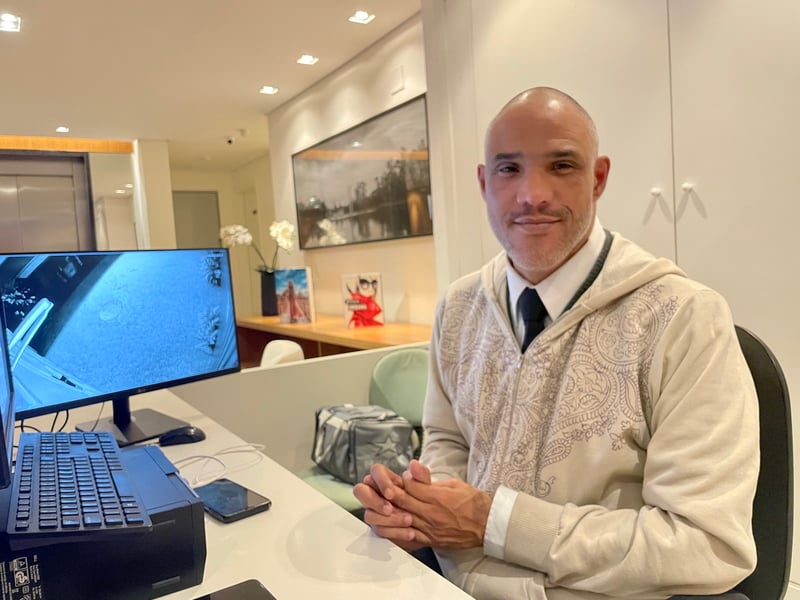
SÃO PAULO (CN) — João Antônio Costa works as a doorman in the wealthy neighborhood of Vila Madalena.
It takes the 44-year-old about two hours to get to work. Each day, he spends $4 on three different modes of public transportation from his home in Itaquera on the far eastern edge of the city. The long commute includes trips on a bus, monorail and subway.
By motorcycle, the trip would take no more than 40 minutes. He could book a ride through 99, an Uber-like app in Brazil.
Even so, the shorter travel time is not enough to convince Costa to switch.
“In my view, it’s not a very safe means of transportation,” he said in an interview. “I’d rather spend a little more and have a little more safety.”
Debates like this — about travel times, transit fares and rider safety — have taken center stage in São Paulo amid a big legal fight over motorcycle ride-hailing services.
Since 2023, U.S.-based Uber and the Chinese company DiDi, which runs 99 in Brazil, have been locked in a legal battle with the São Paulo city government. That’s after officials here banned their services by decree.
The fight is far from over: On June 25, the São Paulo Court of Justice is scheduled to rule on a constitutional challenge brought by the National Confederation of Services, a service industry group. If the group is successful, the services could once again return following stops and starts that have followed the court drama.
“What happens here will affect the entire country,” said Helena Carvalho Coelho, a lawyer and deputy coordinator of the National Observatory for Sustainable Mobility at Insper Cidades, a research center focused on urban development at Insper, a nonprofit institute of higher learning in the city.
The conflict, she said, is not just a battle between city officials and companies. Also at stake are competing visions of traffic safety, urban mobility and social equity.
Although Brazil’s Mobility Policy Law grants municipalities the power to regulate private app-based transportation, Brazil’s Supreme Federal Court ruled in 2019 that blanket bans on such services are unconstitutional because they violate the principle of free enterprise.
Another contentious point concerns licensing. The Mobility Policy Law requires drivers of taxi-like services to hold a category B driver’s license. Some legal experts argue that effectively exclude motorcycles from legal scrutiny, as they require Category A. That in turn has raised questions about whether São Paulo can regulate them at all under the law.
Uber and DiDi don’t seem to think so. In January, DiDi defied the city’s decree and launched its 99Moto service. Uber followed a few days later.
Uber says its motorcycle service has been used by more than 20 million Brazilians, while DiDi says it operates 99Moto in more than 3,300 cities. Since at least January, though, both services have faced an uncertain future.
The city filed suit against the companies, and services were again suspended. A preliminary injunction in May briefly allowed the resumption of rides. Then, just days later, a female passenger was killed during a 99Moto ride.
The incident renewed concerns over road safety. On May 26, the São Paulo Court of Justice reinstated the suspension, imposing a daily fine of $5,450 and authorizing a criminal investigation for contempt of court.
Now, all eyes are back on the court, which next week will likely rule again on whether these services are allowed in the Brazilian metropolis — the largest city in the Americas.
The specifics here may be unique, but the story is familiar, as officials and courts race to catch up with a new technology.
“The wave of lawsuits reflects the challenge of adapting traditional legal frameworks to rapid technological innovation,” said Gustavo Justino de Oliveira, a professor of administrative law at the University of São Paulo. “It creates an environment of extreme legal uncertainty, with services operating through preliminary injunctions and court orders." At the same time, legal wrangling is “prolonging the absence of proper regulation and leaving users in limbo.”
Officials in São Paulo say motorcycle ride-hailing is dangerous, increasing road fatalities and adding strain to an already overwhelmed public health system.
“We know these riders are transporting people in a hurry,” said Paulo Frange, a city council member. “They say the first thing passengers tell them is, ‘I’m late.’”
Data from São Paulo’s Infosiga platform — run by the state’s transit department — show that motorcyclist fatalities in the city rose 18.3% in May, compared to the same period last year.
The Brazilian Association of Traffic Medicine likewise reports that motorcycles were involved in 60% of all road accidents nationwide in 2024. Public hospitalizations related to such crashes are estimated to have cost the national health system around $42 million. Both DiDi and Uber declined to comment for this story.
Despite the official suspension, informal motorcycle-taxi services continue to operate across São Paulo.
Lacking regulation, drivers offer rides at bus terminals and metro stations throughout the city. The absence of enforcement has created an ironic situation: While the major app-based services are banned by decree, unlicensed operators face little oversight.
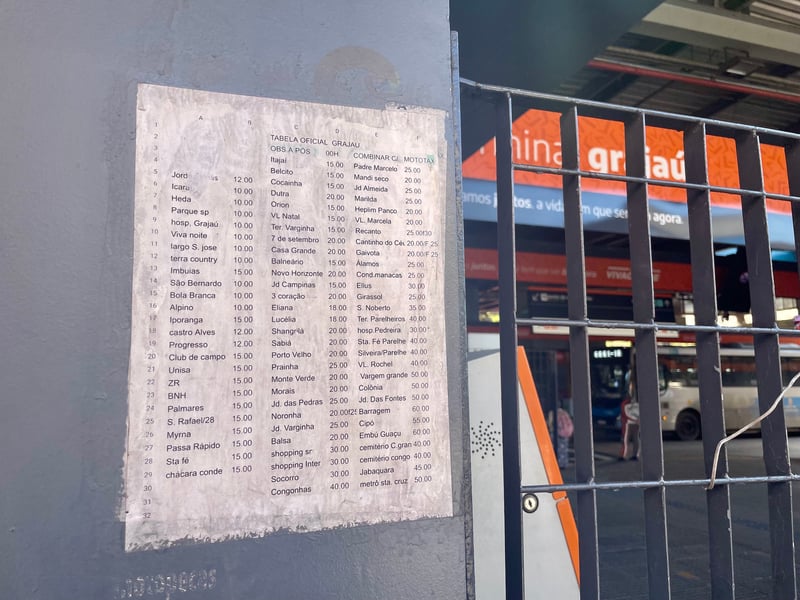
Still, mirroring fights in other cities, these established taxi services haven’t always seen eye-to-eye with their new tech-world competitors. The São Paulo State Motorcycle Couriers Union (SindimotoSP) criticized how the platforms introduced their services, arguing a lack of clear rules was undermining road safety and the professionalization of the sector.
“There has never been a formal motorcycle taxi category in São Paulo,” said Gilberto Almeida dos Santos, head of SindimotoSP. He added that the platforms are trying to bend or bypass existing legislation, encouraging drivers to operate without meeting legal requirements — especially those related to safety and traffic organization.
Clarisse Cunha Linke, Brazil director at the Institute for Transportation & Development Policy, said both motorcycles and motorcycle ride-hailing apps are filling a gap left by the government.
“It’s a gap in infrastructure, in service and also in the cost of public transportation, which is very high for people in the outskirts of the city,” she said.
According to Linke, transportation expenses can consume up to 30% of a low-income family’s monthly budget. Currently, a bus or subway ticket in São Paulo costs around $1. For some, that makes motorcycle taxis the only cost-effective option.
Still, when Paulistanos are deciding how to get somewhere, costs are far from the only consideration.
For many, a safe ride means more than avoiding a crash.
Kawanny Antônia da Silva França, an 18-year-old from the Jardim Ângela neighborhood in southern São Paulo, described a situation where she was considering her transit options. Using public transit meant taking two buses; a 20-minute car ride was $7 on the 99 app. “Then I checked the motorcycle ride, and it was $1.50,” she said.
Beyond the lower fare, França believes riding on a motorcycle carries less risk of harassment.
“In a car, the driver can just lock the doors and harass you. And we see a lot of harassment on public transportation too,” she said. “We’re never really safe, but this would be another chance to get around more securely.”
França’s experience reflects another piece of this issue — one that motorcycle ride-hailing advocates say has been largely missing from the legal debate.
According to company data, 59% of 99Moto users in Brazil are women. Surveying low-income women in São Paulo and Rio de Janeiro, a study by the Locomotiva Institute found that most see motorcycle rides as a way to reduce the risk of harassment, especially at night or in poorly lit areas.
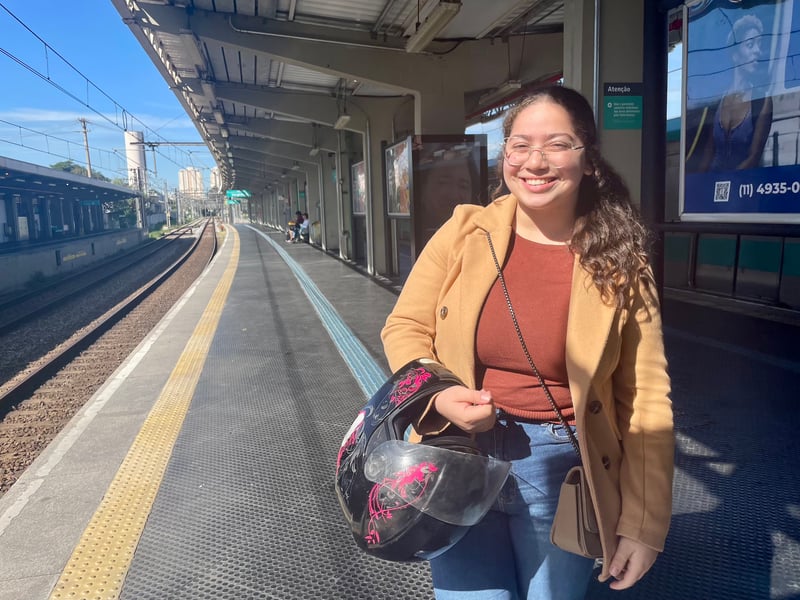
“The streets aren’t designed for women,” said Coelho, the lawyer from Insper Cidades. “The main issue is the walk to public transit and the wait. Public transportation routes should prioritize mixed-use areas — places where people are around.”
Linke, the transit policy expert, pushed back. She argued ride-hailing platforms tend to amplify existing inequalities rather than solve them.
“The companies push this narrative that the problem is now solved — that public authorities no longer need to invest in transportation because we have this supposedly democratic [and] adequate solution — but it’s not," she said.
Amid the controversy, São Paulo’s city council in April created the Motorcycle Passenger Transport Subcommittee to assess legislative proposals for regulating the services.
Linked to the council’s Commission on Transit, Transportation, and Economic Activity, the subcommittee began holding public hearings in May. Its proposals include requirements such as certified helmets, mandatory insurance, a speed limit of 30 km/h, reflective vests, crash bars, knee pads and disposable head covers for hygiene.
The subcommittee has an initial 120-day deadline to present a report with legislative recommendations. According to Frange, the subcommittee’s rapporteur, the goal is to gather as much information as possible, including from municipal officials, to create a proposal aimed at improving mobility, reducing road fatalities and setting safety standards for the service.
Still, “what we will not do is create another tool within the transportation system that ends up taking people out of their way,” he said. “Meaning that people don’t make it home alive.”
Oliveira, the University of São Paulo professor, argued that the city should not impose restrictions that make the service unfeasible.
“Instead of banning it, municipalities should enable motorcycle ride-hailing, as already happens in other major Brazilian cities,” he said. “Regulation should focus on road safety, mandatory insurance, and operational conditions — not on setting up disproportionate barriers to economic activity.”
While Linke agrees that an outright ban is not the ideal solution, she says regulation is essential, especially when it comes to speed limits.
Coelho takes a more forceful stance, arguing that the debate shouldn’t focus solely on regulation but also on how platform-based gig work erodes public control over urban mobility.
“The issue of motorcycle taxis isn’t new, even in São Paulo. We know that people in the outskirts already use them. It’s often their only option,” she said. “But once we enter the realm of Uber-ization, we completely lose control.”
Instead of more ride apps, Coelho says the real solution lies in massive investment in high-quality public transportation. If motorcycle ride-hailing apps are able to operate with little oversight, she says she “can’t even measure the damage this could cause to society.” Experts and commuters alike will soon learn where the São Paulo Court of Justice stands, as justices debate whether to give the budding industry a green or red light.
Subscribe to our free newsletters
Our weekly newsletter Closing Arguments offers the latest about ongoing trials, major litigation and rulings in courthouses around the U.S. and the world, while the monthly Under the Lights dishes the legal dirt from Hollywood, sports, Big Tech and the arts.