Search Articles


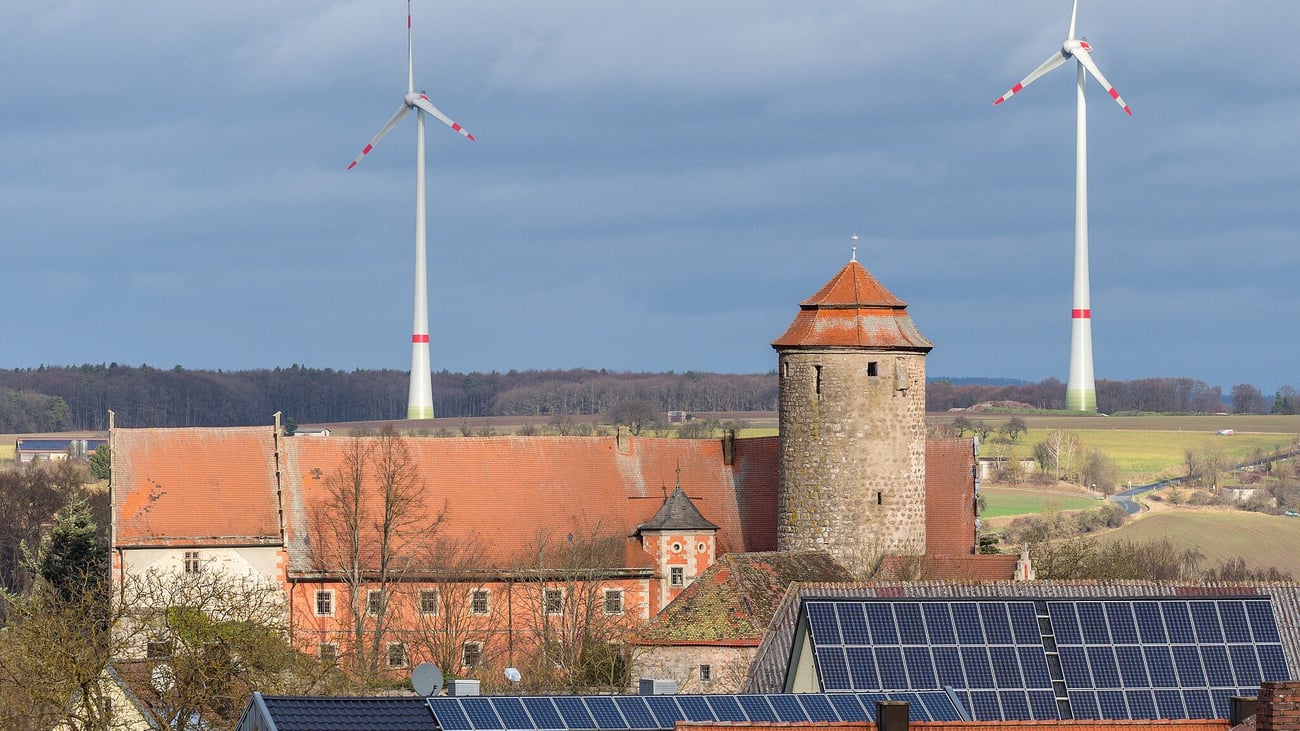
(CN) — Russia’s invasion of Ukraine sent Europe racing to build wind farms, and on Thursday that sprint crashed into an older European obsession: How much landscape and history should be sacrificed to make the green transition move faster.
Advocate General Athanasios Rantos said European Union law generally requires governments to give renewable energy projects priority when they collide with competing interests, including landscape and heritage protection.
Belgian energy company Eneco took the fight to Belgium’s Council of State after Walloon authorities blocked plans in 2023 for two wind turbines near Namur, saying the project would scar the surrounding landscape, affect nearby homes and clash with the character of a region untouched by existing wind farms.
Belgium’s highest administrative court then turned to the Court of Justice of the European Union for answers on how far emergency EU rules favoring renewable energy should go when wind farms run headfirst into biodiversity protections, historic landscapes and cultural heritage concerns.
The rules were adopted in late 2022 as Europe scrambled to break its dependence on Russian fossil fuels after the outbreak of war in Ukraine. The emergency measure sped up permits for wind and solar projects and gave them a powerful legal advantage by treating renewable energy as an “overriding public interest,” a status that can help developments survive environmental objections.
Belgium’s court wanted to know just how far that advantage stretches. Does it apply only when wind farms collide with EU protections for birds, habitats and waterways, or can it also outweigh fears about ruined landscapes and cultural heritage?
Rantos backed the broader reading.
“Member states must ensure that, in the planning and permit-granting process, the construction and operation of plants and installations for the production of energy from renewable sources and the related grid infrastructure development are given priority when balancing legal interests in the individual case,” he wrote.
Rantos added the same approach applies to “competing legal interests falling outside the scope of those provisions, in particular landscape and heritage protection.”
But he rejected the idea that renewable energy automatically overrides every competing concern.
“Member states retain the option of carrying out an assessment of all the characteristics and context of a renewable energy project before adopting their final decision,” he wrote.
Rather than handing wind farms an automatic green light, the opinion describes renewable energy as enjoying a “priority in principle,” meaning authorities must give such projects significant weight but may still reject them with detailed, case-specific reasoning.
Rantos also stressed Europe’s rush for renewable energy does not erase centuries-old protections for landscapes and historic sites. The opinion pointed to several Council of Europe treaties protecting architecture, archaeology and scenery, warning that automatically rubber-stamping wind projects would hand too much land-use power away from national authorities.
Catherine Banet, professor of law at the University of Oslo and academic co-director at Centre on Regulation in Europe, said the opinion offers one of the clearest explanations yet of how the EU’s fast-track renewable-energy rules should work when they collide with local opposition. She said Rantos backed a broad reading that still treats renewable projects as a priority “in principle, but not absolute,” adding the case could carry consequences far beyond Belgium because similar wording now appears in the EU’s revised renewable energy directive.
Hendrik Schoukens, professor of environmental law at Ghent University, said Rantos struck “the correct balance” by stopping landscape and heritage concerns from becoming a “cover up” for anti-wind “NIMBY-behavior,” while still leaving governments room to block projects in exceptional cases if properly justified.
Environmental groups were more cautious about how far the balance could tilt toward developers. Honey Kohan, head of communications at BirdLife Europe and Central Asia, relayed comments from the organization warning the opinion pushes the legal balance further toward renewable energy while still stopping short of giving wind projects unlimited freedom or overriding existing nature-protection safeguards. “It confirms that the ‘overriding public interest’ is not a blank check,” the group said.
BirdLife added that governments rejecting wind farms may now face a higher burden to justify those decisions, while countries seeking faster permits must also invest more seriously in conservation. “If authorities want smooth permitting, they must first deliver on nature restoration and budgets,” the organization said.
Eneco declined to comment before the court’s final ruling, while a spokesperson for Walloon minister François Desquesnes said the proceedings were still ongoing and the government had “nothing to say at this stage.”
Advocate general opinions are not binding, but judges at the Court of Justice of the European Union often follow them. The court’s eventual judgment, expected in the coming months, will be final, leaving Europe’s judges to decide how far the energy transition can override competing landscape and heritage concerns in the name of speed.
Courthouse News reporter Eunseo Hong is based in the Netherlands.
Subscribe to our free newsletters
Our weekly newsletter Closing Arguments offers the latest about ongoing trials, major litigation and rulings in courthouses around the U.S. and the world, while the monthly Under the Lights dishes the legal dirt from Hollywood, sports, Big Tech and the arts.