
 Search Articles


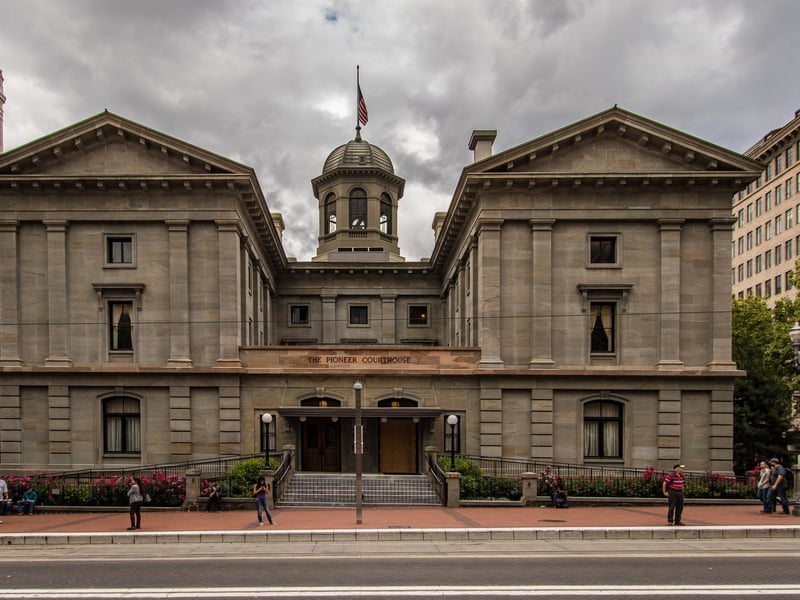
PORTLAND, Ore. (CN) — A Ninth Circuit panel heard arguments Tuesday on whether an Oregon state investigator withheld evidence that would have prevented the indictment of a prominent lead safety advocate in 2017.
The local founder of Lead Safe Mama, Tamara Rubin, became the subject of a 2016 state investigation in suspected theft and welfare fraud involving her previous charitable organization, Lead Safe America Foundation.
The yearlong investigation by Oregon Department of Justice financial investigator Kris Kalanges involved a spreadsheet detailing about $450,000 of transactions between the foundation and Rubin over five years. It prompted separate investigations from the Internal Revenue Service and Oregon Department of Human Services that same year, the latter concluding that Rubin and her husband received an overpayment in public benefits in a 2019 settlement.
The IRS investigation, however, found no change to Rubin’s tax liability and that Rubin had made loans to the foundation while it paid for out-of-pocket expenses. Rubin’s attorneys informed Kalanges, state human services investigator Michael Glenn and Oregon Assistant Attorney General Mark Kleyna of the audit results in October 2017, agreeing to provide Kalanges with documents that Rubin gave the IRS.
Yet, on Nov. 9, 2017 — the day before Rubin’s attorneys emailed the documents — Kalanges testified to a Multnomah County grand jury about possible charges against Rubin. Kalanges read the email on Nov. 13, the same day that the grand jury indicted Rubin on seven counts of theft and two counts of welfare fraud.
Court documents indicate Kalanges could only access the password-protected files in mid-December and that, when read, he concluded that they contained errors and examined different issues. Rather than analyzing whether the foundation paid Rubin more than the industry standard, Kalanges sought to learn whether Rubin and the foundation had mismanaged fiduciary duties.
However, Kalanges acknowledged in a February 2018 meeting that he had not reviewed all of the IRS conclusions and financial records and withheld the documents from the Department of Human Services and then-Multnomah County District Attorney Rod Underhill. This prompted swift action from Rubin’s attorneys, leading Underhill to drop all criminal charges against Rubin in May 2018.
While the dismissal surprised some — including a nonprofit manager from the foundation — Rubin has vehemently maintained she is the victim of an attempted smear campaign. She sued in 2019, claiming Oregon and state investigators violated her Fourth, Fifth and 14th Amendment rights by withholding exculpatory evidence.
U.S. District Judge Karin J. Immergut dismissed Rubin’s case in July 2022. After three amended complaints, Immergut concluded Rubin could not prove Kalanges knew or should have known that she was innocent or that the investigators’ conduct was unconstitutional. Immergut also ruled that Rubin’s claims fell outside the statute of limitations because she knew of Kalanges’ analysis for over two years before suing.
On Tuesday, the Ninth Circuit panel appeared more sympathetic toward the last point, questioning whether Rubin could have sued any sooner than she did.
Presiding from the Western District of Texas, Senior U.S. District Judge Frank Montalvo noted Rubin would have needed to file suit while the criminal case was pending, calling it an “absurdity.”
“Supreme Court law is clear, you know, wrongful prosecution statute of limitations begins after you get exonerated from the charges," the George W. Bush appointee said.
As for Rubin’s broader appeal — limited to a 14th Amendment claim for deliberate fabrication of evidence against Kalanges — the judges took up Immergut’s observation of a lack of evidence.
“Point to me any facts that say Kalanges should have known then or later before he testified in front of the grand jury that your client was innocent,” Montalvo told Rubin’s attorney, Zachary Duffy of Duffy Law.
Montalvo further instructed Duffy to provide any established law that assigns a law enforcement agent a duty to supplement a grand jury testimony after the fact. To this, Duffy said Rubin’s established right doesn’t involve Kalanges updating his investigation.
“Rather, it is to be free from the direct fabrication of evidence and that the evidence here to the district court was sufficient under the jury instruction to show that deliberate indifference,” Duffy said.
When it came time for Oregon attorney Jon Zunkel-Decoursey to defend Immergut’s ruling, he explained that Kalanges’ investigation had been separate from Underhill’s and that Kalanges’ grand jury testimony only described $450,000 of transactions between Rubin and the foundation. He also doubled back on the point about Kalanges’ qualified immunity, noting a lack of case law giving Rubin the right to have him update his testimony.
“You would agree with me though, that the district court erred in ruling that there was no clearly established law regarding deliberate fabrication of evidence,” Montalvo asked.
Zunkel-Decoursey disagreed, explaining that while a state actor cannot withhold evidence, it’s less clear for instances when a criminal defendant provides a state actor with evidence that they believe is exculpatory.
In a quick rebuttal, Duffy argued that the claim that Kalanges was not a part of the state’s investigation is subjective, particularly given the February meeting and how the state investigation was ongoing during the county case. He also argued that Kalanges previously worked as an IRS investigator, indicating that he always understood the importance of the IRS records and his analyses.
U.S. Circuit Judges Jacqueline H. Nguyen and Eric D. Miller — Barack Obama and Donald Trump appointees, respectively — rounded out the panel. The judges took the case under submission without indicating how they would rule.
 Follow @alannamayhampdx
Subscribe to our free newsletters
Our weekly newsletter Closing Arguments offers the latest about ongoing trials, major litigation and rulings in courthouses around the U.S. and the world, while the monthly Under the Lights dishes the legal dirt from Hollywood, sports, Big Tech and the arts.