
 Search Articles


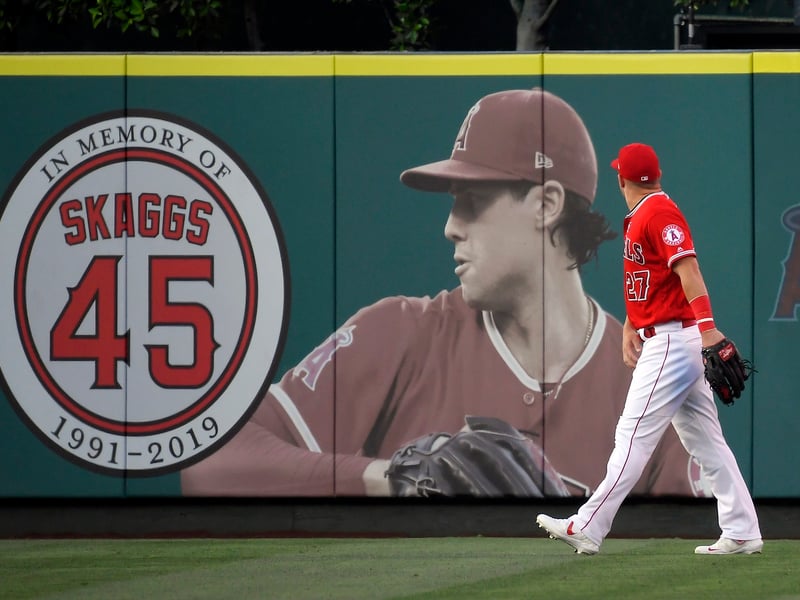
SANTA ANA, Calif. (CN) — Lawyers for the Los Angeles Angels and for the family of pitcher Tyler Skaggs, who died of a drug overdose in 2019, made their final appeals to a jury on Monday following a two-month civil trial.
Skaggs was just 27 when he was found dead in his Texas hotel room. It was later determined that Skaggs had alcohol, oxycodone and fentanyl in his system — the fentanyl having come from a counterfeit oxycodone pill given to him by Eric Kay, a former Angels executive. Kay was convicted of distributing drugs resulting in a death, and sentenced to 22 years in federal prison.
One key question the jury will have to answer: Was Kay acting “within the scope of his employment” when he sold Skaggs the fatal pill?
Daniel Dutko, an attorney for the Skaggs family, argued that one of Kay’s jobs was to make various arrangements for the highly paid ballplayers. He would, for example, get them tickets to plays, set up golf tee times, book massages for them. And according to the testimony from Kay’s ex-wife, Camela, Kay would give them marijuana vape pens. Giving them pain pills fit neatly into this category, Dutko said.
“They believed that Eric Kay’s job description was getting the players whatever they needed,” Dutko said. “As long as the players were happy, the Angels were happy.”
Camela Kay also testified that the Angels knew that Kay was selling players illicit opiates.
“The Angels knew about it,” Dutko told the jury. “They didn’t step in. They did absolutely nothing.”
A major part of the plaintiffs’ case was that the Angels clearly knew that Kay was a drug addict, paid for his treatment, but continued to employ him and even sent him along on the Texas road trip shortly after finishing his latest stint in rehab. The plaintiffs say that was a “but for” cause of Skaggs’ death; or as Dutko put it: “If Eric Kay was not allowed to return to work, then Tyler Skaggs would still be alive.”
During his own closing argument, Angels attorney Todd Theodora pointed out what he said was a contradiction: If Kay shouldn’t have been allowed to keep his job, what about Skaggs? Theodora argued that Skaggs had been snorting opiates — off and on, perhaps — since 2011, unbeknownst to the Angels. It was Skaggs, Theodora said, who was responsible for his tragic death.
“He died when he was doing things that we teach our children and our grandchildren not to do,” Theodora said. “Don’t do drugs … certainly don’t chop up and snort pills that were not prescribed to you.”
As to whether or not the Angels knew about Kay’s drug-dealing, he said, “It’s such a preposterous thought. Of course, the last thing Angels baseball wants is its players on street drugs — counterfeit pills that impair you mentally and physically.”
Theodora pointed to numerous text messages sent by Skaggs to his teammates, entered into evidence, casually referring to “crushing … blue boys,” potent opiate painkillers. He also argued that it was Skaggs who’d introduced numerous ballplayers to ingesting pills. Kay, he said, was simply manipulated into being the players’ “drug gopher.”
“Tyler was more of a danger to his fellow players,” Theodora said. “Tyler was impairing our players. Eric is complicit, no doubt. But Tyler set it all up.”
He also argued that Skaggs, a practiced and knowledgeable drug addict, had no problem getting pills when Kay was in rehab. He simply relied on a network of other drug addicted baseball players, he said.
“You can’t prevent a drug addict from getting counterfeit pills and chopping them up and snorting them,” Theodora said. “Terminating Eric Kay would not have changed the outcome … There’s no doubt that Tyler could have gotten the exact same pill from Eric even if he didn’t go on the trip.”
The attorney also contended that Skaggs, a practiced and knowledgeable drug user, knew that Kay’s pills were bought on the street and likely contained fentanyl, a dangerous synthetic opioid often manufactured in China. Dutko disputed this, saying, “There is no evidence Skaggs knew there was fentanyl in the pills.”
The plaintiffs’ side will have the opportunity to make one last rebuttal argument Tuesday morning. After that, the case will be in the hands of the jury. In order to reach a verdict, they’ll have to wade through up to 26 questions in order to determine what percentage responsibility, if any, the Angels have for Skaggs’ death.
They’ll also have to come up with damages, and to do that, they’ll have to assess how much Skaggs would have earned for the rest of his career, which both sides agree would likely have ended in around 2026. Dutko said Skaggs would have earned between $91 million and $101 million in the seven years after his death, since he would have likely become a free agent. The Angels say that number would have been $32 million.
The jury will also have to determine noneconomic damages — that is, they’ll have to place a dollar value on the loss of Skaggs’ love, companionship and support. The final award could easily rise to the hundreds of millions, and that’s before punitive damages are factored in.
There’s a strange quirk of California law: Punitive damages — awards to punish the side who is liable in a civil case — can only be dished out if the decedent suffered property damage. The plaintiffs have argued that Skaggs’ iPad was damaged in the hotel room in Texas — damaged, they say, by fentanyl residue, as they claim Skaggs was using it to snort pain pills. The Skaggs family says the iPad was worth $2,000 and has still not been returned by police. Should the jury agree, there will be a separate, shorter phase of the trial to determine punitive damages.
Theodora said the iPad claims had been “concocted” and were “actually laughable.”
“Angels baseball is responsible for that?” he asked.
But Dutko argued that punitive damages would “send a message,” although that phrase was objected to and stricken from the record.
“Nothing has changed at Angels baseball,” Dutko said. “This could happen again. The only thing that can make them fix this problem is you.”
 Follow @hillelaron
Subscribe to our free newsletters
Our weekly newsletter Closing Arguments offers the latest about ongoing trials, major litigation and rulings in courthouses around the U.S. and the world, while the monthly Under the Lights dishes the legal dirt from Hollywood, sports, Big Tech and the arts.