
 Search Articles


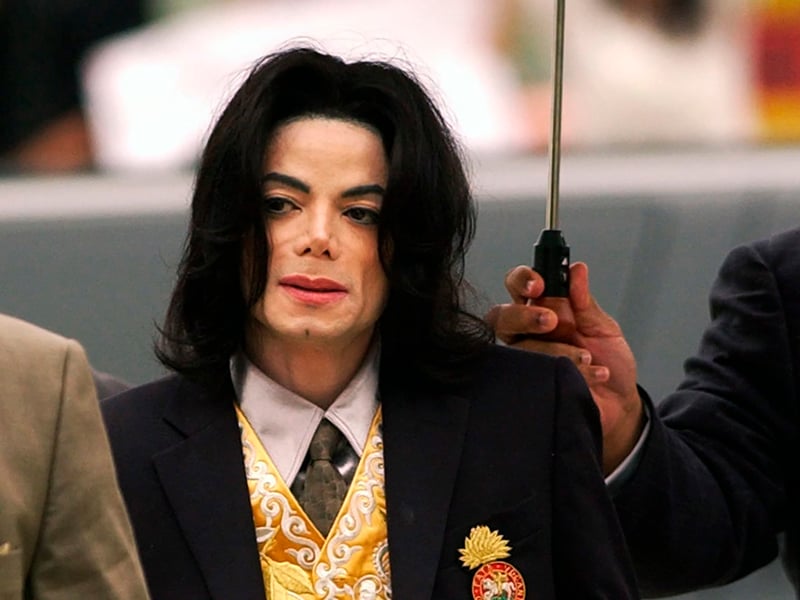
(CN) — A three-justice California appeals panel on Friday reinstated the lawsuits of two men who say they were sexually abused by Michael Jackson in their youth.
The Second District Court of Appeal panel ruled that the lower court erred in deciding that the defendants — MJJ Productions, Inc. and MJJ Ventures, Inc., entities solely owned by Jackson — had no legal duty to protect James Safechuck and Wade Robson from sexual abuse.
Safechuck and Robson have argued that the companies had a legal duty to protect them from the abuse, citing the control company employees had over transporting them and helping them communicate with Jackson. The companies say they had no duty because of their corporate structure.
“… We conclude a corporation that facilitates the sexual abuse of children by one of its employees is not excused from an affirmative duty to protect those children merely because it is solely owned by the perpetrator of the abuse,” Justice Elizabeth Grimes, an appointee of Governor Arnold Schwarzenegger, wrote for the panel.
The justices reversed the rulings of the Los Angeles County Superior Court and sent the cases back for additional proceedings.
Safechuck and Robson discussed their allegations against Jackson in the 2019 documentary “Leaving Neverland.”
Jackson’s estate has strongly and repeatedly denied Jackson abused either boy. It’s also noted that Robson in 2005 testified at Jackson’s criminal trial that he hadn’t been abused. Safechuck told authorities the same. The jury acquitted Jackson, who died in 2009, the Associated Press reported.
Safechuck has said he was 9 years old around 1986 or 1987 when he was hired to appear in a Pepsi commercial that featured Jackson. The singer became a part of his family’s life and the abuse started in 1988 and lasted through 1992, though Jackson continued to meet with him for years afterward.
Safechuck has argued that the companies’ employees concealed Jackson’s misconduct, including from authorities, and installed measures to make his conduct difficult to detect.
The companies countered by saying Safechuck’s arguments hinged on the theory that the corporations could control Jackson and prevent any alleged molestation. It was Jackson who had control over the corporations, not vice versa.
The trial court in October 2020 sustained the companies’ argument. Safechuck appealed.
Robson, whose case is now consolidated with Safechuck’s, has said he met Jackson as a prize for winning a dance contest in 1987. From Australia, his family visited the United States in 1990 and met Jackson at Neverland Ranch. The alleged abuse began then, when Robson was 7, and lasted until he was 14.
The justices wrote that a company employee organized when Robson and Jackson would meet, where they went and how Robson would get there. Employees also drove children in company vehicles, provided security when at Neverland Ranch and assisted with Robson and Jackson communicating.
“Employees of defendants witnessed the sexual abuse of Robson or circumstances suggesting sexual abuse,” the justices wrote.
In Robson’s case, like Safechuck’s, the trial court in May 2021 ruled there was no evidence the companies had control over Jackson and had no legal ability to control him, because Jackson owned them. Robson appealed.
Justice John Shepard Wiley Jr., an appointee of Governor Jerry Brown, wrote in his concurrence that Jackson, as controller of the two companies, could have taken steps to avoid the harm Safechuck and Robson say he inflicted on them.
“Jackson could have restrained himself ,” Wiley wrote. “From a social standpoint, this harm avoidance would have been costless. It merely required law abiding self-control, which the law expects of every person.”
Victor Viramontes, a Governor Gavin Newsom appointee, concurred with Friday’s ruling.
Subscribe to our free newsletters
Our weekly newsletter Closing Arguments offers the latest about ongoing trials, major litigation and rulings in courthouses around the U.S. and the world, while the monthly Under the Lights dishes the legal dirt from Hollywood, sports, Big Tech and the arts.