
 Search Articles


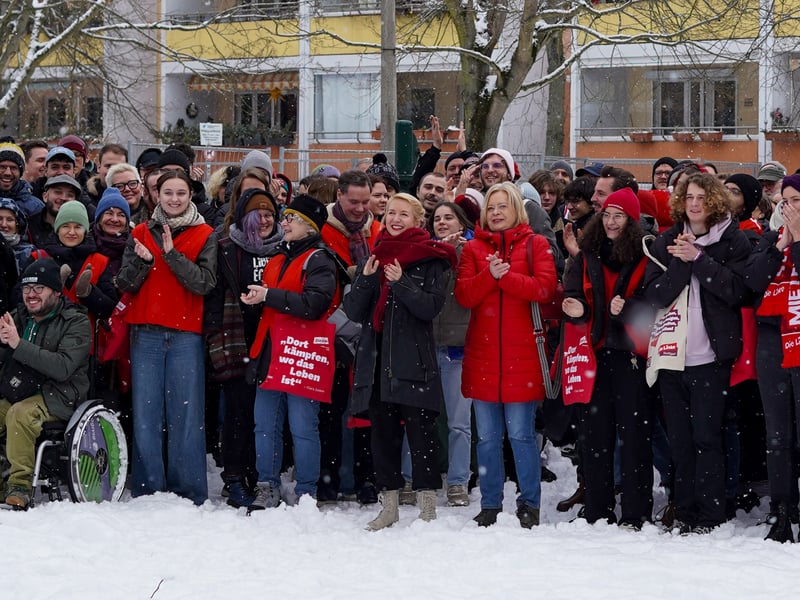
BERLIN (CN) — Tucked away among snow-capped apartment blocks in the Lichtenberg district, hundreds of buzzing organizers from die Linke, or the Left Party, punctuated the sleepy Saturday morning, preparing a final get-out-the-vote initiative before Sunday’s federal elections.
Their first voter drive in the area drew about 100 organizers. Roughly a month later, the campaign office was packed to the brim with four times as many participants. The momentum is national — the Left Party has gained 23,000 members since January, hitting a record.
“First of all, we’re not going to experience an election campaign like this in the next decades, whether it’s about the campaign atmosphere or the masses of people who are joining the party,” Martin Neise, who works on political education for the Left Party, told Courthouse News. “That’s why I’m cherishing it so much.”
The party hopes their surge in popularity will translate into electoral success. The Left Party is now polling as high as 9%, a meteoric climb from late last year’s dismal 3% that not even the most fiercely optimistic party members saw coming.
“I thought it would be really close and we’d have to put on a brave face. I was ready for that, and it would have been OK,” party co-leader Ines Schwerdtner told Courthouse News. “But I absolutely did not expect that we could be carried into parliament on such a wave of momentum; I’m so excited and proud of what we’ve already accomplished.”
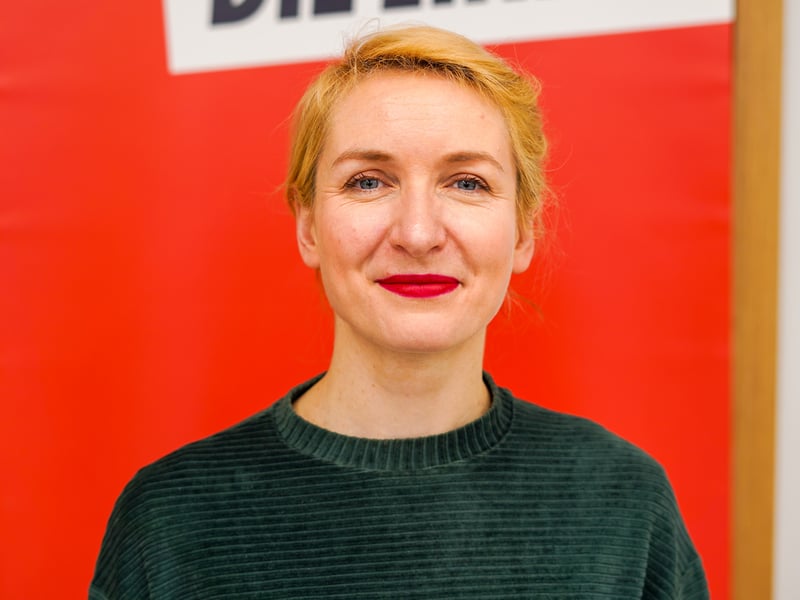
Schwerdtner’s primary goal was simply to meet the threshold to enter the Bundestag, either by getting 5% of the vote, or as was the Left Party’s case in 2021’s elections, by winning at least three districts via direct mandate Germans cast two votes, one for a party and one for their local representative.
The Left Party’s rise has become a central story late in the election as a frustrated, crisis-ridden Germany heads to the ballots. Its story also has far wider repercussions. As one of only three smaller parties vying to make it into parliament, the groups aren’t just shaping their own political futures, they will also drastically impact potential governing coalitions after the election.
Building another ‘firewall’ against the far right
The Left Party’s immediate surge is in many ways attributable to disappointment with Germany’s political status quo. The latest membership influx came immediately on the heels of Christian Democrat and likely chancellor Friedrich Merz’s controversial attempt to pass immigration reform with help from the far-right Alternative for Germany. The Alternative for Germany, or AfD, is currently polling at roughly 20%, putting it second after Merz’s group.
Incensed by an attack on Germany’s “firewall” against collaborating with the far right, hundreds of thousands have taken to the streets in protest. Though leaders of the ruling center-left Social Democrats and Greens sharply criticized Merz, they have not ruled out forming a coalition with him.
“I’ve only been a member for two weeks. I joined right after Friedrich Merz tried to pass a law with the AfD, which I think is a real threat to our democracy,” Anni, a 22-year-old organizer in Lichtenberg, told Courthouse News.
“The Left Party has an advantage in that they can really establish a clear-cut left-leaning profile, especially against the center-left parties,” Andreas Schäfer, political scientist at Berlin’s Humboldt University, told Courthouse News.
Heidi Rechinnek, the Left’s top candidate, gave a blistering Bundestag floor response to Merz’s far-right flirtation that got tens of millions of views on social media, underscoring the party’s effective digital campaigning. It’s quickly become one of Gen Z’s most popular options.
Schwerdtner said, “Lots of people have joined our campaign here in recent weeks, even those who aren’t necessarily party members. I think people really want to respond to this country’s rightward drift. And I think we as a party are a lot better organized than when there were big demonstrations a year ago, when people took to the streets and then just went home.”
Schwerdtner is locked in a neck-and-neck race with the AfD’s Beatrix von Storch — the granddaughter of Lutz Graf Schwerin von Krosigk, Hitler’s finance minister and Nazi Germany’s last head of state — for Lichtenberg’s direct mandate. She says bringing people into the Left’s campaign offers a concrete way of pushing back against the AfD locally.
Bringing the party back to life
The 36-year-old Schwerdtner, a former journalist, was elected co-chair of the party in October 2024, inheriting an organization still reeling from a dramatic split. The prominent and controversial Sahra Wagenknecht left the party to found her own populist project after years of bitter infighting.
Snap elections following the collapse of Germany’s governing coalition meant Schwerdtner’s team was thrown immediately into campaign mode.
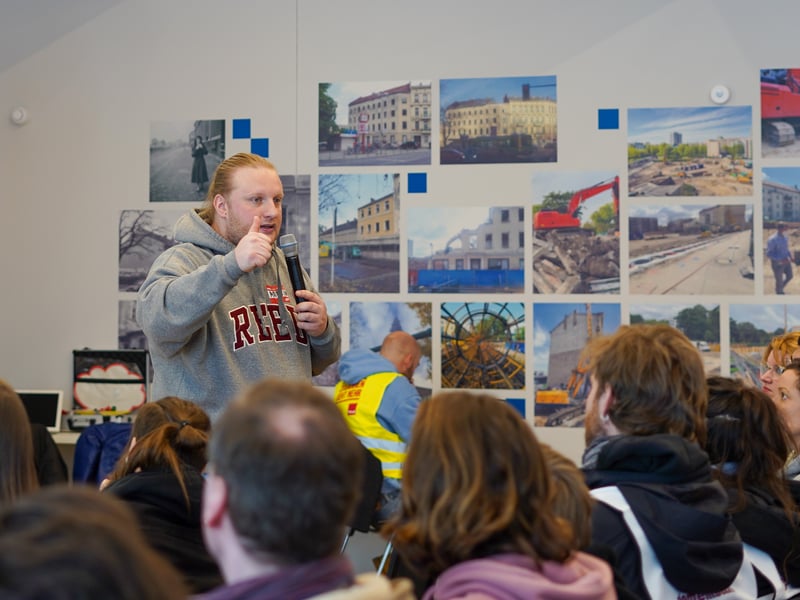
“When they called early elections we basically thought, ‘Oh shit, we’re dead in the water.’ We had two new chairpeople no one had really heard of. But we decided to focus on districts we thought might be winnable,” said Neise.
Initially intent on winning direct mandates in case they fell short of the 5% hurdle, the party focused on a handful of reliable districts with popular candidates, including an admittedly uphill battle in Lichtenberg. The local emphasis also allowed them to put early party reforms into practice, like capping politicians’ wages to the German median and providing direct social support to neighborhoods.
“Everyone else is talking about migration and criminality; we’re focused on speaking with people about their everyday problems,” said Schwerdtner. Schwerdtner says the party has knocked on 400,000 doors so far, after initially planning for 100,000.
“People don’t just vote for you because you’re against the right, you have to show them how you can improve their life,” said Neise, reflecting on recent rightward political shifts throughout Europe. The party has called for a rent cap and taxing the super rich. In addition to ballot info, campaigners provide information, like how residents can check if they qualify for rebates on heating costs.
“I like that the leaders have capped their wages and are focused on providing social support even if they’re not in power,” said Azamat, a 26 year old from Lichtenberg who also joined the party two weeks ago.
Small parties, big repercussions
The Left Party breakaway — the populist grab bag Sahra Wagenknecht Alliance — and the liberal Free Democrats are also hoping to squeak into parliament. Both have been polling at around 4%-5% in recent weeks, meaning it will likely be a significantly closer call than with the Left.
Initially popular due to Wagenknecht’s personal status as one of Germany’s most trusted politicians, plus momentum leading into last year’s European elections, it now appears the party may have overestimated demand for its unique political mix.
“Trying to combine a right-wing position on migration and a left-wing position on social justice is not very successful at the moment — I think largely because there are two very clear-cut party alternatives for either of those positions,” argued Schäfer.
Both the Wagenknecht Alliance and the Free Democrats voted along with Merz’s failed immigration reform, indicating that multiple parties adopting similar anti-immigrant policies could lead to redundancies in voters’ minds.
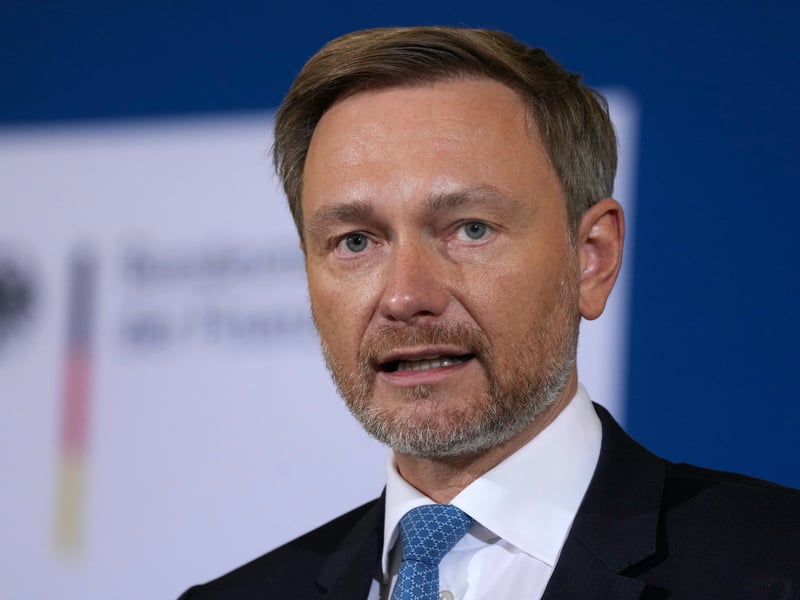
The liberals have a unique challenge in that they have yet to recover from their direct role in last year’s dissolution of Germany’s three-way coalition. “Even sympathizers of the party see them as playing a rather destructive role — both in the last three years by raising issues with other members of the coalition, and in the coalition’s end,” said Schäfer.
Germany’s incredibly fractured political landscape means that coalition-forming will likely be a convoluted affair, especially as every democratic party has ruled out working with the AfD.
Merz’s Christian Democrats are polling at about 27%, Chancellor Olaf Scholz’s Social Democrats at 17%, and the Greens at 12%. When smaller parties fail to clear the threshold to reach parliament, their seats are distributed among the parties that do make it, meaning the fate of the Free Democrats, Sahra Wagenknecht Alliance and Left Party will affect much more than their own parties.
“If only one of these smaller parties makes it into parliament, then it could still be very close. Depending on the exact amount of shares the other parties receive, they can build a two-party coalition,” said Schäfer. This would likely be a ‘grand coalition’ between Christian and Social Democrats, a familiar German ruling constellation. But if that’s impossible, the math — and potential for political coherence — gets tricky.
“If two of these parties make it into parliament, a two-party coalition won’t be possible,” continued Schäfer. This means that another awkward, three-way coalition would be needed. This possibility has many concerned given the spectacular implosion of Germany’s last three-way coalition and the AfD’s ability to turn widespread discontent into doubling support in polls during the last four years.
“If the AfD is the only party in the opposition, then I think we’ll end up with an AfD chancellor in four years,” said Schwerdtner. If the Left does make it into parliament, she maintains they’ll be in the opposition. From there, she’ll hope to form a counterbalance against the right.
“We want to put pressure on the centrist parties, but also use the party as a stage for what we see as popular reforms that don’t have advocates in the Bundestag, but might have support among unions and social organizations,” she said. “I think even if we get just around 7% of the vote, we can get a lot done if we are organized.”
 Follow @braneck
Subscribe to our free newsletters
Our weekly newsletter Closing Arguments offers the latest about ongoing trials, major litigation and rulings in courthouses around the U.S. and the world, while the monthly Under the Lights dishes the legal dirt from Hollywood, sports, Big Tech and the arts.