
 Search Articles


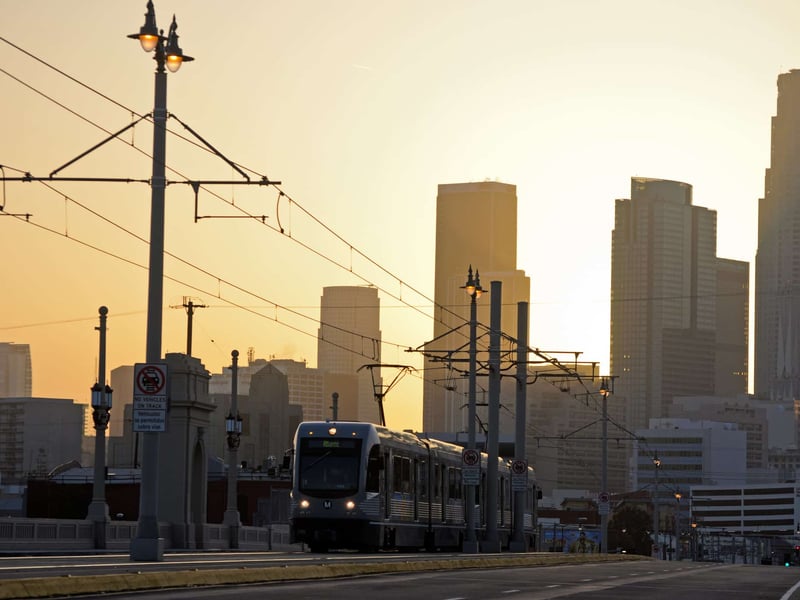
LOS ANGELES (CN) — Los Angeles’ newest rail line is less than two miles long, took 10 years to build (two longer than it was supposed to) and cost nearly $2 billion ($335 million over budget). And it’s not even a new rail line.
The much-anticipated regional connector will unite three different light rail lines into two, reorganizing what was once three lines: the L (formerly the Gold Line, the E (formerly the Expo Line) and the A. Starting on Friday at noon, those three lines will become two: the roughly 23-mile E line, running from East LA to Santa Monica, five blocks away from the pier, and the A line, which will connect the far-flung foothills city of Azusa all the way down to Long Beach, a distance of nearly 50 miles, making it the longest light rail line in the world.
Much of the project’s price tag went into three new underground stations: one at Little Tokyo, one at Broadway near City Hall and one at Grand near Disney Hall. It will, in theory, allow transit riders to traverse downtown with far greater ease than ever before and allow the city’s four major rail lines to connect at one station at Figueroa and 7th St.
Transit riders hope the regional connector will cut many rides through downtown by as much as 25 minutes. Whereas before a journey from, say, Culver City to Chinatown would’ve needed two transfers, one of which involved navigating the labyrinthian corridors of Union Station, the trip will now take just two trains, both of which will run through downtown on the same track, making the transfer between them as simple and unhurried as possible.
“It’s both going to be a big deal and totally invisible,” said Joe Linton, the editor of Streetsblog LA. “Pretty soon, people will forget that it ever didn’t exist.” He added: “It isn’t sexy, but it really does tie things together, in what has been a disjointed system. People who use transit a lot will notice that.”
At the same time, he said, “It’s not going to get people in Pacific Palisades out of their car.”
Like transit systems across the country, bus and rail ridership in Los Angeles declined steadily throughout the 2010s, thanks largely to low gas prices and cheap credit. Ridership was then decimated during the first two years of the Covid pandemic. Last year, ridership was up, and the signs are that it has continued to rise this year, though it is still nowhere near where it once was.
Crime on the Metro system surged 24% in 2022, and according to the Los Angeles Times, at least 22 people have died on the city’s buses and trains from drug overdoses since January 2022. The problem is especially bad on trains, which don’t have a driver surveying things through a rearview mirror.
“Public safety on the system right now is an existential crisis for public transit in LA,” said Eli Lipmen, executive director of the advocacy group Move LA. “I ride regularly the expo line, and over the last few months it has not been the most pleasant experience.”
Even still, he added, “The reality is that public transit is more or less as safe as walking around the street. There are some lines that aren’t as safe, and some stations that are not as safe.”
The hope is that more riders will make the system safer — the more people there are, the more eyes and ears there are in each car and station, the less inclined someone will be to commit a crime.
Once the regional connector opens, LA Metro will have 105 stations — more than in Washington, D.C., though it still has a fraction of the ridership. The region’s light rail system extends to many of its most famous destinations, from the Hollywood Walk of Fame to the beach, Universal Studios, the Rose Bowl, USC, Watts Towers and the Long Beach Aquarium. Soon, the newly opened K line will reach Los Angeles International Airport, and the D line will go to the LA County Museum of Art.
“The Regional Connector brings Los Angeles closer to having the world-class transportation system that Angelenos deserve,” said LA Mayor Karen Bass in a written statement. “With this opening, traveling across the region can be easier and more accessible all while Metro works to make the experience safer, cleaner and more welcoming for today’s and future riders.”
To mark the opening of the regional connector, Metro will offer free rides on its trains, buses and even its bike share on Friday and throughout the weekend.
 Follow @hillelaron
Subscribe to our free newsletters
Our weekly newsletter Closing Arguments offers the latest about ongoing trials, major litigation and rulings in courthouses around the U.S. and the world, while the monthly Under the Lights dishes the legal dirt from Hollywood, sports, Big Tech and the arts.