
 Search Articles


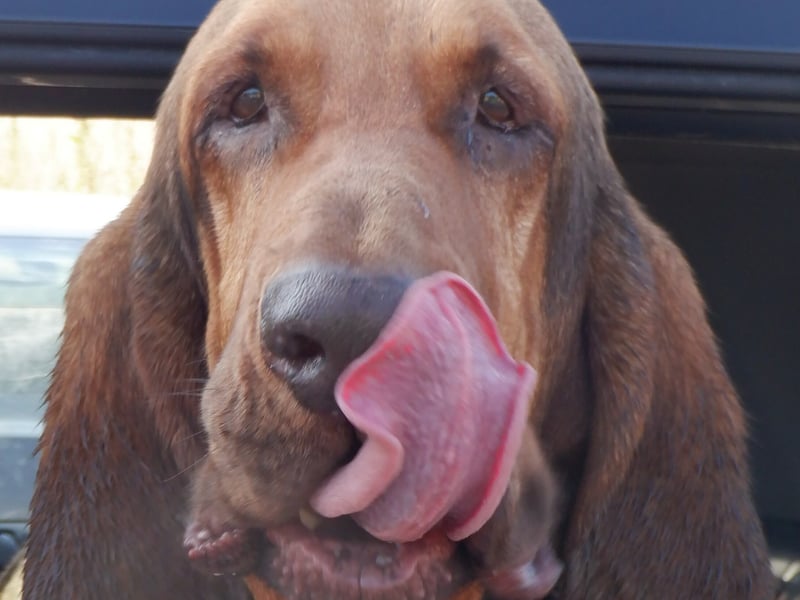
RICHMOND, Va. (CN) — The Supreme Court of Virginia heard from landowners Tuesday who argue they deserve their day in court to challenge a hound hunting statute.
The argument focused on whether the appellate court improperly sustained the trial court’s dismissal of the challenge. The three landowners argue that hounds overrun their properties during hunting season thanks to Virginia’s Right to Retrieve law.
“The dogs run loose and loudly on plaintiffs’ properties, disturbing the peace of their private homes, agricultural uses and leased hunting cabins, chasing deer and presenting a safety risk to plaintiffs’ clients, livestock and families,” the landowners wrote in their initial petition for declaratory judgment.
Virginia law allows hunters to continue coon and fox hunts on private land and enables hunters to access private property to retrieve hounds hunting any game. The landowners claim the government’s trespassing exception entitles them to compensation under the Fifth Amendment’s taking clause.
The case hit a roadblock when the Henrico County Circuit Court sustained the state Department of Wildlife Resources’s demurrer, a legal objection to an opposing party’s claims. In a nonrecorded pre-evidentiary hearing, the department successfully argued that the Right to Retrieve law decriminalizes rather than authorizes hunters’ entries on private land and that the department is not responsible for the intrusions.
An appeals court sustained the demurrer, reasoning that without a hearing transcript the panel could not meaningfully review the lower court’s decision. The landowners say this was a mistake.
They contend that the lower court’s order sustaining the demurrer provided enough context for the appellate court to review the order without a transcript.
“The ruling was error because trial courts speak only through their written orders, which are presumed to accurately reflect what transpired,” the landowners wrote in their brief.
The landowners and the department also dispute the breadth of the lower court’s order. The landowners believe the order only addressed the department’s first contention that the law decriminalizes rather than authorizes hunters’ entries on private land.
“Wherefore, Va. Code § 18.2-136 only creates an exception to criminal trespass and does not modify common law trespass and; wherefore, plaintiffs have failed to state a claim upon which relief can be granted,” the trial court judge wrote.
The landowners want the seven-judge Supreme Court panel to determine whether the finding of failure to state a claim is related to the lower court’s determination that the law decriminalizes rather than authorizes trespassing or, as the department believes, whether the landowners’ claims failed because the lower court, in addition, believed that the department was not responsible for the intrusions.
Pacific Legal Foundation attorney Daniel Woislaw, representing the landowners, told the panel that the best reading of the order is that the claim failed solely because of the lower court’s finding of decriminalization, a determination they hope to have reconsidered.
“The court of appeals failed to acknowledge the causal relationship between these two statements,” the landowners wrote in their brief.
Virginia Deputy Solicitor General Graham Bryant argued that the best reading is that the lower court considered both of the department’s objections and offered two separate grounds for dismissal.
“The landowners’ attempt to salvage their appeal by arguing that the dismissal order contained only a single ground fails because they did not provide a record sufficient for the Court of Appeals to evaluate the argument,” attorneys representing the department wrote in their brief.
Justices Arthur Kelsey and Wesley Russell Jr. disagreed on the semantics of the lower court’s use of the word “wherefore.” Russell claimed that using the second wherefore was essentially a stand-in for the word “because,” that is, the landowners failed to state a claim because of the lower court’s decriminalization determination.
Kelsey argued that the lower court’s order addressed both of the department’s objections separated by wherefore, which was a stand-in for “and."
Justice Stephen McCullough asked Bryant why they shouldn’t remand the case so the lower court could clarify its position. Bryant said that wouldn’t be necessary because he believed the order unambiguously addressed both objections. Russell said Bryant was “stealing a base” by assuming the entire panel agreed with him.
Hunting with hounds has been a way of life for many Virginians, including George Washington, for centuries. According to Pacific Legal, Virginia is one of only two states that allow hunters to access private property to retrieve their hunting dogs.
With more people and less farmland, hunters have significantly smaller private hunting grounds than their ancestors. Tensions between hound hunters and property owners have led the department to propose regulations, including requiring GPS-tracking collars.
The state declined to comment on the oral argument.
Subscribe to our free newsletters
Our weekly newsletter Closing Arguments offers the latest about ongoing trials, major litigation and rulings in courthouses around the U.S. and the world, while the monthly Under the Lights dishes the legal dirt from Hollywood, sports, Big Tech and the arts.