
 Search Articles


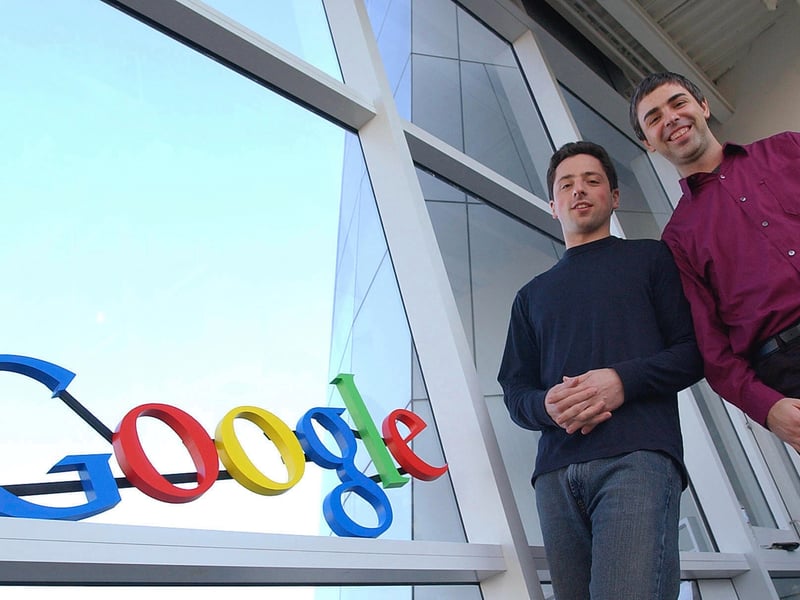
WASHINGTON (CN) — Google faces a major breakup as the long-awaited second phase of the landmark antitrust trial began Monday, where a federal judge will determine how best to remedy the tech giant’s internet search monopoly.
U.S. District Judge Amit Mehta ruled in August 2024 that Google operated an illegal monopoly in the search and search advertising markets — becoming the colloquial term for searching on the internet — following a nine-week trial in October 2023, and two full days of closing arguments.
First brought in October 2020 during President Donald Trump’s first term, the Justice Department, joined by 49 states, have litigated the case throughout two presidential elections with striking consistency.
The Justice Department has suggested the Barack Obama appointee should order the divestment of Google Chrome, and potentially of Android, as well as bar Google from shelling out billions to make its search engine the default option on iPhone and other browsers.
Justice Department attorney David Dahlquist argued that the government’s sweeping remedies were necessary to break up the “vicious cycle” that stems from Google’s multibillion-dollar default status deals.
In 2021, Google paid Apple approximately $26.3 billion for its exclusive default status on the Safari browser.
Dahlquist warned that Google’s proposed remedies — which would allow the company to bid against other search engines for default status on a yearly basis — would effectively “freeze the ecosystem in place.”
“Blocks of ice do not thaw overnight, Google wants you to shut the door and hope it thaws overnight,” Dahlquist said. “We’re asking you to put a flame under the block of ice.”
John Schmidtlein, Google’s lead attorney of Williams Connolly, argued that the Justice Department’s proposed remedies go far beyond what is required under the D.C. Circuit’s precedent in U.S. v. Microsoft and would simply help Google’s rivals.
“Plaintiffs’ remedies are, in many respects, completely untethered to the actual conduct that was at issue in the liability phase, reaching to regulate conduct and issues that had no bearing at all during the trial,” Schmidtlein said. “Google’s proposed judgment, by contrast, directly responds to this court’s legal determinations.”
Throughout Monday’s opening, the Justice Department focused on generative artificial intelligence, a recent technological development that has grown exponentially since the liability phase of the trial concluded, including Google’s own AI Overview and Gemini products.
The Justice Department has expressed concern that such AI products would allow Google to circumvent any final remedies. However, it noted that the technology would not replace search, but rather relies on it.
The Justice Department pressed Peter Fitzgerald, Google’s vice president of platforms and devices, regarding recent agreements between Google and Samsung that would preload the Gemini app onto Motorola Razr devices.
According to a partially redacted document, Motorola would have to place the app on Razr home screens, making the deal nearly identical to default search engine deals that Mehta ruled were illegal.
Fitzgerald will return to the stand on Tuesday, followed by ChatGPT head Nick Turley later in the day.
Dahlquist said that Mehta’s ruling found Google had clearly violated the landmark 1890 Sherman Act, even though the statute was created well before the internet was a possibility.
“The antitrust laws are designed to adapt to advances in technology, the oil companies and railroads of yesterday are the internet and search engines of today,” Dahlquist said. “Today, this court has an opportunity to remedy a monopoly that has controlled the internet for today’s generation and to instead create competition for decades to come.”
Google has also raised concerns that the Justice Department’s data sharing proposal — which would force Google to share the data it uses to improve search and advertisement quality — could create national security concerns.
Schmidtlein asserted that if specific searches were publicly available, astute third parties could tie specific searches to individuals, as had happened when AOL released search logs in 2006.
Dahlquist has rejected the argument as “incredulous,” and noted that AT&T made similar claims to stave off its breakup during the Cold War in 1974. Microsoft also made similar claims, he pointed out.
Both arguments failed, as the judiciary’s recognition that it should generally defer to national security concerns only applies to those invoked by the executive branch.
Deputy Attorney General Todd Blanche, who previously represented Trump during his several criminal trials under the Biden administration, issued a statement lauding the case as part of the president’s “fight to restore power back to the American people.”
“Today, the Department of Justice takes an important step forward to protect the American people from the perils of Big Tech,” Blanche said in the statement. “Today, as the remedies phase of that case begins, President Trump’s Justice Department will finish the job.”
 Follow @Ryan_Knappy
Subscribe to our free newsletters
Our weekly newsletter Closing Arguments offers the latest about ongoing trials, major litigation and rulings in courthouses around the U.S. and the world, while the monthly Under the Lights dishes the legal dirt from Hollywood, sports, Big Tech and the arts.