
 Search Articles


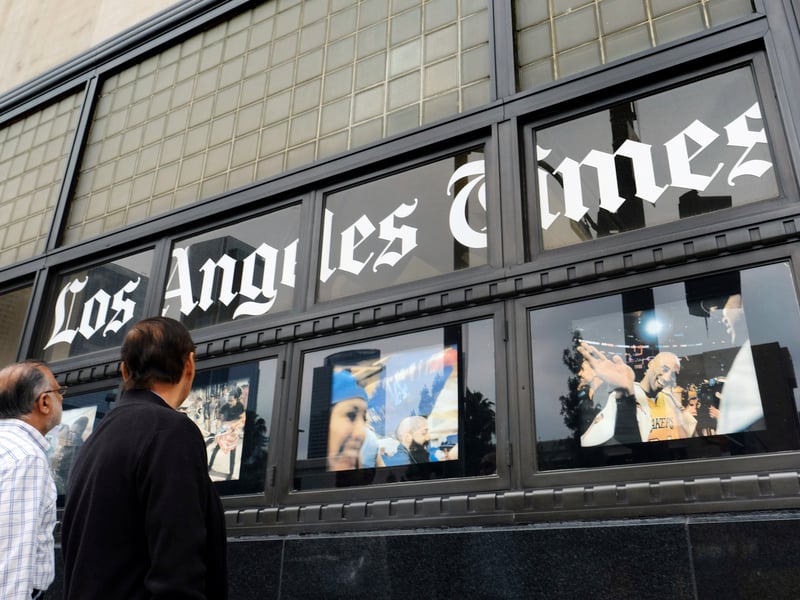
LOS ANGELES (CN) — A Superior Court judge ruled Wednesday that the LA Times must revise its petition seeking to force the city of Los Angeles to retain a range of electronic records, including text messages between public officials, for up to two years.
Judge Maurice Leiter said he found the Times’ request too broad.
“Petitioners have not sufficiently defined the types of records they contend the city has a ministerial duty to retain,” Leiter wrote in his tentative ruling, later adopted as final. “To the extent petitioners allege that the city has a duty to retain all text messages and ‘other forms of communications’ of all city employees, including those held on personal devices, that might relate in some way to ‘public business,’ that theory is not supported by [law].”
Kelly Aviles, who represents the LA Times, suggested the newspaper would likely seek a writ from the state court of appeals, rather than amend its complaint.
The case arises out of the two deadly wildfires in January, which leveled the neighborhoods of the Pacific Palisades and Altadena, killing at least 31 people. When the fires first broke out, Mayor Karen Bass was in Ghana, attending the inauguration of President John Mahama — despite having promised during her campaign not to travel internationally.
Bass cut her trip short and was back in LA on Jan. 7. Nonetheless, she was heavily criticized for being abroad when the National Weather Service had been forecasting “critical fire weather conditions.” Bass later expressed regret for taking the trip, but also defended her actions by maintaining she was actively involved in decisionmaking during her return flight. Bass later removed LA Fire Chief Kristin Crowley, in part for the way she handled the deadly wildfires.
In the course of investigating the city’s response to the fires, a pair of LA Times reporters filed a public records request for all of the mayor’s text messages in the days before and after the disaster. The city was told that they had been deleted — that the mayor’s phone was set to automatically delete all of her text messages after 30 days, despite the fact that the records request had been filed less than 30 days after the fires began. Eventually, the mayor’s staff was able to recover some of the texts.
In its petition for a writ of mandate, the Times claimed that several city employees are “engaged in the practice of illegally destroying public records.” The newspaper requested the court order the city to fulfill its public records request and issue an injunction prohibiting the destruction of any public records less than two years old.
The city decried a potential injunction as logistically impractical, arguing that even a city hall janitor would be required to review their texts and keep any content related to “the public’s business.”
At the heart of the dispute: What is a public record? And when does a city have to retain it?
“It’s not our contention that city doesn’t have to retain these records,” said Reuben Cahn, a partner at Bienert Katzman Littrell Williams representing the city. “But rather, the definition of records that must be retained is much narrower than the scope of records covered under the California Public Records Act.” In other words, just because the city has to respond to a public records request doesn’t mean it has to actually keep the record in question.
Avila argued that the city’s policy of auto-deleting text messages after 30 days wasn’t a use of discretion at all, since no one had reviewed the texts. Avila also urged the judge not to sustain the demurrer — even if he thought their request was too broad, he could register that feeling sometime down the road.
“This is going to the court of appeal,” Avila said. “If we were to narrow our cause of action to a more limited subset of records, we could do that. But it doesn’t bring the full issue to the court of appeals.”
Leiter was unmoved by that argument, sustaining the demurrer and giving the Times 45 days to amend its petition.
 Follow @hillelaron
Subscribe to our free newsletters
Our weekly newsletter Closing Arguments offers the latest about ongoing trials, major litigation and rulings in courthouses around the U.S. and the world, while the monthly Under the Lights dishes the legal dirt from Hollywood, sports, Big Tech and the arts.