
 Search Articles


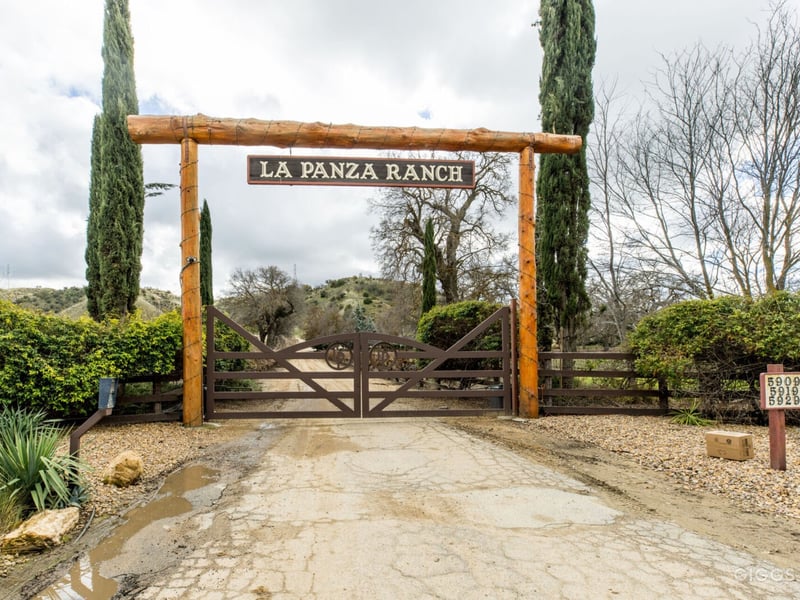
SANTA MARGARITA, Calif. (CN) — When the 15,000-acre La Panza Ranch listed for sale at $38 million in 2020, a brokerage firm touted the property’s luxury, hacienda-style main home, its olive oil processing facilities, a helicopter pad, and picturesque agricultural land with a working cattle operation.
“It’s one of the best trophy estates that I’ve seen, period,” said Lance Dore, real estate agent for California Outdoor Properties, which listed the property.
But while La Panza Ranch, located in Santa Margarita, California, was unique for its size and amenities, it boasted another interesting selling point: Not long after the U.S. Civil War, it served as a hideout for notorious outlaws Jesse and Frank James while Jesse recovered from a gunshot wound.
“There’s very little known about Jesse and Frank’s trip to California,” author Mark Lee Gardner told Courthouse News. “The earliest reference I’ve found is from a newspaper story by John Newman Edwards published in the St. Louis Dispatch on Nov. 22, 1873. Edwards wrote that Jesse visited the springs at Paso Robles as treatment for the wound to his lung.”
While outlaws such as Billy the Kid, Wyatt Earp and the Sundance Kid have long captured the imaginations of history buffs, the James brothers are among the best known Old West bandits, having pulled off a string of daring — and violent — bank and train robberies that began in early 1866.
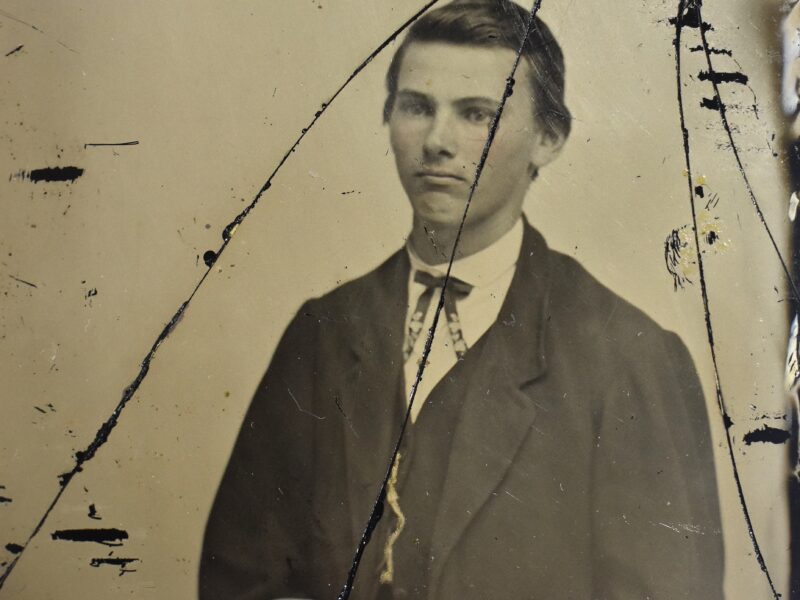
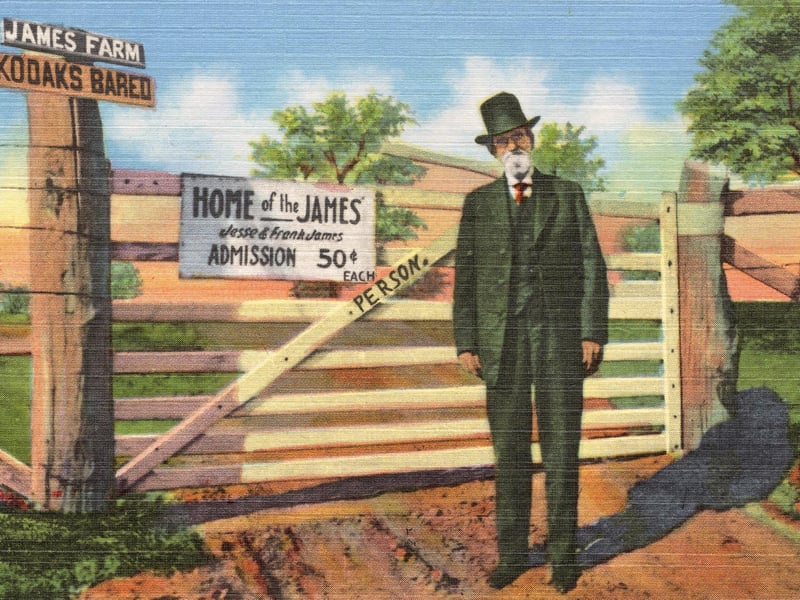
“I think they kept doing it because they spent every dime they had,” said Beth Beckett, historic site manager for theJesse James Farm in Kearney, Missouri, which welcomes around 12,000 visitors a year. “Jesse had nice horses, nice clothes. I’m sure he gave some money to his mother.”
Jesse James was born in Kearney, where he was raised by his mother Zerelda and father Robert, a Baptist minister. In 1850, when Jesse was just three, Robert James traveled to California so he could preach to those seeking gold. Shortly after his arrival, Robert James became ill and died near Placerville.
“I always figured if the father would have returned from California, we wouldn’t know Frank and Jesse,” Beckett said. “I think he would have been such an influence in their lives.”
Instead, Zerelda remarried twice — the second time to Reuben Samuel, a physician turned farmer. During the Civil War, a Union militia tortured Confederate sympathizers Samuel and Jesse James, prompting Jesse James to join the Confederate cause — and marking the beginning of his violent tendencies.
“I think that was a turning point,” Beckett said.
Three years after he took part in a Kansas massacre during the war, Jesse James robbed his first bank in Liberty, Missouri, in February 1866. The robberies that followed would put both victims and perpetrators at risk. During a Russellville, Kentucky, robbery in March 1868, Jesse suffered a gunshot wound to his chest during a shootout from which he narrowly escaped.
Shortly after that, it is believed Frank and Jesse traveled by train and stagecoach to visit their uncle Drury James, who lived at the La Panza Ranch. Drury James and a partner had purchased the land, located in eastern San Luis Obispo County, in 1860.
Some historians believe the James brothers wanted to lay low for a while. Others believed Jesse was seeking the mineral waters of the area to help mend his wounds.
“According to some sources, Jesse and Frank attempted to locate the grave of their father,” said Gardner, whose books include “Shot All To Hell: Jesse James, the Northfield Raid, and the Wild West’s Greatest Escape.”
It’s not clear if the James brothers ever found their father’s grave. But while at La Panza, local historians have written, the James boys lived a crime-free life, working as ranch hands under pseudonyms.
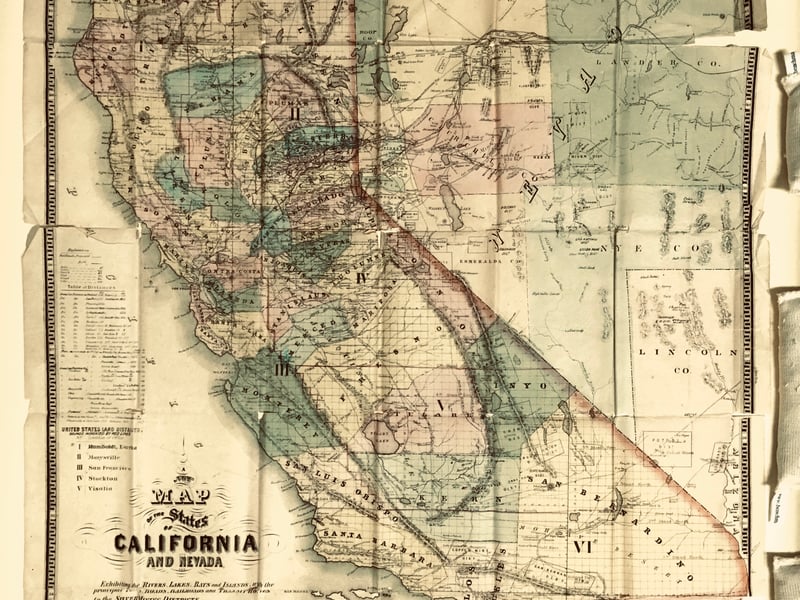
Jesse James did recover from his wound, according to the late folklorist Angus MacLean, and the brothers explored much of the county. (The Jesse James Farm owns a California map that belonged to Jesse James at the time.)
Local law enforcement knew the James brothers were at the ranch, MacLean wrote, “But as long as the boys behaved themselves while in California, no one wanted to embarrass Drury James, who was liked and respected.”
Featuring rolling meadows, rugged rock formations and mountain slopes, bordering the Los Padres National Forest, the ranch could have easily provided cover for the James brothers, Dore said.
“There are these finger canyons on the property,” said Dore, whose firm sells large ranches in California and Nevada. “You could have had a 500-soldier army back in there — nobody would have known.”
Drury James would eventually co-found the nearby city of Paso Robles, which today is known for its blend of cowboy flair and wine culture.
It’s believed the brothers stayed at La Panza for a little over a year — roughly the gap between robberies in Russellville and Gallatin, Missouri, the latter in December of 1869.
In Gallatin, Jesse James shot and killed a bank cashier. That robbery was the first that garnered the James brothers national attention. And the James-Younger gang robberies, which resulted in 16 deaths, would continue until Jesse James himself was shot and killed in 1882.
Drury eventually moved to Paso Robles, where he enjoyed success as a businessman before venturing into politics. He died in San Francisco. After his brother’s death, Frank James stood trial for crimes but was acquitted.
In the years that followed, the La Panza Ranch would become the property of various cattle partnerships and individuals, according to Hall and Hall, which specializes in the sale of rural properties.
The Cowell Foundation owned La Panza Ranch for 55 years. And in 1996, the property was sold to publisher Robert Petersen (Motor Trend, Teen, Guns & Ammo), who used the ranch to entertain race car driver friends and celebrities, including Tom Selleck.
In 2003, Mike Leprino Jr. and his daughters purchased the ranch. Leprino’s father founded what eventually became a billion-dollar cheese business in 1950.
Shortly before his death in 2018, Mike Leprino Jr. was removed from the board at Leprino Foods, which sells cheese to most major pizza restaurants. More recently, in a well-publicized case, his daughters sued their uncle James Leprino, the company CEO, and his children.
As the suit was pending, the daughters tried to sell the La Panza Ranch. Despite the hefty price tag, there was initially plenty of interest, Dore said. After all, he said, it’s rare to see a ranch that size available in California. And the property includes olive trees, alfalfa, a bunk house, a guest house, and several hay barns.
“I would get a call almost every week,” Dore said. “Some of them were cattle ranchers. Some of them were investors. Some were international.”
Initial offers for $25 million were turned down, Dore said. In April 2022, the property was finally sold for an undisclosed sum at auction by Hall and Hall.
“It was an international developer,” Dore said. “He said, ‘I like ranches. I buy ranches. I want this one.’ And that was the end of it.”
According to the San Luis Obispo County Clerk’s Office, there are multiple fictitious business names associated with the ranch, including La Panza Olive Oil, La Panza Cattle Co. and the most recent, La Panza Ranch Resort, Inc., which registered just after the sale. According to the county assessor’s office, addresses related to ownership of the ranch trace to both an international real estate firm in Vancouver, Canada, and a global finance company in the Netherlands.
The property continues to operate as a cattle ranch, and La Panza Olive Oil is still made there.
Since the sale, there has been a new development likely to add drama to the ranch: The property was listed on the website Giggster as a possible location for filming. Billed as “a filmmaker’s paradise,” the site includes reviews from three filmmakers who have already shot there.
While the site notes the ranch is a “living piece of Old California with a rich history dating back to the 1860s,” it never mentions Jesse James.
Subscribe to our free newsletters
Our weekly newsletter Closing Arguments offers the latest about ongoing trials, major litigation and rulings in courthouses around the U.S. and the world, while the monthly Under the Lights dishes the legal dirt from Hollywood, sports, Big Tech and the arts.