
 Search Articles


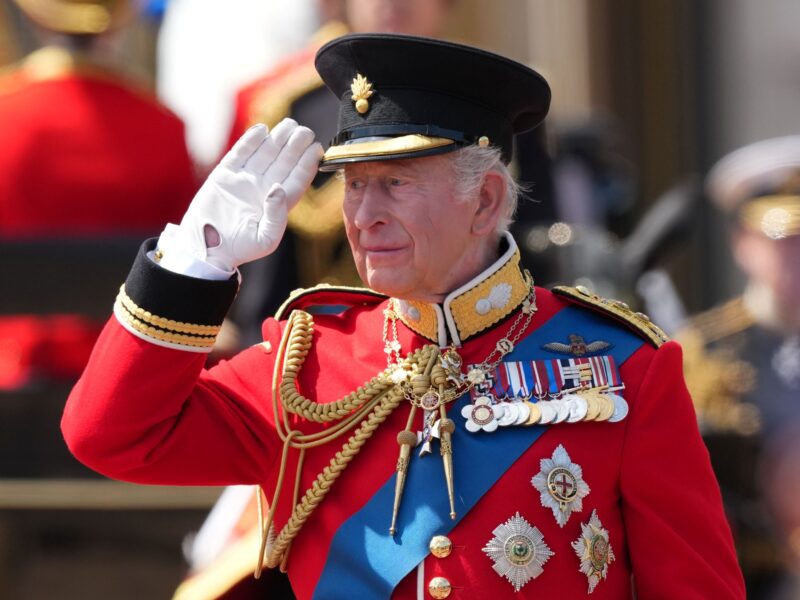
MANCHESTER, England (CN) — King Charles III became the first British monarch to publish his personal tax bill, revealing he voluntarily paid $17 million for the 2024-25 tax year.
Buckingham Palace also confirmed Thursday evening he will not move into the iconic royal residence after its nearly $490 million renovation is complete.
The disclosure comes as the monarchy’s main source of taxpayer funding — the core Sovereign Grant, which annually pays for official duties, staffing and the upkeep of royal residences — is set to nearly double within three years to $132 million, after a temporary increase to fund the palace’s renovation.
Buckingham Palace said Charles paid $15.4 million in tax in 2023-24 and $17 million in 2024-25, marking the first time a reigning monarch has publicly disclosed the amount.
Prince William also disclosed his tax voluntarily, paying $10.3 million in tax in 2024-25, down from $11 million the previous year.
Palace officials said the move forms part of a broader push for greater transparency over royal finances. But much remains unknown.
Bill shines some light into royal finances
British monarchs are exempt from paying income tax by law but since 1993, Queen Elizabeth II and now King Charles have chosen to pay it.
The figures place Charles among Britain’s top 100 taxpayers, although the palace did not disclose how his tax liability was calculated or provide details of his taxable income, deductions or expenses.
Charles also receives $33.3 million a year from the Duchy of Lancaster, a portfolio of land, property and investments that provides the monarch with independent income for official and private spending.
He also earns money from private investments and his privately owned Balmoral and Sandringham estates. The latter is where his brother and former prince Andrew Mountbatten-Windsor now resides after he was stripped of his royal titles following revelations about his friendship with Jeffrey Epstein.
The palace did not provide figures from these estates.
The disclosures were published alongside the Royal Household’s annual financial report, which also confirmed Charles and Queen Camilla will continue living at Clarence House instead of moving into Buckingham Palace once refurbishment work finishes next year.
Palace officials said the decision will allow Buckingham Palace — which is a 6-minute walk from Clarence House — to remain the ceremonial center of the monarchy while expanding public access to the landmark to generate additional visitor income.
It will be the first time since Queen Victoria’s reign (1837-1901) that a British monarch has chosen not to make Buckingham Palace a primary residence.
How taxpayers fund the monarchy
The Sovereign Grant is funded from public money and calculated using profits from the Crown Estate, a vast portfolio of land and property owned by the monarch but managed independently.
Since 1760, each monarch has surrendered its revenue to the treasury in return for government support.
Parliament then returns a percentage of those profits to fund the monarchy’s official work. In 2017 it was increased from 15% to 25% to accommodate renovation works at Buckingham Palace before dropping to 12% in 2024. The latest review recommended increasing it to 20.5% from 2027.
The annual core grant stood at $68.4 million from 2021-2025. It rose to $95.3 million last year and $129 million this year before reaching $132 million next year.
Temporary extra payments to finish Buckingham Palace’s renovation push the total grant this year to $182 million.
James Chalmers, who oversees royal finances, said the disclosures reflected the Royal Household’s commitment to accountability.
“While royal finances can sometimes appear complex, the underlying system is clear in principle, structured in law and refined over time to ensure the monarch can serve with independence, accountability and in the long-term interests of the nation," Chalmers said.
Republic, a campaign group that advocates abolishing the monarchy, said the disclosures answered few questions and challenged the king to declare his full income and explain how his tax bill was calculated.
“If Charles doesn’t say what his income is, we have no idea if he is paying the top rate of tax, as he should be," said Graham Smith, CEO of Republic.
Smith also criticized the continuing rise in public funding for the monarchy during Britain’s prolonged cost-of-living crisis, arguing the annual grant has increased far faster than spending on schools or wage growth.
“Royal finances are out of control,” he added, “and Parliament needs to act to slash the annual budget.”
He also questioned spending almost $490 million renovating Buckingham Palace when Charles has decided not to live there, saying the building should instead be “fully open to the public all year round.”
Courthouse News reporter James Francis Whitehead is based in England.
 Follow @jayfranklinlive
Subscribe to our free newsletters
Our weekly newsletter Closing Arguments offers the latest about ongoing trials, major litigation and rulings in courthouses around the U.S. and the world, while the monthly Under the Lights dishes the legal dirt from Hollywood, sports, Big Tech and the arts.
Additional Reads


 Macron hosts Meloni for Riviera talks after Trump rift June 25, 2026
 World sends rescuers, aid as Venezuela reels from quakes June 25, 2026