
 Search Articles


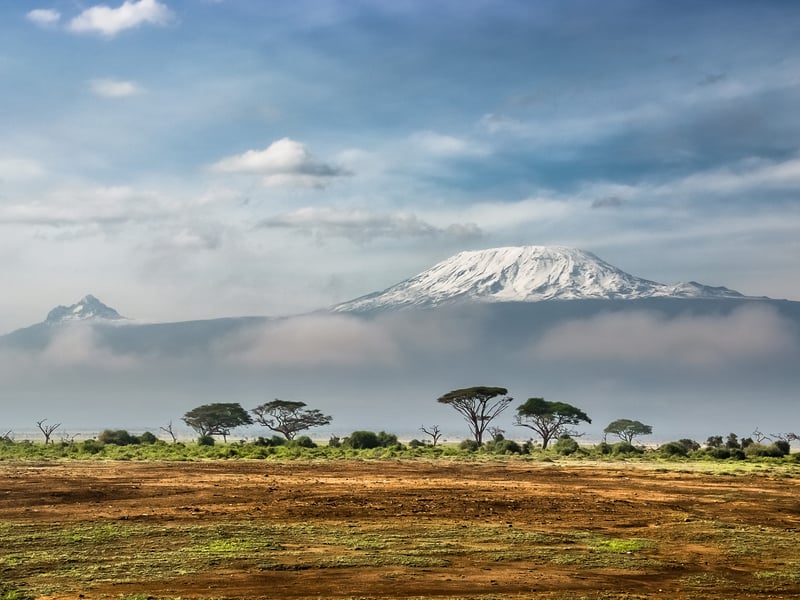
(CN) — An explosion of the human population around Mount Kilimanjaro, Africa’s tallest mountain, over the past 100 years has reduced the mountain’s natural biodiversity by 75%, according to a new study published Wednesday.
The study found that land-use change caused by humans, not climate change, was the direct cause of the loss of the mountain’s natural plant species among its lower slopes between the years 1911 and 2022, according to the study published in the journal PLOS One from researchers in Europe, Finland, Switzerland and Japan.
The study’s authors — Andreas Hemp, Mieko Miyazawa and Pekka Hurskaine — were surprised to find climate change appeared to have “no measurable effect” on the decrease in the reduced biodiversity, they wrote in a press release. The researchers added that their findings emphasized the necessity to address the socioeconomic factors impacting the mountain and others like it.
“A century ago, when Kilimanjaro’s population was below 100,000, approximately 98% of its savanna vegetation remained intact, and natural vegetation covered 90% of the lower slopes,” the authors wrote in their study. “Although biodiversity data from that time is limited, extrapolating our population density and species richness trends suggests that in 1911, nearly 700 native plant species existed per square-kilometer, whereas today, this number has declined to approximately 180.”
The mountain’s rich natural resources and historical biodiversity have been a major economic driver for the local population’s explosive growth, according to the study.
Relying on satellite imagery, historical maps and census data over a 3,200 square-kilometer region around Mount Kilimanjaro, the researchers found that between 1911 and 2022, the population per square-kilometer grew from 30 to 430 people, as urban populations expanded and savannas were converted for farming and agroforestry. Now, millions of people who live along the mountain rely on its environmental benefits for food, water regulation and timber, the study’s authors wrote.
Climate change, however, is a likely factor for the mountain’s glacier retreat, the authors noted. According to the Kilimanjaro National Park, the mountain’s snow caps have lost about 80% of their mass since 1912. Additionally, increasing human activity and decreasing humidity are also driving more frequent forest fires in the region, the authors wrote.
But these factors did not significantly impact Mount Kilimanjaro’s biodiversity.
“If it had been a primary driver of land use change, we would expect to see negative impacts on subsistence agriculture and agroforestry, yet these categories showed significant gains,” the researchers wrote.
According to the researchers, this is the first study to link human population density with plant species diversity at a one-square-kilometer scale in a tropical region.
Mount Kilimanjaro, located on the Tanzanian side of the Kenyan border, is a dormant tropical volcano at 19,341 feet high. It is the tallest “free-standing mountain” in the world, meaning it is not connected to a larger mountain range.
The population on the mountain has multiplied 28 times, according to the study, from about 50,000 people in 1889 to now more than 1.4 million people. This population boom also correlates with an increase in the region’s gross domestic product, as well as the Tanzanian GDP, between 1980 and 2020.
“The remaining natural vegetation faces significant pressure from human activities such as agricultural expansion and intensification, urbanization, firewood collection, brick manufacturing and grazing,” the authors wrote in the study.
The study found that between 1976 and 2022, a major transformation took place with nearly half (46%) of the plant biodiversity declining in forests, savannas and other natural areas.
“In the last 120 years, Kilimanjaro has lost about 50% of its forest area,” the authors wrote. “This not only affects biodiversity, but also has far-reaching consequences for the regional climate.”
The new findings can help guide policies to mitigate biodiversity loss as a result of human impact in other tropical areas, the authors wrote.
“Kilimanjaro remains a biodiversity hotspot, reflecting both the extraordinary diversity of its flora and vegetation and the challenges posed by demographic and ecological changes, exemplifying broader issues and opportunities for other tropical regions,” the authors wrote.
Subscribe to our free newsletters
Our weekly newsletter Closing Arguments offers the latest about ongoing trials, major litigation and rulings in courthouses around the U.S. and the world, while the monthly Under the Lights dishes the legal dirt from Hollywood, sports, Big Tech and the arts.