
 Search Articles


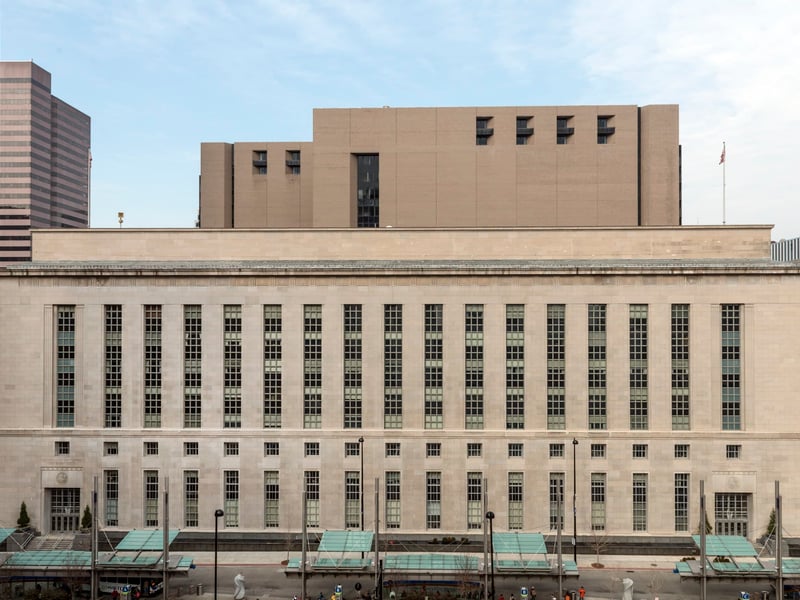
CINCINNATI (CN) — A Kentucky law banning some sex offenders from using aliases on social media sites does not violate the First Amendment, a county attorney from the commonwealth of Kentucky argued Wednesday before an appeals court panel.
Kentucky Senate Bill 249 requires people convicted of a sex crime involving a minor to use their full legal names on all social media platforms. The Republican Legislature passed the bill, which was signed into law by Democratic Governor Andy Beshear in 2024.
One such offender claims the law violates his First Amendment right to anonymous speech and is overly broad, an argument that held significant weight in July 2024 with U.S. District Judge Greg Stivers, an appointee of Barack Obama.
Although the anonymous plaintiff who filed the lawsuit in federal court was denied class certification, Stivers granted his request for an injunction. The narrow relief granted to plaintiff John Doe prevented enforcement of the law only in Daviess County, and did not apply to any other convicted sex offenders in the state.
Attorney John Heyburn, principal deputy solicitor general of Kentucky, argued Wednesday before the Sixth Circuit on behalf of Daviess County Attorney John Burlew.
Heyburn pointed out the challenge made by Doe was a facial one that required him to “establish a burden on the speech of non-parties.”
U.S. Circuit Judge Eric Murphy, a Donald Trump appointee, cited the 2017 U.S. Supreme Court decision in Packingham v. North Carolina , in which the court struck down that state’s social media ban for all convicted sex offenders.
“Is there a First Amendment right to use social media?” Murphy asked.
“Packingham was a total ban on social media where the balance between the government’s interest and the burden on speech was out of whack,” Heyburn answered. “There is a significant interest here to protect children in the ever-evolving internet age.”
“Everyone agrees that’s important, but doesn’t the law need to be tailored?” Murphy asked.
The attorney agreed and emphasized the law only applies to people convicted of sex crimes involving minors.
He said they don’t have to use their legal name as their username and can simply include it in their user profile.
Attorney Guy Hamilton-Smith from Washington, D.C., argued on behalf of John Doe and took issue with that interpretation.
“S.B. 249 is a categorical ban on one category of protected speech, the facial analysis is very straightforward,” he told the court. “It simply imposes massive burdens on sex offenders, and our overbreadth argument assumes injuries to third parties.”
Murphy asked about the sex offenders’ ability to include their legal names only within their user profiles, but Hamilton-Smith quickly dismissed that idea.
“It is a distinction without difference,” he said. “On social media, people click through to the profile, and there it is.”
The attorney reiterated his client’s First Amendment protections were spelled out in the Packingham decision, in which the court held free speech rights apply to the “modern town square” that is social media.
“The First Amendment safeguards choice. By not speaking on a certain day, sex offenders don’t forfeit their First Amendment right to speak,” Hamilton-Smith said.
Stivers, the federal judge who issued the initial injunction, homed in on free speech in his opinion: “Kentucky may criminalize the use of social media platforms to commit sexual and enticement crimes against minors, but may only do so consistent with the First Amendment.”
“Requiring Doe and other persons on the Kentucky Sex Offender Registry to use their full legal names for all communications on social media platforms impermissibly infringes upon their First Amendment rights because the law mandates the use of a full legal name for all communications in those forums — not just the targeted danger — and such conduct is also prohibited by other statutes,” he concluded.
Hamilton-Smith asked the court to expand the scope of the injunction granted by Stivers to include all of Kentucky, pointing out that his client could be arrested if he violates the law outside of Daviess County.
In his rebuttal, Heyburn requested the injunction be vacated, and defended the law as “exceptionally important and narrowly tailored.”
Senior U.S. Circuit Judge Julia Smith Gibbons and Senior U.S. Circuit Judge Helene White, both George W. Bush appointees, also sat on the panel.
No timetable has been set for the court’s decision.
 Follow @kkoeninger44
Subscribe to our free newsletters
Our weekly newsletter Closing Arguments offers the latest about ongoing trials, major litigation and rulings in courthouses around the U.S. and the world, while the monthly Under the Lights dishes the legal dirt from Hollywood, sports, Big Tech and the arts.