
 Search Articles


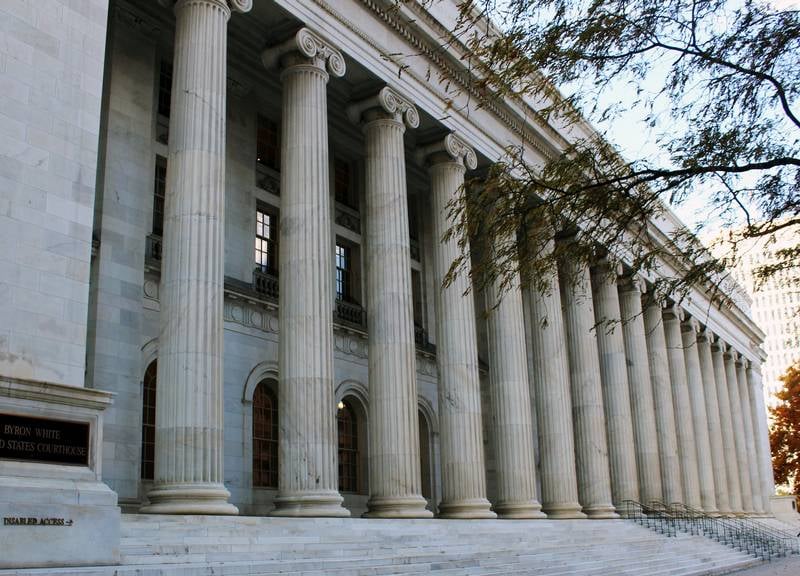
DENVER (CN) — Two former Kansas City police detectives on Thursday asked the 10th Circuit Court of Appeals to reverse a lower court’s denial of qualified immunity for the investigation that led to the wrongful conviction of Olin Coones in 2009.
“It’s the defense’s position that there was probable cause, that it existed at the time of his arrest and never went away,” said attorney David Cooper on behalf of the former Detectives Angela Garrison and William Michael. The Kansas City detectives investigated the deaths of Kathleen and Carl Schroll in 2008.
On April 7, 2008, Kathleen Schroll called her mother around 2 a.m., saying “Pete” was going to kill Carl and cover his tracks. The mother told her son, who called 911, sending detectives to the Kansas City home to find the couple dead.
Investigators immediately focused in on Olin “Pete” Coones as the main suspect. A first jury convicted Coones of first-degree murder in January 2009. Following the revelation of delays in prosecutors providing evidence to the defense, a second jury convicted Coones in December 2009.
However, a few key pieces of missing evidence misled the jury, Coones’ attorneys argue, including the fact that gunshot residue was only found on Kathleen Schroll’s dominante hand, along with Detective Michael’s testimony that he didn’t see Coones’ van when he initially went by the home, even though another witness supported Coones’ claims that the van had been blocked in behind the house all night in a blind spot.
Initial investigators also overlooked evidence calling into question the murder victim’s credibility. In the years leading up to her death, Kathleen Schroll had stolen money from Coones’ elderly father while caring for him as a housekeeper. Schroll then falsely told family members Coones was stalking her while she embezzled money from the bank where she worked.
Coones died just 108 days after his release. He had been incarcerated for 12 years. His wife, Deirdre, sued the county on Nov. 3, 2022. Senior U.S. District Judge Julie Robinson granted summary judgment to several of the named defendants but denied qualified immunity to Garrison and Michael on claims of fabrication of evidence, suppression of exculpatory evidence and malicious prosecution.
In light of the additional evidence, however, Cooper maintains that “it does not make the probable cause go away.”
U.S. Circuit Judge Carolyn McHugh disagreed with the Topeka-based attorney.
“The view of the district judge is that the additional evidence would have called into question Kathleen’s credibility,” the Barack Obama appointee said.
While Cooper argued there was no evidence detectives had been reckless in their initial investigation, George W. Bush-appointed U.S. Circuit Judge Timothy Tymkovich suggested that was a jury question.
In response, the Coones family attorney, Russell Ainsworth, provided an answer.
“Probable cause is a quintessential jury question," Ainsworth said. “It’s a complex question that requires weighing of the evidence.”
Ainsworth, who practices with Chicago firm Loevy & Loevy, also highlighted the evidence that weighed against Coones as a suspect, including the fact that there was no sign of forced entry at the Schroll home and that the murder weapon belonged to Kathleen.
“Mr. Coones was a 50-year-old guy with no criminal history; a reasonable jury could find probable cause had dissipated,” Ainsworth said.
Obama-appointed U.S. Circuit Judge Gregory Phillips rounded out the panel, which opted to meet remotely at the last minute due to the uncertainty posed by the government shutdown.
The panel did not indicate when or how it would decide the case.
 Follow @bright_lamp
Subscribe to our free newsletters
Our weekly newsletter Closing Arguments offers the latest about ongoing trials, major litigation and rulings in courthouses around the U.S. and the world, while the monthly Under the Lights dishes the legal dirt from Hollywood, sports, Big Tech and the arts.