Search Articles


WASHINGTON (CN) — The Supreme Court on Tuesday threw out a lawsuit from Chinese nationals seeking to hold a California-based company liable over claims it helped the Chinese Communist Party subject them to brutal human rights abuses.
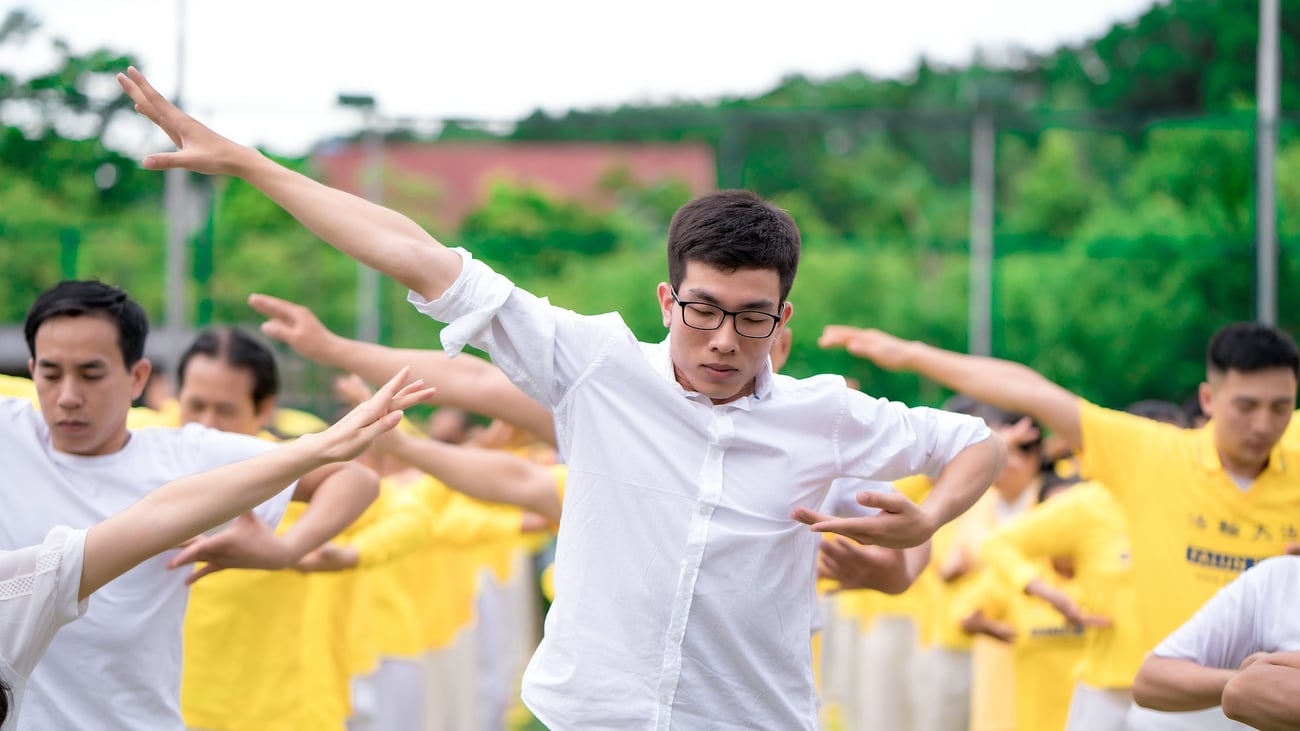
Members of the Falun Gong religious movement say Cisco Systems contracted with the Communist Party to create the “Golden Shield,” a multitiered surveillance system used to target, detain and torture religious minorities.
They argued the Alien Tort Statute and the Torture Victim Protection Act create a legal pathway to address such injustices when American companies participate in violations of international law.
To bring a lawsuit in a U.S. court, the nationals would need a cause of action. The Alien Tort Statute gave federal courts original jurisdiction for civil actions by foreign nationals committed in violation of international law.
But in a 6-3 opinion, the high court majority held that asserting such authority would intrude on both Congress’ prerogative to create rights of action and the power of the executive and legislative branches to direct the nation’s foreign policy.
In 2004, the Supreme Court’s ruling in Sosa v. Alvarez-Machain identified circumstances when foreign nationals could bring these cases. But in recent years, the Supreme Court has strictly limited when such suits can be brought.
“Today, we close the door that Sosa cracked and hold that courts may not create new causes of action for violations of international norms,” Justice Amy Coney Barrett wrote.
The Donald Trump appointee said Sosawas overly optimistic in predicting a narrow class of cases in which courts could create new rights of action to remedy international law violations, without infringing on Congress or creating detrimental foreign policy consequences.
“We also hold that the Torture Victim Protection Act of 1991, which contains an express cause of action, does not provide for aiding-and-abetting liability,” Barrett added.
In their suit, the Falun Gong members claimed Cisco Systems aided and abetted violations of international law, including torture, forced labor, arbitrary detention, cruel treatment, extrajudicial killings and forced disappearances.
While the act allows certain victims to recover damages from perpetrators, it does not encompass any forms of assistance from others who are one or more steps removed from the torturer, Barrett wrote.
The majority said they recognize that such cases frequently involve heinous and inhumane acts, but they can only be redressed by the other branches of government; they said they declined to distort the Constitution’s allocation of powers to include U.S. courts.
Chief Justice John Roberts, a George W. Bush appointee; justices Clarence Thomas and Samuel Alito, both George H.W. Bush appointees; and justices Neil Gorsuch and Brett Kavanaugh, both Donald Trump appointees, joined the opinion.
Justice Sonia Sotomayor filed a sprawling dissent, joined in part by Justices Elena Kagan, a Barack Obama appointee, and Justice Ketanji Brown Jackson, a Joe Biden appointee.
Sotomayor, also appointed by Obama, emphasized the severity of the Chinese nationals’ claims and said such violations of international law should be addressed on a case-by-case basis, rather than a categorical one.
She warned that the majority’s opinion will shut the doors on virtually every future litigant seeking redress for a violation of international law under the Alien Tort Statute.
“It also slams the door in the faces of victims of horrific mistreatment without giving any reason to think that Congress, whom the court purports to respect, would have wanted to do so. The majority errs at each turn,” Sotomayor wrote.
Although Sosa stressed that courts must act “with great caution” when finding implied causes of action, it left the door open to doing so, Sotomayor wrote.
She noted that the U.S. government has already consistently and publicly condemned China’s persecution of Falun Gong members, thus hindering the argument that allowing a private suit against an American company would affect relations with China.
Additionally, Sotomayor cited opinions of Thomas Jefferson, William Bradford and other early American statesmen she said confirm that the law allows civil suits for violations of international law even without any express causes of action.
California-based attorney Paul Hoffman, who represents the Chinese nationals, called for legislation to protect people like his clients.
“It is up to Congress to act so that victims of serious human rights violations at the hands of U.S. corporations may hold those corporations accountable in U.S. courts under the Alien Tort Statute,” Hoffman said.
“The founding generation would have been shocked that this court held the statute to be a dead letter when only 20 years ago the same court held the opposite. The victims of egregious human rights violations should be able to sue U.S. corporations who aid and abet those violations in U.S. courts,” said Hoffman, of Schonbrun, Seplow, Harris, Hoffman & Zeldes.
 Follow @Megwiththenews
Subscribe to our free newsletters
Our weekly newsletter Closing Arguments offers the latest about ongoing trials, major litigation and rulings in courthouses around the U.S. and the world, while the monthly Under the Lights dishes the legal dirt from Hollywood, sports, Big Tech and the arts.