
 Search Articles


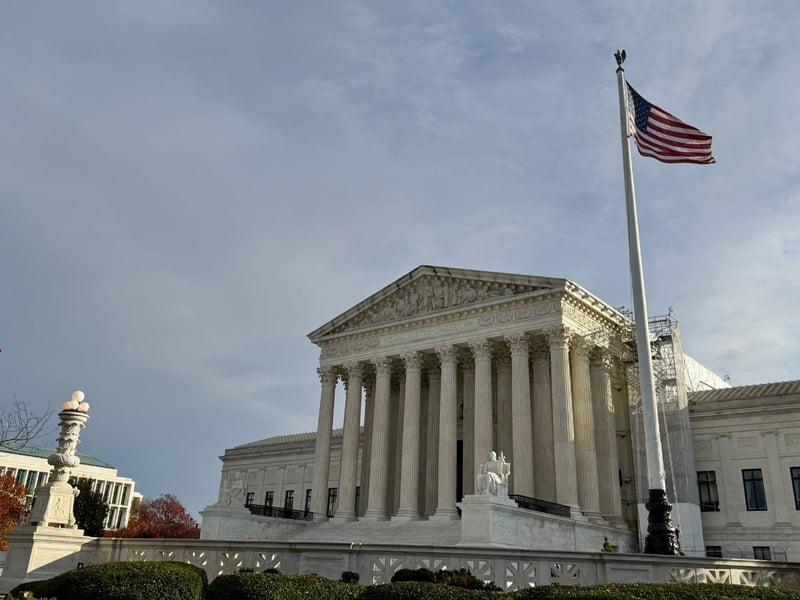
WASHINGTON (CN) — A trio of bank robbers should benefit from sentencing relief, the Supreme Court ruled on Thursday, allowing the men to take advantage of a criminal justice reform law passed after their convictions.
Tony Hewitt, Corey Deyon Duffey and Jarvis Dupree Ross committed a slew of bank robberies in 2008, stealing over $350,00 from several financial institutions. While planning an armed robbery in Garland, Texas, the men and other associates were arrested.
The men were convicted on various charges, including conspiracy, bank robbery, kidnapping and carrying a firearm during a crime of violence. A court sentenced each of them to a term of over 300 years, imposing a minimum 25-year sentence for all but one charge.
Several of their convictions were vacated on appeal, leading to resentencing hearings for the men. However, by that time, Congress had passed the First Step Act, which eliminated the harsh mandatory minimum penalty they faced.
Yet, a Fifth Circuit panel declined to vacate their sentences, finding that the act excludes any defendant who was sentenced before its enactment date, even if their sentence was later vacated.
But the high court majority disagreed. In their interpretation of the statute, they held that the act’s more lenient penalties should apply to the men’s vacated convictions.
“A criminal defendant whose conviction has been vacated, for example, is to be treated going forward as though he were never convicted,” Justice Ketanji Brown Jackson wrote in the opinion.
“By operation of legal fiction, the law acts as though the previous conviction never occurred,” the Joe Biden appointee added.
Jackson emphasized why the sentencing reform bill was created and how it applies to all first-time offenders who have yet to be resentenced. Before the First Step Act’s enactment, several federal judges and institutional stakeholders criticized the stacking system as imposing “excessively severe and unjust sentences” for first-time offenders, particularly in non-violent cases.
The American Civil Liberties Union, which joined the case as amicus curiae, applauded the decision.
“For many people facing extreme sentences of 50-plus years, applying the First Step Act can be the difference between dying in prison and having a chance to return home,” Emma Andersson, deputy director of the ACLU’s Criminal Law Reform Project, said.
“The First Step Act was a landmark achievement in federal sentencing reform, and this decision ensures that it will mitigate extreme and outdated sentencing laws for more people. The ACLU was vocal about supporting the First Step Act when it was passed, and we continue to advocate for the law to be fully implemented as Congress intended,” Andersson added.
However, four of the justices were at odds with what they called a “boundless interpretation” and dissented from the majority.
“Animating the court’s atextual interpretation is a thinly veiled desire to march in the parade of sentencing reform. But our role is to interpret the statute before us, not overhaul criminal sentencing,” Justice Samuel Alito wrote.
The George W. Bush appointee was joined by Justices Brett Kavanaugh, Amy Coney Barrett and notorious dissenter Clarence Thomas.
In their view, the act should only be applied to “pending” cases and that the men’s 2012 sentences remained in full force at the time of its enactment. They also clashed with the majority’s opinion that vacatur of a defendant’s predicate conviction implies the conviction “never occurred.”
During resentencing, after a sentence is vacated, a court must apply the sentencing guidelines that were in effect on the date of the original sentencing, Alito wrote.
“The court ignores Congress’ intention to afford only limited retroactive relief to certain offenders under the First Step Act,” Alito wrote. “Instead, the court embraces an interpretation that has no limiting principle and affords petitioners a windfall. That is an indefensible result based on indefensible reasoning.”
 Follow @Megwiththenews
Subscribe to our free newsletters
Our weekly newsletter Closing Arguments offers the latest about ongoing trials, major litigation and rulings in courthouses around the U.S. and the world, while the monthly Under the Lights dishes the legal dirt from Hollywood, sports, Big Tech and the arts.