Search Articles


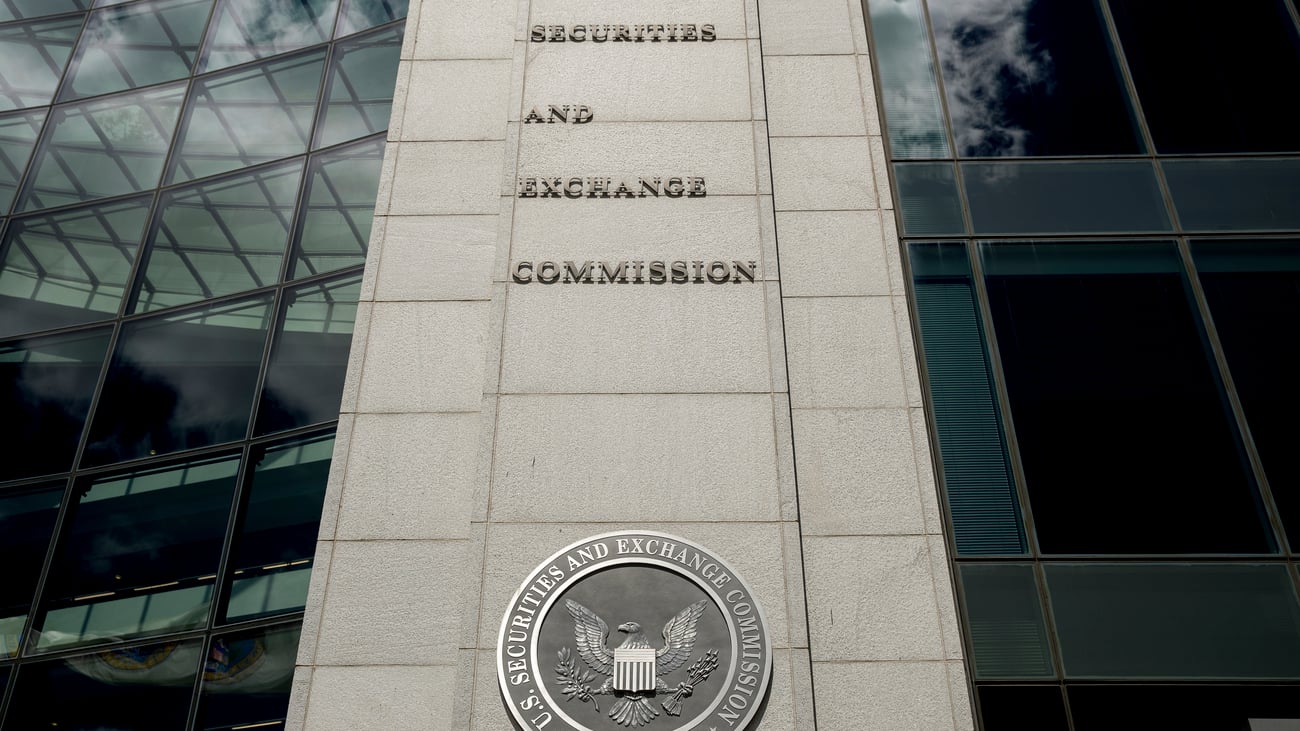
WASHINGTON (CN) — The Supreme Court ruled Thursday that the Securities and Exchange Commission can force securities law violators to surrender unlawful profits without proving investors suffered financial losses.
Under a nearly century-old law, the SEC can ask federal courts to strip wrongdoers of any unjust enrichment obtained through securities violations. Securities fraudster Ongkaruck Sripetch tried to fend off such a suit by challenging the agency’s authority to require repayment without drawing a direct line to the victims harmed by his scheme.
He argued that without that link, the agency was acting outside its statutory authority. The justices disagreed, finding such a showing was not necessary to secure profit-based remedies.
In a unanimous decision, the court held that the government did not have to prove victims of securities law violations have suffered a loss to force a fraudster to pay back any illicit gains.
“A victim seeking disgorgement of a defendant’s unlawful gains does not need to prove he has ‘suffered a corresponding loss or,’ indeed, ‘any loss,’” Justice Neil Gorsuch, a Donald Trump appointee, wrote. “Instead, when a victim ‘has suffered an interference with protected interests,’ he may be entitled to ‘restitution of [the defendant’s] wrongful gain’ from that interference even when he has suffered ‘no measurable loss whatsoever.’”
Sripetch was involved in fraud schemes involving penny-stock companies — low-priced, high-risk equity securities without a well-developed market. The government claimed he sold unregistered stocks and engaged in manipulative “match” trading.
A court ordered Sripetch to pay over $2 million in disgorgement — the repayment of ill-gotten gains — and an additional $1 million in prejudgment interest.
Sripetch urged the justices to overturn the disgorgement order, claiming the SEC had to show investors suffered pecuniary losses.
Gorsuch said that requirement would violate traditional equitable principles. Courts have long issued remedies to deprive wrongdoers of their net profits, he wrote. Such calculations are measured by a wrongdoer’s illicit gains, not a victim’s losses.
“The point of the remedy is for ‘the defendant…to give to the plaintiff the amount by which he has been enriched’ from the wrongful invasion of the plaintiff ’s legally protected interests, not to compensate the plaintiff for a financial loss,” Gorsuch wrote.
Former SEC Division of Enforcement Associate Director Gerald Hodgkins said the court’s ruling bucked a trend of earlier decisions narrowing the circumstances under which the SEC can obtain the remedy.
“The SEC perhaps can thank Congress for this outcome because its 2021 codification of disgorgement in SEC actions as an equitable remedy seemed to be the difference maker for the court,” Hodgkins, now an attorney with Covington, said following the ruling.
The court declined to address whether the government must direct unlawful profits to specific victims or whether it can keep the awards for itself. Gorsuch said the court will likely need to address that question in a future case.
Justice Clarence Thomas, a George H.W. Bush appointee, penned a concurring opinion stating that the court should also eventually consider whether disgorgement has become a legal remedy that would entitle defendants to a jury trial under the Seventh Amendment.
 Follow @KelseyReichmann
 Follow @kelseyreichmann.bsky.social
Subscribe to our free newsletters
Our weekly newsletter Closing Arguments offers the latest about ongoing trials, major litigation and rulings in courthouses around the U.S. and the world, while the monthly Under the Lights dishes the legal dirt from Hollywood, sports, Big Tech and the arts.
Additional Reads
 Outrage in France as body found in missing girl case June 4, 2026