
 Search Articles


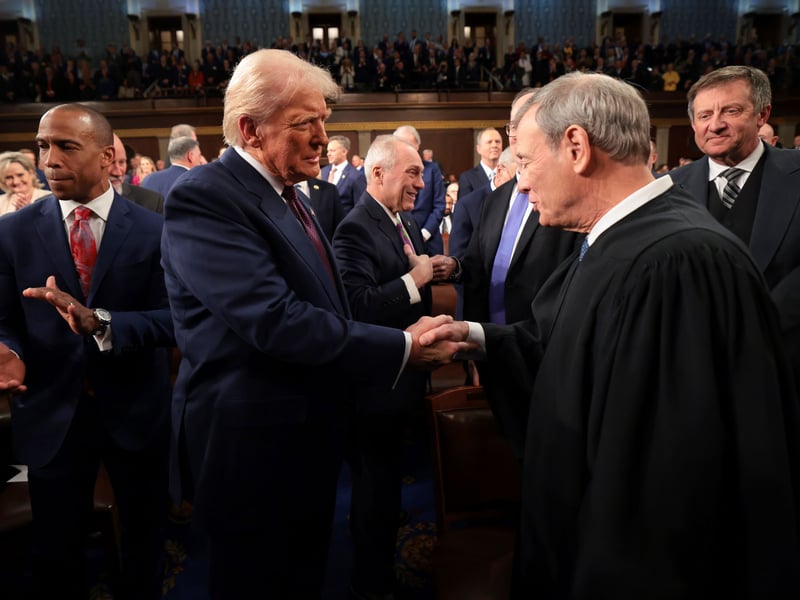
WASHINGTON (CN) — After high-profile emergency orders this week, court watchers are warning of an impending doom loop on the Supreme Court’s shadow docket, locking the justices into an endless cycle of rushed and incomplete rulings from behind the curtain.
President Donald Trump has filed 11 emergency applications at the Supreme Court in just the first few months of his second term — already prevailing in three disputes.
By agreeing to take these emergency cases, legal experts worry that the court is rushing decisions on complex legal questions — creating a feedback loop where more and more important and high-stakes decisions are decided without a full public airing of arguments. Unlike typical merits appeals, emergency applications can be decided through entirely secretive deliberations where the justices do not have to tell the public how they voted or why.
“All they’re doing at the moment is creating more uncertainty,” said Paul Daly, a law professor at the University of Ottawa. “It’s creating a sort of a doom loop, a feedback loop, where they’re going to get more and more of these cases because the government knows relief is available.”
This term, the justices have provided some rationale for their emergency decisions. But critics of the shadow docket have found those explanations wanting.
Steve Vladeck, a law professor at Georgetown University and author of “The Shadow Docket,” said recent legal opinions from the high court have left much to be desired.
“It’s wonderful to see the Court finally committing to writing in these cases," Vladeck wrote in a post in his newsletter One First. Still, “it would be even better if the opinions it produced tried to persuade and not just rationalize.”
This week, the strongest rebuke of the court’s shadow docket didn’t come from law professors or pundits but from the Supreme Court itself.
“With more and more of our most significant rulings taking place in the shadows of our emergency docket, today’s Court leaves less and less of a trace,” Justice Ketanji Brown Jackson wrote. “But make no mistake: We are just as wrong now as we have been in the past, with similarly devastating consequences. It just seems we are now less willing to face it.”
The Biden appointee dissented when her conservative colleagues ruled that Trump could use wartime powers to deport migrants to a Salvadorian megaprison.
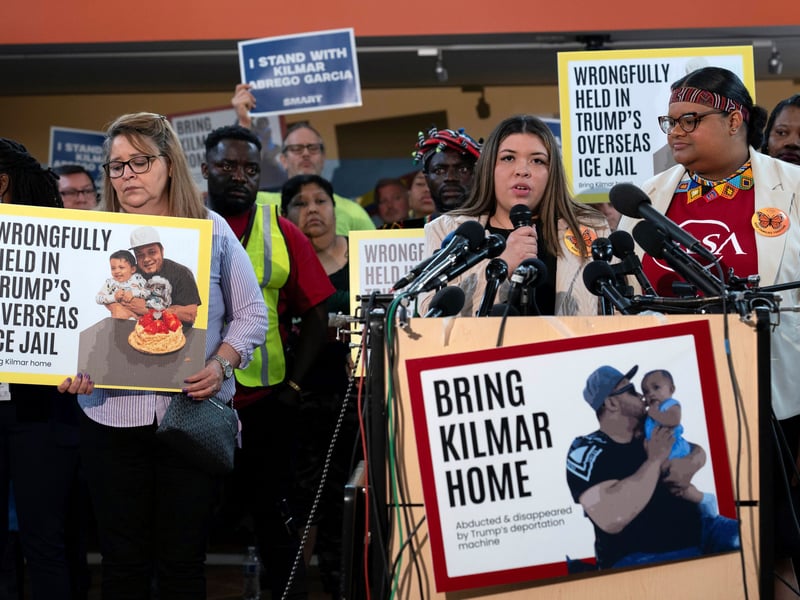
Even with the court’s newfound and welcomed tendency to issue opinions to explain its emergency decisions, the justices’ ruling Thursday on a mistakenly deported Maryland man left open many questions.
A federal judge ordered the Trump administration to return Kilmar Abrego Garcia to the U.S. by midnight Monday. Chief Justice John Roberts, a George W. Bush appointee, temporarily paused that order. The Supreme Court’s vague ruling called for the administration to “facilitate” Abrego Garcia’s release while questioning whether the lower court has the authority to “effectuate” his return.
The White House has waffled on the implications of that language. When asked whether El Salvador’s president return Abrego Garcia back to the U.S. during a planned visit next week, the White House suggested that the court’s order did not require such action.
“The Supreme Court last night made their ruling very clear," Press Secretary Karoline Leavitt said. “It is the administration’s responsibility to facilitate the return, not to effectuate the return.”
Eric Segall, a law professor at the Georgia State College of Law, said the justices’ order didn’t go far enough because there’s no guarantee their central command would be upheld.
“The court needs to be much stronger about one basic idea, just one: You can’t take people off the streets without due process,” Segall said. “They did say it but with no teeth. No teeth at all — and I’m terrified they’re gonna start doing this to citizens.”
In emergency appeals, justices must quickly answer technical legal questions.
This inherent pressure has only been amplified by Trump’s attacks on the judiciary and judges who rule against him.
“I’m not sure how we deal with an administration that we don’t expect to act in good faith in response to court orders,” Segall said. “That’s kind of a new place for us.”
Some legal experts speculate that the court could be proactively trying to avoid strongly rebuking Trump so as to not set off a constitutional crisis, but that strategy has its risks too, Daly said.
“That’s a dangerous game to be playing,” Daly said. “When you’re a court, you have very limited ability to speak. And sometimes when courts try to play political games, they end up in more trouble than they were in to begin with.”
Segall said it’s hard for legal scholars to know if the justices are making the right strategic moves because the court is in uncharted territory. He said people tend to forget the justices are human beings who also have to make hard decisions in stressful times.
“They do come out of a marble temple on a hill," he said, “but they’re not gods.”
 Follow @KelseyReichmann
 Follow @kelseyreichmann.bsky.social
Subscribe to our free newsletters
Our weekly newsletter Closing Arguments offers the latest about ongoing trials, major litigation and rulings in courthouses around the U.S. and the world, while the monthly Under the Lights dishes the legal dirt from Hollywood, sports, Big Tech and the arts.