Search Articles


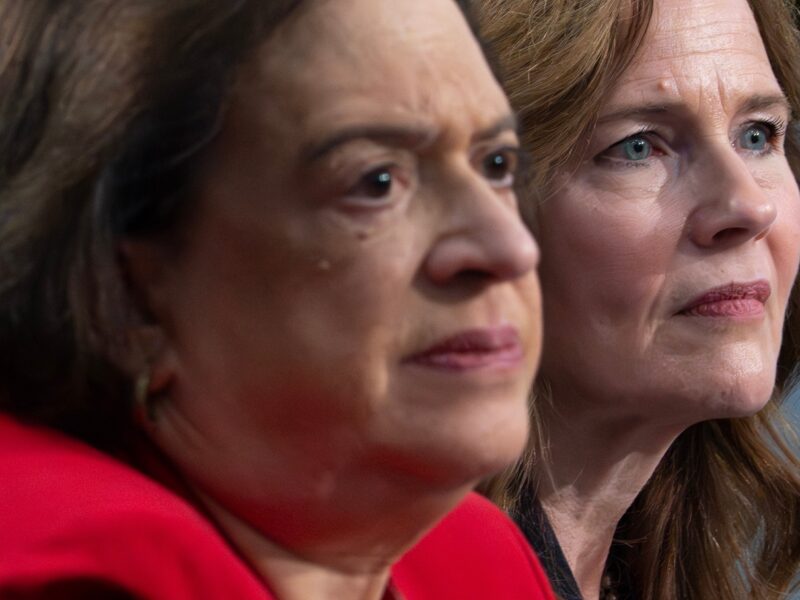
WASHINGTON (CN) — In a rare moment on Capitol Hill, a pair of Supreme Court justices on Tuesday implored congressional appropriators to greenlight millions more in government funds for high court security, including expanded personal protection for the justices themselves.
The unusual testimony from members of the Supreme Court bench — the first such occasion since 2019 — proved another opportunity for the justices to sound the alarm over an increased threat environment against the court that has personally affected several jurists and their families.
Speaking to the House Appropriations Committee during a hearing Tuesday morning, Justice Elena Kagan said Supreme Court police expect a 38% annual increase in threats to the high court in the upcoming year, up from a 25% increase in such threats the year prior.
“For some of us, those threats have come very close, and all of us live with the knowledge that they may again materialize,” said Kagan, a Barack Obama appointee.
“Those statistics sound abstract but being on the receiving end of them is not,” added Justice Amy Coney Barrett, who joined Kagan before House lawmakers.
Several of the Supreme Court’s nine justices have been targeted by bad and potentially violent actors in recent years. Following a leak of the court’s controversial 2022 decision rolling back abortion rights, Justice Brett Kavanaugh was the target of an assassination attempt. The would-be assassin was sentenced to eight years in prison in 2025.
And in May, Barrett was the target of a “swatting” attack — a hoax call to law enforcement aimed at sending armed police to a person’s house.
Barrett, a Donald Trump appointee, recounted the incident during her testimony. She recalled how one of her teenage sons had opened the door for police responding to calls about “gunshots and raised voices” at her Virginia home.
Following the leak of the decision in the case Dobbs v. Jackson Women’s Health Organization, Barrett said she was given a bulletproof vest by her security detail and struggled to explain its importance to her children.
“I didn’t expect that performing this service was going to put me in the position of explaining to my children what a bulletproof vest was and why I had to wear one,” Barrett told lawmakers.
Other members of the bench have also been targeted with suspicious, anonymous packages bearing the name of U.S. District Judge Esther Salas’ son, the justice said. Salas in 2020 was the intended target of an assassination attempt at her New Jersey home. A gunman who approached her house instead shot and killed her son, Daniel Anderl.
“I think the message on the deliveries being sent is clear,” Barrett said.
In its 2027 budget request, the Supreme Court has requested $228 million in funding, a nearly $20 million increase from the previous fiscal year. Part of that budget hike comes in the form of an $18 million line item for court security programs. Within that program, the high court requested nearly $15 million to expand personal protection for the justices and to hire additional security officers at One First Street.
The Supreme Court’s police force currently handles most security functions for the justices — a function previously performed by the U.S. Marshals Service. But Barrett told lawmakers on Tuesday that the court still relies partly on outside contractors for home security.
“The goal is to be able to staff so that we can entirely absorb residential security within our office,” she said, adding the increased security budget for 2027 would not completely cover that transition but the court was “getting closer” to its goal of managing the justices’ security entirely in-house.
The Supreme Court has requested roughly $2 million for the upcoming fiscal year to establish an off-site residential security office.
Though court security was a central theme of the justices’ unusual appearance before congressional appropriators, lawmakers seized the opportunity to press Kagan and Barrett on some other key issues — namely, the court’s increased use of the emergency docket, or shadow docket, to issue temporary rulings on some cases.
Facing questions from Maryland Representative Steny Hoyer, Barrett opined that litigants before the Supreme Court “have long had the ability to seek interim relief” but acknowledged that there had been changes in the “volume and the nature” of such requests.
“The court is doing its best to adapt and respond,” she told Hoyer.
Kagan took issue with the docket’s colloquial designation as a “shadow” docket, calling it “a terminology nightmare.” She added there were “definitely” questions about when the justices should use its emergency authority and what standards should be applied, but that the Supreme Court has increasingly explained its rulings from the emergency docket.
“The reason I think it’s probably not appropriate — at least not now — to call it a shadow docket is because we have done, I think, a better job in the recent past of, where appropriate … explaining ourselves at least to a moderate degree.”
 Follow @BenjaminSWeiss
Subscribe to our free newsletters
Our weekly newsletter Closing Arguments offers the latest about ongoing trials, major litigation and rulings in courthouses around the U.S. and the world, while the monthly Under the Lights dishes the legal dirt from Hollywood, sports, Big Tech and the arts.