Search Articles


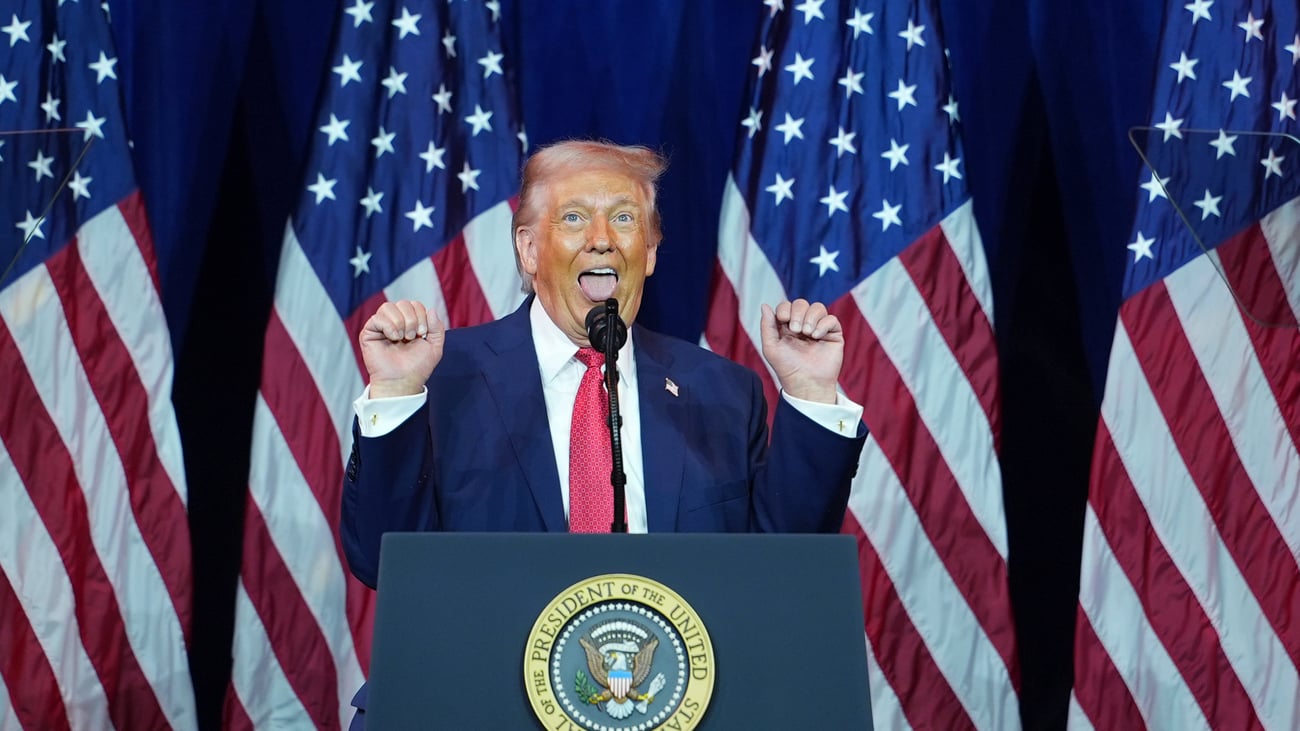
WASHINGTON (CN) — Marking a monumental expansion of executive power, the Supreme Court on Monday scrapped nearly a century of precedent to give President Donald Trump sweeping influence over the federal government.
In a 6-3 ruling, the conservative majority found Trump had authority to fire executive board commissioners, overturning a landmark decision preserving the independence of regulatory agencies.
“Subordinates who exercise the president’s power are subject to removal by him,” Chief Justice John Roberts, a George W. Bush appointee, wrote for the court. “Then, and only then, can they remain accountable to the president, and the president to the people.”
In dissent, the three liberal justices admonished their colleagues for shedding “any pretense of judicial modesty” and giving presidents “a power unknown even to the English crown against which the founders revolted.”
“Today, the court discards that democratic regime in favor of one that distorts the structure of government to fit the majority’s theory of unitary, total executive control. The result is a president who emerges with far greater power than ever before," Justice Sonya Sotomayor wrote. She is a Barack Obama appointee.
Humphrey’s Executor v. United States has limited presidential influence over regulatory commissions since 1935, preventing board members from removal for partisan reasons. Trump pushed for an end to Humphrey’s dominance when the landmark precedent became a roadblock to his federal government overhaul.
But on Thursday, the Supreme Court ended its reign, holding that the ruling had not withstood the test of time.
“If anything more is left of Humphrey’s, we overrule it,” Roberts wrote. “Humphrey’s has for decades been a result in search of a rationale. As we have often said, stare decisis is not an ‘inexorable command,’ and is at its weakest in constitutional cases, where only we may readily fix our own mistakes.”
Stare decisis, or “let the decision stand,” is a foundational concept for legal systems in countries including the U.S. and United Kingdom, which rely on precedent.
Last year, the conservative majority allowed Trump to ignore the 90-year-old ruling to terminate Rebecca Slaughter, a Democratic member of the Federal Trade Commission.
The FTC was created by Congress more than a century ago as a bipartisan federal agency responsible for protecting consumers by combatting unfair, deceptive and anticompetitive business practices.
Regulatory commissions like the FTC operate under the executive branch. The president appoints board members who require Senate confirmation. Members then maintain for-cause removal protections, creating limited circumstances for their termination, such as misconduct.
But Trump argued that allowing the Democratic commissioner to remain in her seat interfered with his executive authority.
In Humphrey’s, the court determined the FTC is disconnected from the executive branch. Trump argued the assessment hasn’t withstood the test of time, stating the FTC and similar regulatory boards issue binding rules, adjudicate claims when businesses or individuals violate the law, investigate wrongdoing and bring civil suits seeking fines.
Trump himself nominated Slaughter to serve as a Democratic commissioner in 2018. Nominated again last year by former President Joe Biden, her appointment was not set to expire until September 2029.
A long time coming
Proponents of the unitary executive theory — a legal doctrine embracing an expansive version of the Constitution’s Article 2 — argue Humphrey’s created a well of unchecked bureaucratic power.
The Constitution requires the president “take care that the laws be faithfully executed.” Trump says removal power is an indispensable tool of control presidents must maintain to prevent transferring executive power to a “headless fourth branch.”
Over the last two decades, the Roberts court has chipped away at Humphrey’s, but the landmark ruling seemed headed for the graveyard after the justices gave Trump permission to terminate independent officials heading the National Labor Relations Board, Merit Systems Protection Board and Consumer Product Safety Commission.
With Humphrey’s officially overturned, the court held that the FTC’s for-cause removal provision violated the separation of powers. Roberts explained that the agency was tasked with authority squarely within the president’s constitutional role.
“The FTC unquestionably exercises executive power, and must therefore be controlled by the chief executive, in whom such power is vested,” Roberts wrote. “It follows, then, that Slaughter served as the president’s subordinate at the FTC — and that the president was entitled to cut her tenure short.”
Roberts said executive branch officers exercise the president’s power, not their own, so they must remain responsible to him. While the president is not all powerful, Roberts said, he is “not impotent either.”
“He and he alone is vested with ‘[t]he executive power’ of the United States,” Roberts wrote. “To ‘discharg[e] the duties of his trust,’ the president must have the assistance of officers he can trust.”
Sotomayor said the high court’s embrace of a unitary executive branch came at the cost of the democratic regime.
“The result is a president who emerges with far greater power than ever before,” Sotomayor wrote. “It is a power, however, that neither the people, nor Congress, nor the Constitution bestowed upon him.”
Trump celebrated his win in a Truth Social post, claiming the confirmation of presidential power has been sought by presidents dating back to the 1930s.
“It is such an Honor to be the sitting President who won this Historic and Unprecedented Ruling, one of the most important ever given with respect to Presidential Powers,” Trump wrote.
Advocacy groups, however, worried the ruling would turn agencies into conduits for personal political vendettas by any sitting president.
“Instead of taking actions to benefit consumers, the FTC and other formerly independent agencies will face more pressure to focus their attention on companies or activities the president doesn’t like — as we’ve already seen with the FTC’s actions targeting trans youth, the FCC’s threats to Disney, and both agencies’ recent campaigns against ‘conservative bias,’” Alexandra Reeve Givens, president and CEO of Center for Democracy & Technology, said.
Ideological divide on presidential power
The majority and dissent sharply divide over the role of executive commissions. While the majority saw them as extensions of the presidency, the dissenters said these boards carried out government functions that should operate at a distance from partisan politics.
Sotomayor noted that executive agencies covered by the ruling manage nuclear energy, the security of the monetary supply and the safety of American workplaces, consumer products and chemical hazards.
“Ordinary Americans and regulated firms alike have organized their affairs understanding that some government decisions will depend not on political favoritism or partisan advantage (or at least not only on those considerations), but on expertise, adherence to law, judgment and the public good,” Sotomayor wrote.
More than undermining those interests, Sotomayor said her colleagues had reshaped the government by shifting tremendous power into the president’s hands.
Sotomayor said the logic followed a “disconcerting trend” in the court’s cases prioritizing the justices’ views on how the government should operate.
“In this case, the court takes one of the oldest debates in American history and decides that the six justices in the majority, alone, ought to be the ones to settle it for all time,” Sotomayor wrote. “That decision does not just overrule precedent; it all but ignores that precedent exists. It does not just hamstring the political branches’ ability to respond to new challenges; it rewinds the clock nearly 150 years, holding that a common agency structure is, and always has been, forbidden.”
 Follow @KelseyReichmann
 Follow @kelseyreichmann.bsky.social
Subscribe to our free newsletters
Our weekly newsletter Closing Arguments offers the latest about ongoing trials, major litigation and rulings in courthouses around the U.S. and the world, while the monthly Under the Lights dishes the legal dirt from Hollywood, sports, Big Tech and the arts.