
 Search Articles


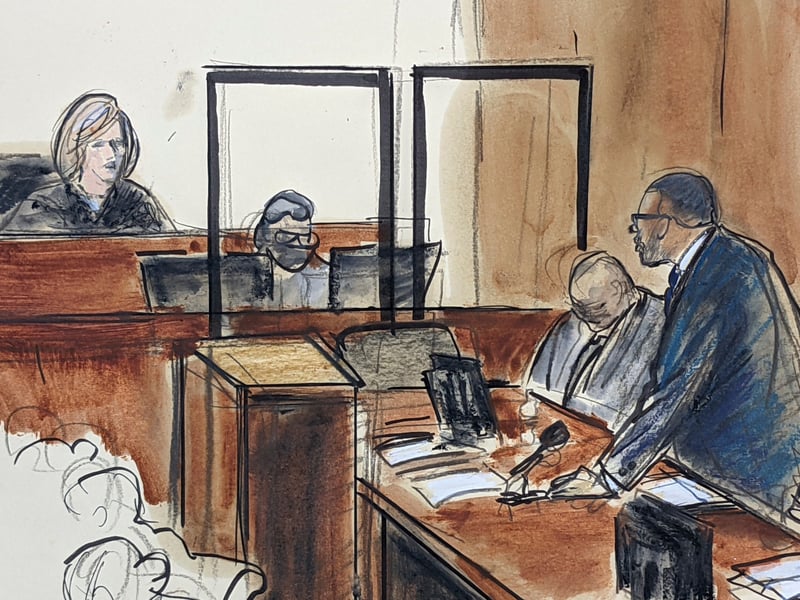
BROOKLYN (CN) — A New York jury convicted R. Kelly on Monday of running a career-spanning sex ring that included the late singer Aaliyah among scores of underage girls.
Kelly, 54, has been dogged by sexual abuse allegations dating back to the 1990s when his first hit song, “Bump N’ Grind,” spent a record-breaking 12 weeks at No. 1 on the Billboard Hot R&B Singles chart. The singer sat motionless, his eyes trained down, as the guilty verdict from a jury of seven men and five women was delivered on day two of deliberations in the Brooklyn federal courthouse. He nodded when U.S. District Judge Ann M. Donnelly commended his defense attorneys, after also giving kudos to prosecutors.
The conviction on all counts could mean life in prison for Kelly, who is scheduled to be sentenced next May.
In the top count — Kelly was charged with 14 acts violating federal anti-racketeering law — jurors found that the government proved all except for two kidnapping and Mann Act allegations pertaining to a woman who testified as Sonja that Kelly had sexually assaulted her in 2003 while she was drugged and unconscious. Kelly, whose full name is Robert Sylvester Kelly, was also charged and convicted of all eight counts against him under the Mann Act.
The 12 jurors said they each agreed with the verdict when Donnelly polled them. As they exited the room, at least four of them looked directly at Kelly, who wore a blue pinstriped suit, white dress shirt, light blue tie and glasses.
Kelly exited the room quickly after his verdict, escorted by suited U.S. marshals.
Defense attorney Deveraux Cannick said his team plans to appeal.
“Of course I’m disappointed with the verdict,” Cannick said while exiting the courtroom. “I think I’m even more disappointed with the prosecution bringing this case, given all the inconsistencies.”
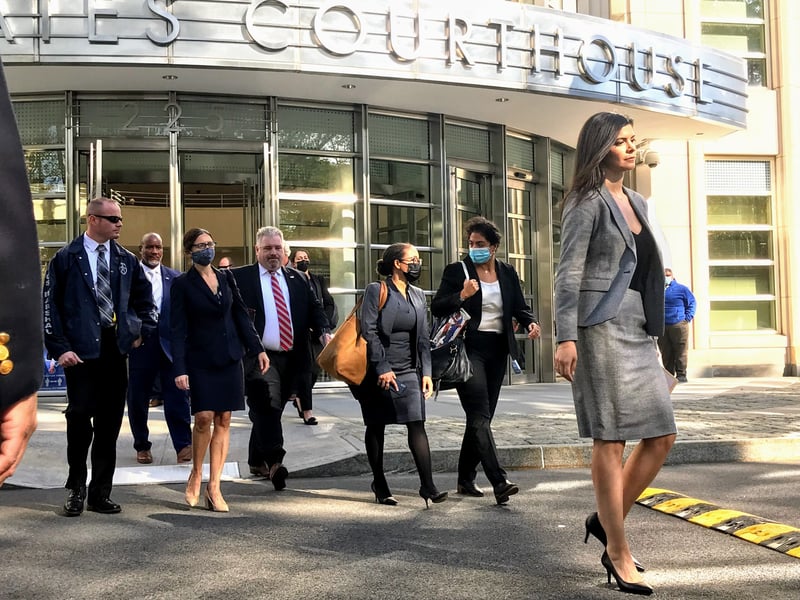
Acting U.S. Attorney Jacquelyn M. Kasulis addressed reporters outside the courthouse.
“Today’s guilty verdict forever brands R. Kelly as a predator, who used his fame and fortune to prey on the young, the vulnerable, and the voiceless for his own sexual gratification,” Kasulis said, “a predator who used his inner circle to ensnare underage teenage girls, and young women and men, for decades in a sordid web of sex abuse, exploitation and degradation.”
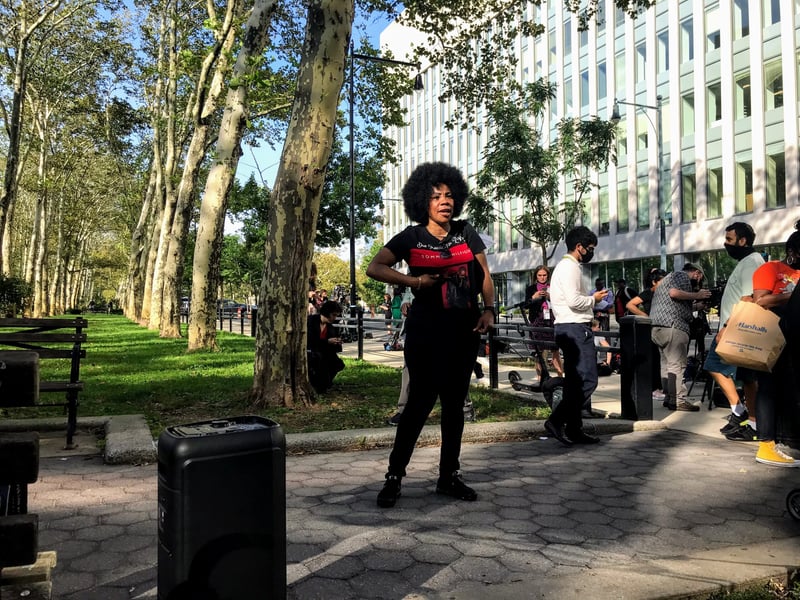
While Courthouse News was part of a small group of journalists allowed into the main courtroom Monday, the six-week trial was otherwise off-limits to press and the public due to the Covid-19 pandemic. Spectators watched from an overflow room, and a coterie of Kelly’s supporters also staged regular demonstrations outside the building. After Monday’s verdict, that display included one woman blasting “I Admit,” a 19-minute song from 2018 in which Kelly reacted to some of the longstanding sex-abuse allegations against him. The song came out a full 16 years after the Chicago Sun-Times began investigating Kelly upon receiving a sex tape that appeared to show the singer having sex with an underage girl and urinating on her. In 2008, Kelly was acquitted of 21 counts of child pornography in Chicago.
In the Eastern District of New York, five Jane Does and one man spoke on the witness stand about life under Kelly’s full control. The female victims said they had to ask Kelly or his associates for permission to eat or use the bathroom while staying with the singer at his home or studio. When out of the house, Kelly made them wear baggy clothes and face the wall to avoid eye contact with other men.
The singer made nearly constant videos of his sexual interactions, according to the testimony. He directed his girlfriends to have sex with each other and with men — sometimes strangers — with Kelly directing every move, even when the participants were unwilling.
Breaking Kelly’s rules, victims said, came with consequences that included physical and sexual abuse. One woman described brutal spankings that Kelly called “chastisements,” hard enough to leave bruises and tear the skin. The jury was shown a video in which Kelly spanked another victim witness identified as Anna.
To keep both victims and disgruntled employees quiet, Kelly ordered those close to him to write blackmail letters in which they would admit to stealing from him or falsely accuse family members of abuse. Witnesses read aloud from those letters during trial, and said Kelly had dictated every word of them.
Prosecutors said Kelly’s inner circle of assistants, runners, managers and friends helped him recruit women, girls and boys to engage in sex with the singer and each other. Former employees called to the stand described handing out Kelly’s phone number to prospects, and driving and booking travel for Kelly’s girlfriends, including those who provided dates of birth showing that they were underage.
Yet Kelly was charged alone in running an enterprise — one that the government said was not criminal in nature, but helped Kelly commit sex crimes.
“When someone commits a crime as part of a group, he’s more powerful, more dangerous,” Assistant U.S. Attorney Elizabeth Geddes said in her closing arguments. “The defendant was more than just part of the enterprise: He was its leader.”
Stephanie, another alleged victim to take the stand, told jurors that Kelly saw his musical abilities as a justification for having sex with minors.
“Even look at Jerry Lee Lewis. He’s a genius and I’m a genius,” Stephanie recalled Kelly saying, referring to the fact that rock and roll musician Lewis had married his third wife when she was 13 years old. “We should be allowed to do whatever we want. Look at what we give to this world.”
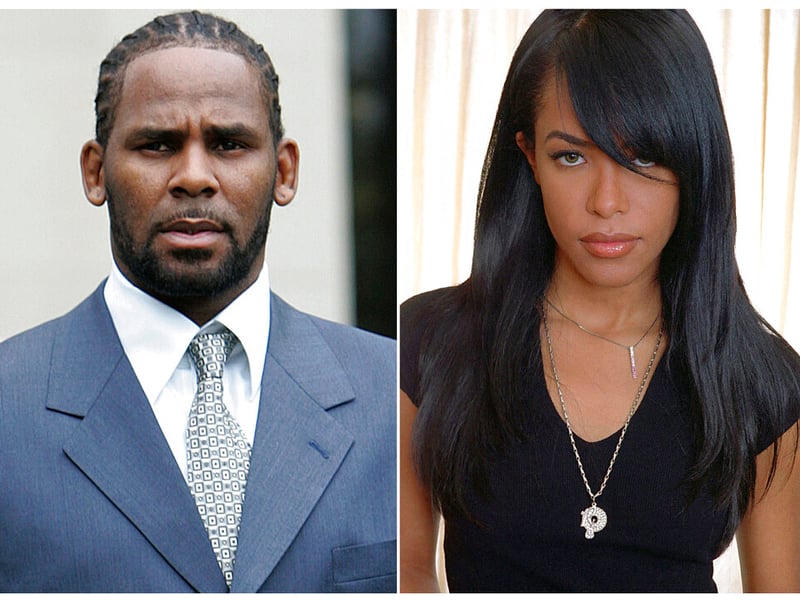
Aaliyah, who died in a 2001 plane crash, is the only one of the victims Kelly is charged with abusing to not testify at his trial. Prosecutors produced evidence to the jury that Kelly was 27 when he believed that he had impregnated Aaliyah, then 15, and then bribed a public official to create a fake ID for her so that he could marry her — ostensibly, and also incorrectly, believing that doing so would shield him with spousal immunity.
Cannick, the defense attorney, told the court that Kelly’s sexual lifestyle may not be for everyone but that nothing that happened was illegal.
“His label marketed him as a sex symbol, a playboy. So he started living that sex symbol, playboy lifestyle,” Cannick, of the firm Aiello & Cannick, said during his closing. “Where’s the crime in that?”
The defense asserts that Kelly’s accusers, some of whom participated in the documentary series “Surviving R. Kelly,” simply wanted to make money off their relationships with Kelly. Cannick pointed to gifts, parties and clothing that Kelly bought his girlfriends, saying the singer had treated them “like gold.”
Playing off the title of the Lifetime drama, which Cannick called a “fictional portrayal” Monday, the lawyer said accusers had been, in fact, “surviving off of R. Kelly.”
On cross-examination, the defense often focused on the fact that several of Kelly’s accusers remained with the singer they now paint as an abuser. For the government, a psychological expert discussed why victims remain in and return to abusive relationships, describing many of the same patterns — like grooming and isolation — that victim witnesses described.
Supporters of Kelly who camped out in front of the Brooklyn federal courthouse have also said that Kelly’s accusers are lying, and they question the government’s motives in prosecuting the singer.
“It’s about money. Money is the root to all evil,” said Tina Brown, a 49-year-old from Los Angeles who said she was a relative of Kelly’s but declined to elaborate.
Brown was present throughout the trial, and plans to follow future legal proceedings against Kelly and his appeal.
“I’m trusting in God because I can’t trust in a corrupt system,” Brown said. “When did they start caring about Black women? They don’t give a shit about us.”
In his native Chicago, where Kelly was acquitted on child pornography charges in 2008, the singer is also charged with state and federal sex crimes. He faces yet another indictment in Minnesota that charges him with engaging in prostitution with a minor.
The trial in the Eastern District of New York, which began with jury selection on August 9, was the first time accusers testified in court against the “I Believe I Can Fly” singer.
A year before Kelly’s trial began in Brooklyn, three men were charged with trying to extort and intimidate victims to keep them from testifying. Two have pleadedguilty, one to bribery and another to arson, after setting fire to a car parked in front of the house where an accuser was staying.
Follow Nina Pullano on Twitter
 Follow @NinaPullano
Subscribe to our free newsletters
Our weekly newsletter Closing Arguments offers the latest about ongoing trials, major litigation and rulings in courthouses around the U.S. and the world, while the monthly Under the Lights dishes the legal dirt from Hollywood, sports, Big Tech and the arts.