Search Articles


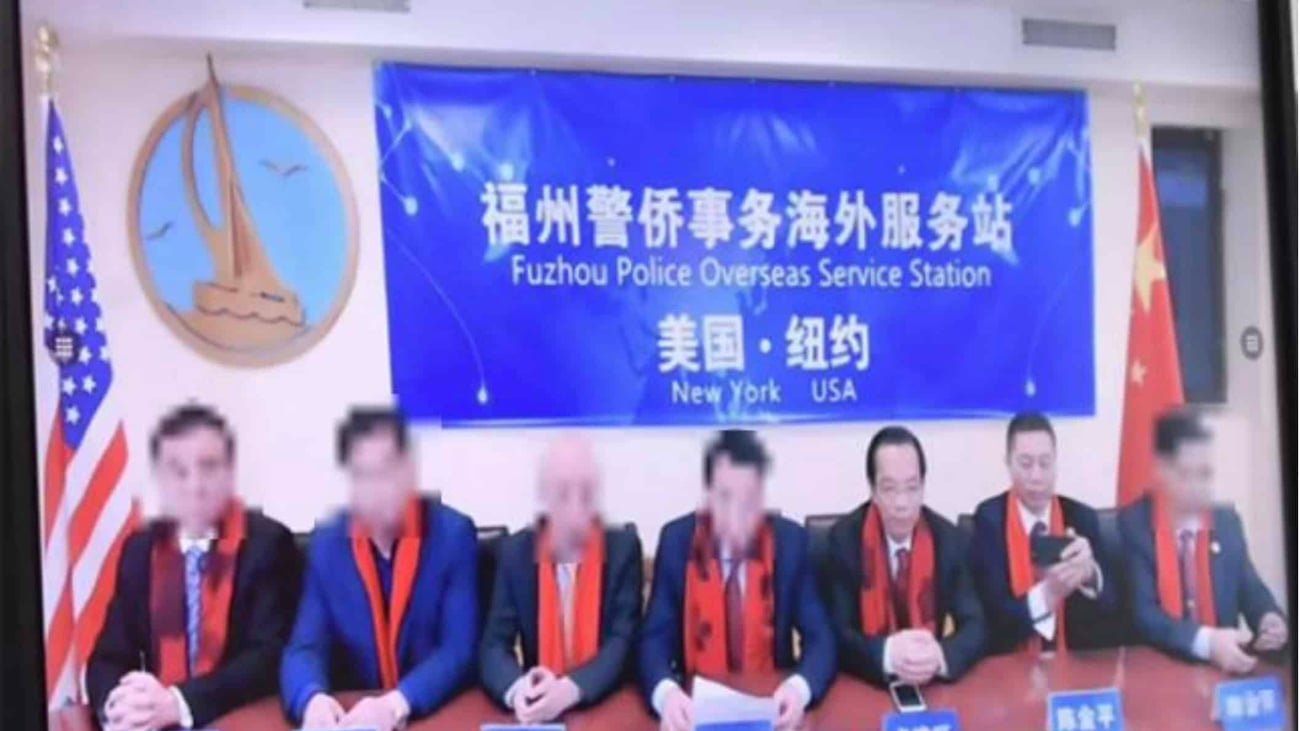
BROOKLYN (CN) — A federal jury on Wednesday convicted a New York City man charged with running a covert Chinese police station out of Manhattan’s Chinatown.
Prosecutors accused 64-year-old Lu Jianwang, otherwise known as Harry Lu, of being an unregistered agent of China by surveilling Communist Party dissidents on behalf of his handler in Beijing.
In a split verdict, jurors found Lu guilty on one count of acting as an unauthorized agent of a foreign government and one count of obstruction of justice. They acquitted Lu on a third count — conspiracy to act as an agent of a foreign government — after sending several notes Wednesday questioning the meaning of “conspiracy” in the charge.
They deliberated for roughly eight hours before reaching their decision.
“A police station operating in New York City at the direction of the Chinese government has been exposed, its sinister purpose disrupted, and its founder held accountable for blatantly disregarding the law and our country’s sovereignty,” Joseph Nocella Jr., the U.S. attorney for the Eastern District of New York, said in a statement after the verdict. “Our office remains resolute in protecting the rights of people seeking freedom from repression and speaking out to bring democracy, reform, and human rights to China.”
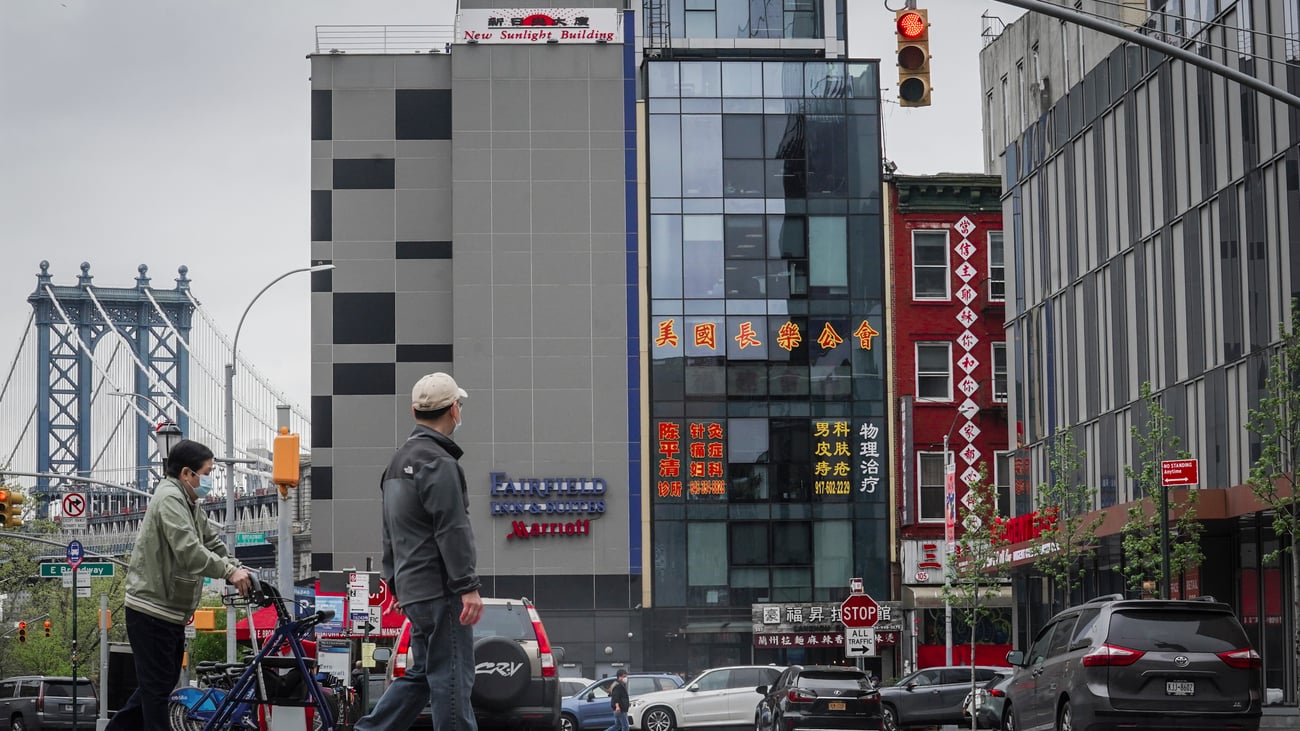
Lu was arrested and charged more than three years ago after federal agents raided the site of the America Changle Association — an organization that represents Chinese Americans in New York City. Lu ran the group out of a nondescript six-story building in Lower Manhattan.
Prosecutors said Lu was actually using the space to operate what the Chinese government calls an “Overseas Police Service Station,” part of a global network of surveillance outposts to secretly maintain Communist Party influence overseas. Lu’s defense team scoffed at the accusations, arguing that the space was a place for Chinese citizens living in Chinatown to remotely renew their drivers licenses — and occasionally play ping-pong.
“This isn’t ‘Spy Time.’ This isn’t international espionage,” Lu’s lawyer John Carman said at the trial’s close. “This is license renewal.”
Lu, who listened to the proceedings via a translator, nervously blinked from the defense table as the verdict was read. The courtroom was filled with friends and supporters from his Chinatown community.
Outside of the courthouse Wednesday, Carman said he was disappointed in the jury’s verdict, but that he saw “multiple issues” at trial he could contend on appeal.
“We are going to continue our fight for Harry to make sure that any motions can be filed to reverse this conviction are put forth,” Carman said, adding, “When you get rid of all the window dressing here, this is a pretty silly, small case.”
Carman criticized the government’s “overly aggressive prosecution" of his client, and warned that the case sends a message to Chinese Americans that they need to watch their step when merely communicating with anyone from their home country.
“That should make everybody very nervous,” he said.
At trial, Carman argued that Lu was unjustly arrested by a “shocked and embarrassed" FBI, which was blindsided by a 2022 report that found the Chinese government had been operating secret police stations under its nose.
Prosecutors acknowledged that Lu indeed helped with license renewals at the office but claimed there was a more sinister side that operated in the darkness.
At the weeklong trial, jurors saw text messages between Lu and his supposed handler in China’s Ministry of Public Security, which showed Lu purportedly helping to identify dissidents living stateside. One of them, Xu Jie, is a YouTuber with more than 38,000 subscribers who makes content critical of the Chinese government.
Xu testified that he was a student protester in Beijing’s Tiananmen Square protests in 1989 and has been harassed by Chinese law enforcement ever since.
“Just help me verify this person exists, thanks,” the Ministry of Public Security official texted Lu about Xu in 2022.
Lu was also charged with obstruction of justice for deleting text messages on his phone with the official. Prosecutors say he only did so after the FBI raided his Chinatown office.
“When the defendant learned that the FBI was onto him … he destroyed evidence,” Assistant U.S. Attorney Antoinette Rangel said at closing.
Prosecutors initially charged Lu alongside a co-defendant, Chen Jinping, in 2023. Chen pleaded guilty at the end of 2024 to working as an unauthorized agent of the Chinese government. He has not yet been sentenced.
 Follow @Uebey
 Follow @uebey.bsky.social
Subscribe to our free newsletters
Our weekly newsletter Closing Arguments offers the latest about ongoing trials, major litigation and rulings in courthouses around the U.S. and the world, while the monthly Under the Lights dishes the legal dirt from Hollywood, sports, Big Tech and the arts.