
 Search Articles


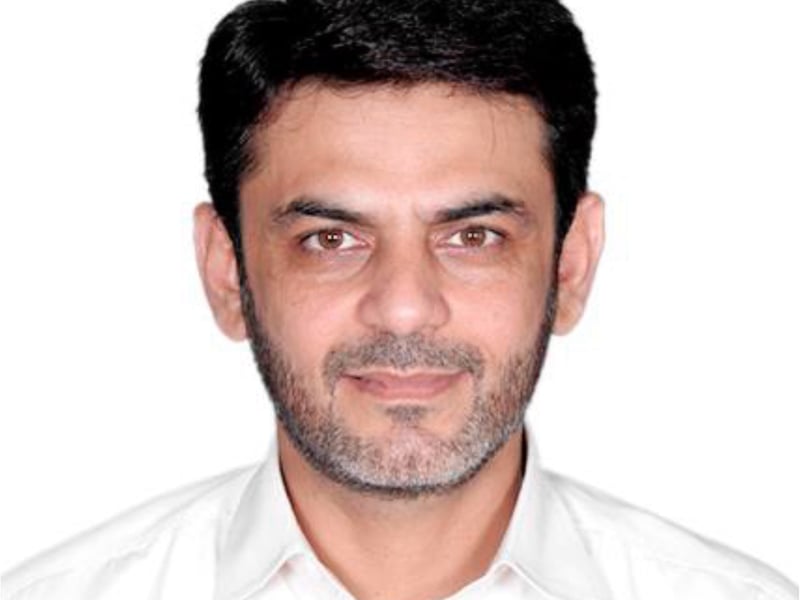
BROOKLYN (CN) — A federal jury on Friday convicted a Pakistani man on terrorism charges that stemmed from a supposed plot to kill United States politicians, including President Donald Trump.
Jurors in Brooklyn took just two hours to return a verdict finding Asif Merchant guilty on both counts with which he was charged: murder-for-hire and terrorism transcending national boundaries. He faces up to life in prison when sentenced.
According to federal prosecutors, Merchant came to the United States in 2024 with three goals: steal documents, stage a protest at a political rally and kill a U.S. politician. The government said he worked alongside Iran’s Islamic Revolutionary Guard Corps to hire hitmen on American soil to carry out the plan, but the plot was foiled when he accidentally tapped two undercover FBI agents for the job.
Merchant’s roughly weeklong trial came at a perilous time for American-Iranian relations. In late February, the U.S. launched a blistering bombing campaign in Iran that killed Supreme Leader Ayatollah Ali Khamenei.
The Trump administration has justified the intervention in part because of Iran’s purported efforts to kill the president, which began after General Quassem Soleimani, a top Iranian commander, was killed by an American drone strike in 2020. Since then, U.S. officials have said the Revolutionary Guards Corps have repeatedly sought to avenge Soleimani’s killing.
Prosecutors said that was precisely Merchant’s goal. They showed jurors inflammatory Facebook posts shared by Merchant. One included a burning American flag, another depicted Trump digging his own grave and a third showed what appeared to be Trump’s severed head.
Other posts memorialized the slain Soleimani in the aftermath of his death.
“This man landed on American soil hoping to kill President Trump — instead, he was met with the might of American law enforcement,” U.S. Attorney General Bondi said in a statement after Merchant’s conviction. “The Department of Justice will remain ever-vigilant to protect Americans, prosecute terrorists, and halt acts of terrorism before they happen.”
Joseph Nocella, U.S. Attorney for the Eastern District of New York, whose office prosecuted the case, celebrated the verdict in a statement vowing to “protect the United States from foreign terrorist adversaries.”
“Iran’s terrorist regime sent Asif Merchant here to sow mayhem and murder,” Nocella said. “Thanks to the vigilance of our law enforcement partners, his scheme ended in failure.”
Merchant’s defense attorney Avraham Moskowitz didn’t immediately respond to requests for comment.
In an unusual move, Merchant took the witness stand in his own defense and, through an Urdu translator, tried to diffuse some of his social media activity.
“I shared it just as the news,” Merchant said of one video he posted, footage of news coverage in which an Iranian official called for revenge on the U.S. for Soleimani’s killing.
Merchant admitted he worked with the Revolutionary Guard Corps, but claimed he did so begrudgingly amid fears that Iranian officials would retaliate against one of his wives — he has two; one in Iran and one in Pakistan — and their children.
“I was not wanting to do this so willingly,” Merchant testified, claiming that he knew the longshot plan would fail.
But prosecutors said there was “absolutely no evidence” Merchant acted out of fear for his family. An FBI agent testified that, despite meeting with Merchant several times after his arrest, he never suggested that he was an unwilling participant in the scheme, nor that he was concerned about the safety of those close to him.
Instead, Merchant offered the FBI another explanation for working with the Revolutionary Guard Corps:
“He said he was interested in intelligence work and wanted to be paid,” said Jacqueline Smith, a special agent for the FBI. Merchant testified that he expected to earn as much as $1 million for his role in the plot.
Merchant was arrested on July 12, 2024, just one day before Trump, then a presidential candidate, was shot in the ear by a would-be assassin at a rally in Pennsylvania. According to Smith, Merchant told the FBI that he believed the Revolutionary Guard Corps was behind the attack.
“He said that he thought that Iran was responsible for that because that’s the same thing he was sent here to do,” Smith testified.
Jurors heard that Merchant didn’t appear to come close to accomplishing that goal, however. They saw his rudimentary sketch of the supposed plan to have two hitmen shoot at their target during a political rally. And when Merchant mapped out the assassination at a Queens, New York, motel — using an orange vape and a napkin — the FBI was watching with a hidden camera.
In his brief defense case, Merchant’s legal team emphasized how far he was from actually killing a high-profile American politician.
They instead focused on the 47-year-old’s past as a banker who transitioned into exporting bananas, selling cars and importing fiberglass insulation. He eventually started working at his uncle’s clothing business, which brought him to the U.S.
Merchant was initially charged in August 2024 on a murder-for-hire count. But a superseding indictment the following month tacked on an additional charge of terrorism transcending national boundaries.
 Follow @Uebey
 Follow @uebey.bsky.social
Subscribe to our free newsletters
Our weekly newsletter Closing Arguments offers the latest about ongoing trials, major litigation and rulings in courthouses around the U.S. and the world, while the monthly Under the Lights dishes the legal dirt from Hollywood, sports, Big Tech and the arts.