
 Search Articles


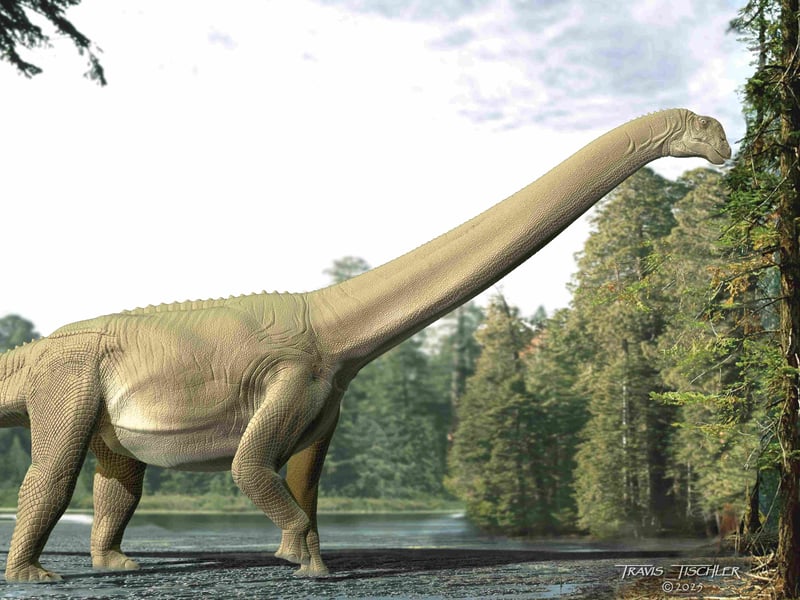
(CN) — In the summer of 2017, staff and volunteers at the Australian Age of Dinosaurs Museum of Natural History were excited to find fossilized feces, because they provided evidence for a longstanding theory about a dinosaur species’ eating habits.
The dinosaur was the relatively complete skeleton of a sauropod from the mid-Cretaceous period. The team who studied the dinosaur said it lived to a subadult age, meaning that it passed the juvenile state but died before reaching adulthood about 95 million years ago in the Winton Formation of Queensland, Australia.
The team named her Judy in their study published Monday in Current Biology.
Elusive guts
Knowing a dinosaur’s diet means understanding their biology and role in ancient ecosystems, especially for the gigantic sauropods — dinosaurs with long giraffe-esque necks that roamed the world throughout the Jurassic and Cretaceous periods.
But before the team found Judy’s fossilized gut contents, known as cololites, the scientific community based the theory of herbivorous sauropods on indirect evidence like tooth wear, jaw morphology and neck length. Sauropod cololites remained particularly elusive, though not for lack of effort per lead study author Stephen Poropat.
“I think that fossilized sauropod gut contents are genuinely rare in the fossil record, and that they would only fossilize under specific conditions,” said Poropat of Curtin University via email. “Judy’s gut contents seem to have become phosphatized — mineralized, likely because of microbial action, using phosphate minerals. Plants are not particularly phosphate rich, so for them to fossilize in this way, the phosphates would have to derive from a different source. Judy’s own body tissues seem to have provided the phosphates for this process, and the acidic environment these microbes generate enabled that phosphate to solidify with the plants within.”
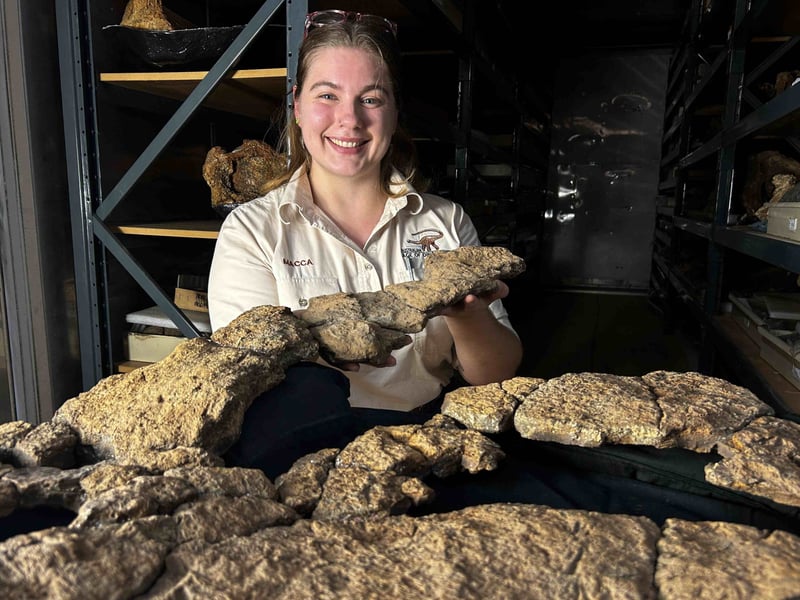
For that matter, the plants in Judy’s guts were severed, bitten, but not chewed, so the team thinks that sauropods like Judy mostly relied on fermentation and gut microbiota for digestion. Flowering plants called angiosperms laid in Judy’s guts, somewhat surprising Poropat.
“About 95 million years ago when Judy was alive, angiosperms were quite abundant and diverse, and it would make sense for herbivores to adapt to eat them,” said Poropat via email. “My surprise stems from the fact that sauropods at that time might not have had that long to adapt to eating angiosperms, which appeared 30 million years before Judy died. Also, many angiosperms today have chemical defenses to dissuade animals from eating them, with some being fatal. It would not be surprising to learn that flowering plants from the Age of Dinosaurs had similar defenses. Whether Judy died from eating a plant that was toxic to her is, however, wild speculation.”
Investigation continues
Speculation surrounds the Judy excavation. Poropat said that his team’s study focused on one data point for an entire species, and the plants in Judy’s guts may have been an unusual last meal for a starving animal instead of a consistent part of her diet. So, the team hopes future studies will find more direct evidence to prove how sauropods survived for 130 million years.
As for the current work, Poropat credited everyone who worked on Judy, especially the volunteers and citizen scientists.
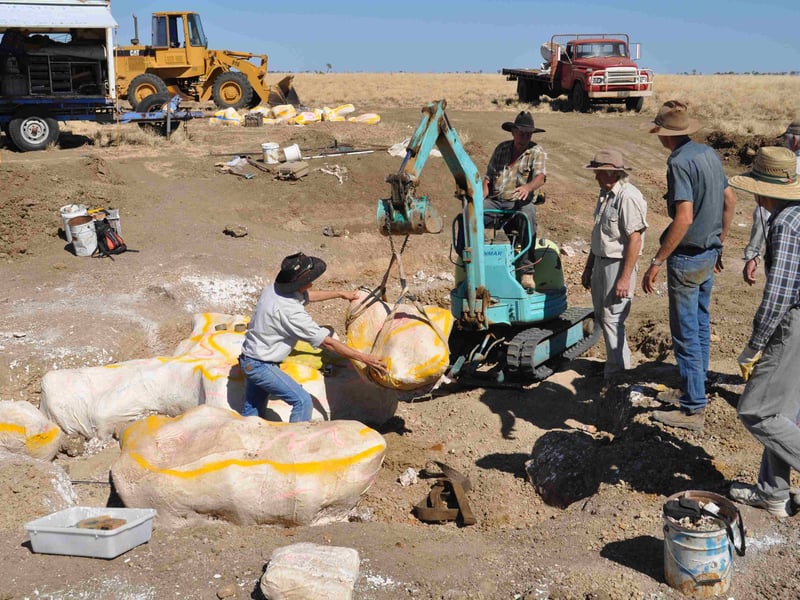
“It could not have happened without their efforts,” said Poropat via email. “Over 50 volunteers helped the Australian Age of Dinosaurs Museum to excavate Judy’s remains, and most of her bones were prepared by volunteers at the museum’s laboratory as well. Knowing that this specimen will go on display in Winton, and that all those volunteers will be able to view it with their loved ones — either in person or in our publication — and proudly point to the bits they worked on is just wonderful.”
 Follow @kndrleon
Subscribe to our free newsletters
Our weekly newsletter Closing Arguments offers the latest about ongoing trials, major litigation and rulings in courthouses around the U.S. and the world, while the monthly Under the Lights dishes the legal dirt from Hollywood, sports, Big Tech and the arts.