
 Search Articles


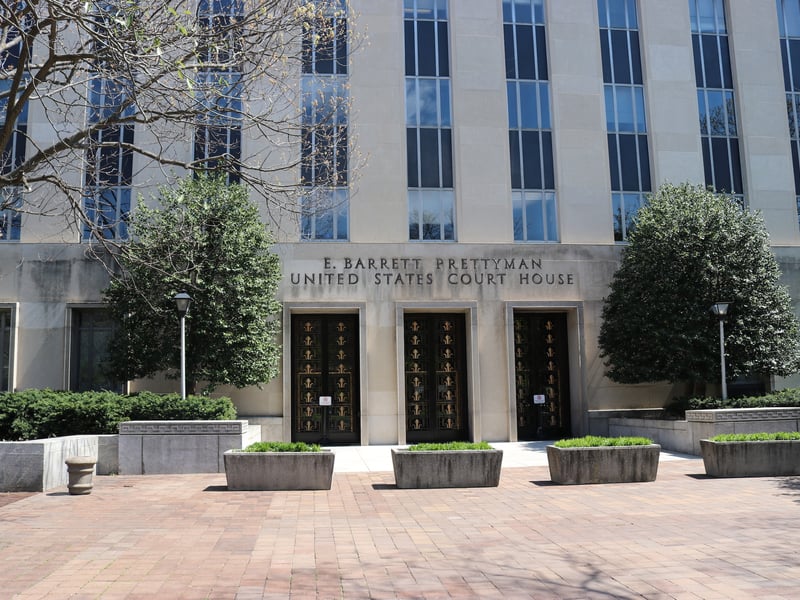
WASHINGTON (CN) — A pair of officials representing the federal judiciary’s administrative and policymaking arms will warn lawmakers this week about the dire consequences of freezing the courts’ budget for security programs, according to written testimony prepared for a House committee hearing.
The court officials’ planned remarks before the House Appropriations Committee come as the federal judiciary has warned Congress that current funding for judicial security is falling short amid escalating threats to judges and courthouses.
Lawmakers, already waist-deep in the budget reconciliation process, are just beginning the debate over a full-year spending plan for 2026. For now, most of the government is funded under a stopgap budget known as a continuing resolution, which Congress passed earlier this year and expires in September.
But, in testimony to be delivered Wednesday before the House’s spending panel, two officials — Judge Robert Conrad, U.S. Courts Administrative Office director, and Judge Amy St. Eve, U.S. Judicial Conference budget committee chair — are set to reiterate that court security programs need more funding than the continuing resolution provides.
In written remarks published ahead of this week’s hearing, St. Eve characterized federal cash allocated for court security as a “hard freeze,” pointing out that funding for the program has remained more or less flat for two years thanks to consecutive budget patches. The judicial security budget has remained level, she said, despite a “dynamic and very active threat environment.”
Federal courts have already been forced to reprioritize security spending given funding shortfalls, St. Eve continued. The judiciary has had to hold off purchasing new security systems and equipment in order to prevent reductions in staffing levels among court security officers or changes to threat management programs.
And if Congress does not increase funding, St. Eve added, the judiciary will need to further pare down its spending — particularly among “aging and outdated” security systems at federal courthouses that screen court visitors and monitor access to restricted areas.
“[A]t a time when dozens of individuals have been criminally charged in connection with threats against judges and the U.S. Marshals Service … is taking extraordinary security measures to ensure judges’ safety, these reductions in security capabilities are extremely worrying,” St. Eve wrote.
Under the current continuing resolution, judicial security programs are funded at around $750 million. The judiciary’s 2026 funding request hikes that line item to nearly $900 million.
St. Eve also had some critical words for the full-year continuing resolution itself, which she called a “blunt instrument” and said inefficiently funded programs whose budget requests tend to fluctuate from year to year. The court system’s juror fees account, for example, was overfunded by more than $26 million in the 2025 fiscal year, thanks to the continuing resolution’s extended funding freeze.
Gabe Roth, executive director of judicial advocacy group Fix the Court, told Courthouse News that St. Eve had made a “critical point” about the way such stopgap budgets affect the judiciary’s funding, calling it a “disservice to the branch,” especially for security.
“Keeping the funding levels static at a time of increasing threats to judges is beyond irresponsible,” Roth said.
Meanwhile, in his own written testimony, Conrad stressed the need for additional appropriations for judicial security, explaining that a cash injection would allow courts to “rebuild our security capabilities.”
But the director of the judiciary’s administrative arm also appeared to take aim at members of Congress who have pushed for the impeachment of federal judges they view as hamstringing President Donald Trump’s agenda.
“The independence of the Judicial Branch is jeopardized when judges are threatened with harm or impeachment for their rulings,” Conrad said. “Our constitutional system depends on judges who can make decisions free from threats and intimidation.”
Threats of reprisal or retribution against federal judges, he added, will “only serve to erode the rule of law.”
In recent months, Republican lawmakers have introduced a handful of impeachment articles against U.S. federal district judges — Congress has the right to remove judges who commit “high crimes or misdemeanors,” but few jurists have actually been ousted this way. Republican leadership, though, has been dismissive of the prospect, with House Speaker Mike Johnson saying last week that impeachment carries a “very high burden” of proof.
Conrad’s remarks also dialed in workplace conduct in the federal judiciary. He pointed to “significant improvements” in how the courts handle employment disputes and reports of abusive conduct.
Roth, though, disagreed with that characterization, arguing that the improvements the administrative office director had outlined “don’t go far enough to ensure the branch is an exemplary place to work.” He pointed to a recent survey finding that just 42% of judiciary staff would feel comfortable reporting misconduct.
The federal judiciary has long sounded the alarm about rising threats against judges and courthouses and has urged Congress to greenlight more funding for security programs. In his 2024 year-end report, Supreme Court Chief Justice John Roberts noted a “significant uptick” in such threats.
Roughly 50 people have been criminally charged in connection with recent threats to the judiciary, and the U.S. Marshals Service has stepped in on several occasions to provide judges additional security. Dozens of jurists involved in high-profile cases also receive online security screening services.
In a letter to congressional appropriators last month, Conrad and St. Eve also warned that budget shortfalls could affect other areas of the judiciary. They pointed in particular to the federally run public defenders’ service, which is under a hiring freeze through September and has paused nearly $100 million in payments to private attorneys who take public defense cases.
Budget freezes could also result in the reduction of appellate, district and bankruptcy court clerk staff by as much as 37%, the officials warned.
Roth worried Monday that the proposed increase in court security funding, at around 19%, was an “unlikely” prospect for appropriators. He said he was eager to hear how Conrad and St. Eve would react to the possibility of a smaller budget hike, which he said they “might have to swallow given current budgetary trends.”
Though a final budget is still months away, Republicans in Congress have outlined a plan which would see billions in government spending slashed. A budget blueprint passed earlier this year prescribes around $4 billion in cuts — but spending hawks in the House have said that federal spending should be pared down by as much as $2 trillion.
 Follow @BenjaminSWeiss
Subscribe to our free newsletters
Our weekly newsletter Closing Arguments offers the latest about ongoing trials, major litigation and rulings in courthouses around the U.S. and the world, while the monthly Under the Lights dishes the legal dirt from Hollywood, sports, Big Tech and the arts.