
 Search Articles


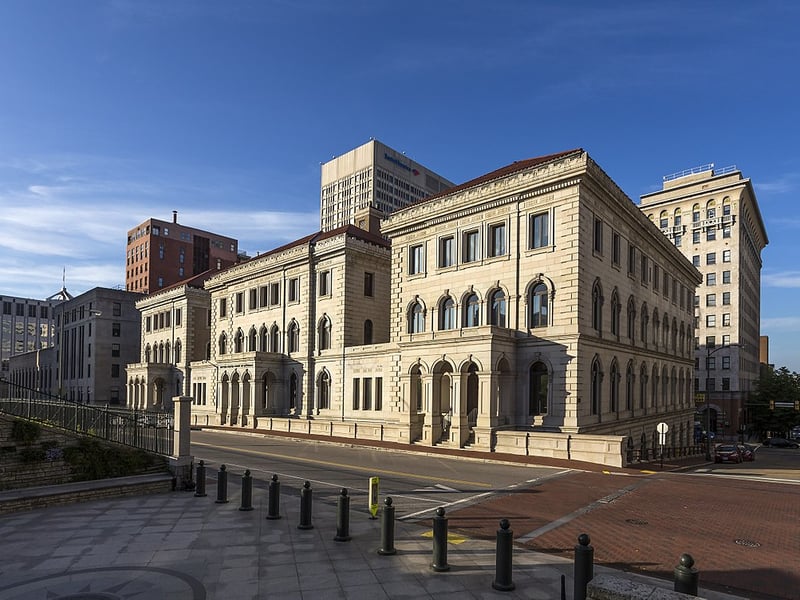
RICHMOND, Va. (CN) — Flood-stricken residents argued before a Fourth Circuit panel Friday that a railroad company violated its obligations when it refused to allow a North Carolina city to fill a gap in a levee left for its tracks.
The railroad company, CSX Transportation, worked with the city of Lumberton for decades to help protect lower areas in the city from flooding before ending that cooperation in the late 2000s.
Lumberton’s levee has one critical weakness, according to the plaintiffs: a gap where CSX’s tracks pass through that has to be blocked prior to rising waters.
The plaintiffs — residents, businesses and a church in Lumberton — sued after devastating flooding from Hurricane Matthew and Hurricane Florence resulted in millions of dollars in damage and the displacement of over 1,500 people for months when CSX refused to allow the line to be closed and that gap to be temporarily filled.
At the crux of the dispute is an agreement between the city, the local flood district and CSX’s predecessor. The city was given the ability — but not requirement — to construct an earthen dike. Lumberton has used temporary means to close the gap instead.
That agreement doesn’t mean that the city has the authority to use different stopgaps, CSX argues, because in the contract, the company’s predecessor didn’t agree to allow sandbagging, concrete barriers or floodgates.
Since the city didn’t build the dike, then under the contract, CSX argues it isn’t required to allow its tracks to be covered, although the city is welcome to build a compliant dike.
CSX says that the city manager can harm the railroad’s operations by shutting down the line and keep hazmat and military supplies from moving.
Attorney Scott Winkelman spoke on behalf of CSX Friday, saying the local government isn’t challenging the railroad and shouldn’t be able to regulate the line.
All parties must abide by the terms of the contract, and only those terms, which don’t require CSX to comply with temporary solutions, Winkelman said.
The Interstate Commerce Commission Termination Act should preempt that contract, the plaintiffs argue, and allow the consideration of local regulations that have an incidental effect on the route, but that benefit the local area. They claim the lower court failed to fully consider the act when weighing its decision.
William Cash III, attorney for the plaintiffs, said CSX’s route has only been affected for 27 days out of the more than 16,000 days it’s been in place.
“CSX didn’t suffer from the city not building the dike,” said Cash.
U.S. Circuit Judge James Wynn Jr. and U.S. Circuit Judge A. Marvin Quattlebaum Jr. challenged the idea that a temporary dike would be more burdensome on the railroad than creating a permanent one.
“I would think that the railroad could really care less that it’s a less intrusive barrier than a more intrusive barrier,” said Quattlebaum, a Donald Trump appointee. “So it seems like this is a very — maybe correct, maybe it ultimately prevails — but an extremely technical argument.”
Wynn pushed for the parties to come to an independent agreement on the issue.
“There’s no way in the world the railroad wants to see this city flood. And you know what’s happening in North Carolina, we just had a major flood attack,” the Barack Obama appointee said. “This has been going on for decades, and you’ve been allowing them to do it for decades, and all of a sudden stop. You know, with the legal arguments that have had some force to it, you know, you prevail, but it just seems to me, just out of public concern, you would settle this thing and not suffer another opinion coming from this court.”
CSX is pushing the judges to uphold a lower court decision granting summary judgment in favor of the railroad. The plaintiffs want the lower court’s order reversed and to take the case to trial.
“It’s not like they want to use it for fishing or something like that,” Wynn said. “They’re saying, ‘we want you to do this so that the people in our city will be protected and will be safe.’”
Cash said that CSX’s predecessor entered into the agreement to prevent flooding. If it were unduly burdensome, the company would not have followed the agreement for over 40 years.
“These residents and businesses suffered two devastating floods — causing hundreds of millions of dollars in damage — because of one reason only: CSX knowingly and repeatedly broke its promise to permit the city to defend itself from floodwaters rolling across CSX’s property,” plaintiffs wrote in their brief.
In 2016, CSX refused to allow the area to be filled with sandbags during Hurricane Matthew, resulting in flooding so severe that part of the track bed was washed away, putting the line out of service for weeks.
Then in 2018, CSX threatened the city with felony trespassing when Lumberton wanted to sandbag the area for Hurricane Florence, only to back down when the governor issued an emergency order allowing temporary sandbagging. Because of the delay, however, the city didn’t have enough time to make an effective dam. The levee failed, once again flooding Lumberton and plaintiffs’ homes and properties, along with CSX’s tracks.
This is the second time the case has come before the Fourth Circuit, which dismissed most issues and remanded a dispute over the plaintiffs’ third-party-beneficiary status back to the lower court in 2020.
“We’re encouraged that the court gave the people of southwest Lumberton a fair hearing, and we look forward to returning to the court below for a trial on the merits,” Cash said after the argument. “CSX told the court that it was in the business of partnering with local communities, but that hasn’t been the reality in Lumberton. If CSX really cared, it would have honored the contract and let the city protect its residents.”
U.S. Circuit Judge Pamela Harris, a Barack Obama appointee, also served on the panel.
Winkelman did not reply to a request for comment.
 Follow @SKHaulenbeek
 Follow @shaulenbeek.bsky.social
Subscribe to our free newsletters
Our weekly newsletter Closing Arguments offers the latest about ongoing trials, major litigation and rulings in courthouses around the U.S. and the world, while the monthly Under the Lights dishes the legal dirt from Hollywood, sports, Big Tech and the arts.