
 Search Articles


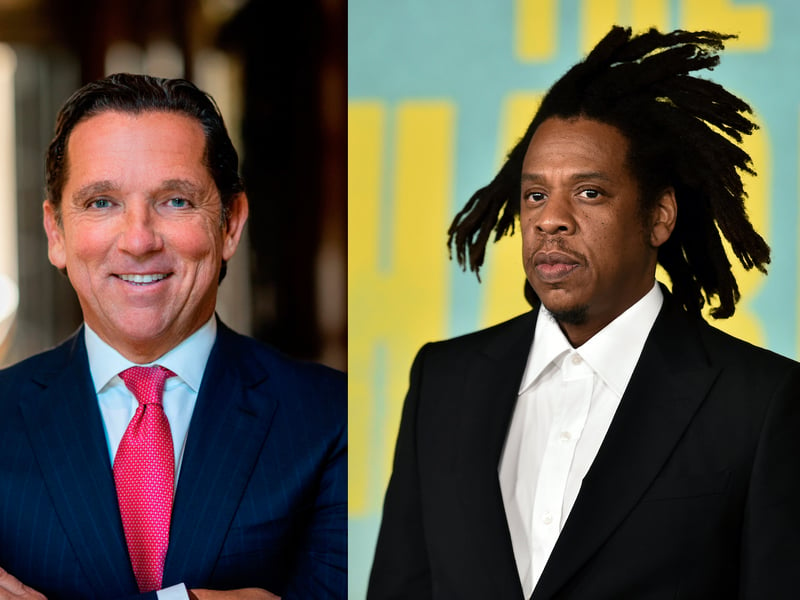
LOS ANGELES (CN) — A Superior Court judge on Tuesday heard more arguments over whether or not he should dismiss a lawsuit filed by hip-hop superstar Jay-Z against Houston-based lawyer Tony Buzbee for defamation and extortion.
The hearing largely revolved around a key piece of evidence offered up by Jay-Z’s attorneys just a few months ago: a surreptitiously recorded conversation between two private investigators and an unnamed woman, a former client of Buzbee’s who accused Jay-Z, whose real name is Shawn Carter, of raping her when she was 13 in a lawsuit that was withdrawn months after it was first filed. In the transcript of the conversation, the woman appears to admit that Carter had nothing to do with her assault, which occurred decades ago. She adds that Buzbee “kind of pushed me toward going forward with him, with Jay-Z.”
“We have evidence of two people in a conspiracy, likely a criminal conspiracy, to extort money from Mr. Carter,” said Carter’s attorney, Robert Schwartz, a partner at Quinn Emanuel, on Tuesday.
But Buzbee’s attorney, Samuel Moniz, a partner at Sheppard Mullin, argued that the conversation transcript was inadmissible for several reasons: it was effectively hearsay, and it violated attorney-client privilege.
“She’s approached by Carter’s intermediaries, outside the presence of counsel, not given time to think,” Moniz said. “That is a blatant attempt to circumvent attorney-client privilege and cannot be allowed to stand.”
He also said the transcript was more ambiguous than Jay-Z’s lawyers made it out to be.
“Their interpretation of this transcript is simply divorced from the words,” Moniz said.
The fracas between the “99 Problems” rapper and the Houston-based lawyers arises from the accusations against a different hip-hop star, Sean Combs, also known as Diddy, who has been charged by federal prosecutors with racketeering, sex trafficking, and transportation to engage in prostitution — accusations stemming from drug-fueled orgies he is said to have thrown, known as “freak-offs.” Buzbee began representing dozens of clients suing Combs and other celebrities who Buzbee said attended the freak-offs. One of those celebrities was Carter.
In November, Buzbee sent Carter’s lawyer a demand letter, accusing the hip-hop star of raping two minors decades ago. The letter made an offer for Carter to enter into confidential mediation where “something of substance” would be given to the survivors. He declined. Buzbee’s client sued Carter in federal court in New York, claiming that both Combs and Carter raped her when she was a minor in 2000 following the MTV Video Music Awards.
“Another celebrity stood by and watched as Combs and Carter took turns assaulting the minor,” she wrote in the complaint. “Many others were present at the afterparty, but did nothing to stop the assault.”
Two months later, the woman agreed to dismiss the lawsuit with prejudice. Carter then sued Buzbee in LA Superior Court for defamation and extortion.
Since then, Buzbee has dropped out of more than a dozen cases against Combs after a federal judge in New York admonished him for not informing the court that he was not admitted to practice law in the Southern District of New York. But he has vigorously defended himself against Carter’s suit. He filed three different motions to dismiss or trim the complaint, including an anti-SLAPP motion, claiming that the letter was a “standard pre-litigation demand letter that made no improper threat and is privileged.” The defamation claims, he said, were based on statements made to the media that either didn’t even mention Carter and were either opinions, substantially true, or made without malice. Carter’s suit, Buzbee wrote in the motion, was “filed purely to harass and intimidate those who dared to sue him, to frighten off other potential accusers, and to change the media narrative.”
Though the woman has suggested in an interview with NBC that “I may have made a mistake in identifying” the men who assaulted her, in a written declaration with the court in LA, she stood by her accusations, writing: “Jay-Z removed my clothes, and both Jay-Z and Diddy engaged in sexual intercourse with me. I did not consent to this, and, given that I was only thirteen at the time, I could not have given valid consent.” She said she only dismissed her lawsuit because she was “frightened by the reaction of Jay-Z and his supporters, and the likelihood that I would have to be publicly named and subjected to public attacks.”
Carter has also sued Buzbee and the woman who accused him in federal court in Alabama for defamation and malicious prosecution.
Tuesday’s three-hour hearing was the third over the anti-SLAPP motion and covered much of the same grounds as the previous one. Judge Mark Epstein said during the first hearing that he was inclined to dismiss the extortion cause of action, as well as some of the defamation claims. But at the end of the first hearing, Carter’s attorneys appeared to learn, in real time, about the existence of the recorded conversation between Carter’s on-and-off accuser and the private investigators. At the second hearing last month, Judge Epstein suggested that the transcript might convince him to allow the extortion claim to survive — but only if he found the new evidence admissible.
Schwartz argued that the conversation was admissible because it showed the woman “describing Buzbee’s wrongful act of pushing her to go after” Carter. When the Judge suggested that that conversation was hearsay since it was introduced as evidence in a declaration by one of the private investigators, Schwartz suggested that the judge order the woman deposed. As to the attorney-client privilege argument, Schwartz said, “The privilege is hers to waive. And she’s free to waive it. And she did.”
Moniz disagreed, telling the judge, “The waiver has to be knowingly and voluntarily relinquished.” He argued that the woman was intimidated by two private investigators who somehow knew her identity, showed up to her house out of the blue, and seemed to threaten to publicly reveal her identity if she didn’t cooperate.
Aside from the admissibility issue, Moniz addressed the anti-SLAPP motion itself, saying that this was exactly what the motion had been designed for — to quickly dismiss a lawsuit aimed at chilling speech and public participation, including tort claims.
“This is a well-funded, powerful figure trying to punish lawyers for what they do,” Moniz said. “This is an attack on the right to free speech. It’s an abusive case, and it deserves to be dismissed.”
Judge Epstein took the case under submission without saying when he would issue a ruling. No matter which way he goes, it will likely face an appeal by at least one of the parties, which would likely mean a long delay in the case.
 Follow @hillelaron
Subscribe to our free newsletters
Our weekly newsletter Closing Arguments offers the latest about ongoing trials, major litigation and rulings in courthouses around the U.S. and the world, while the monthly Under the Lights dishes the legal dirt from Hollywood, sports, Big Tech and the arts.