
 Search Articles


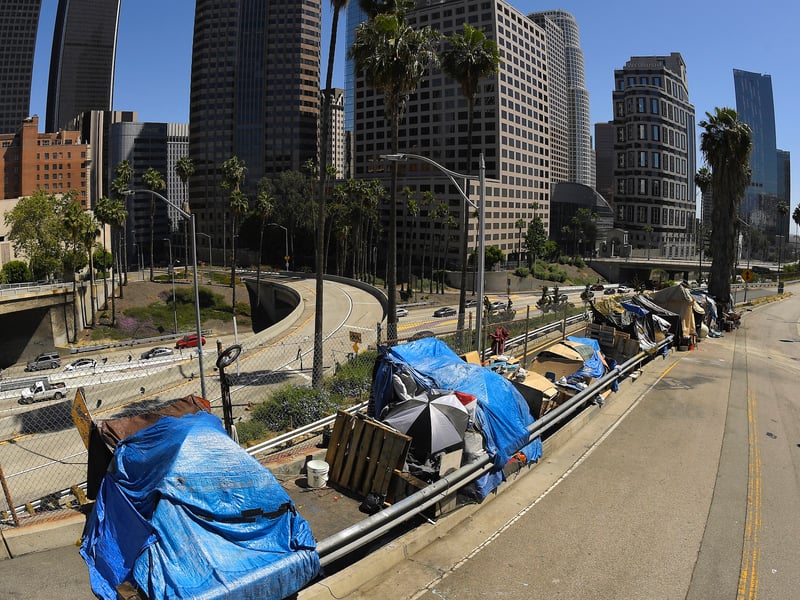
LOS ANGELES (CN) — A California Superior Court judge on Thursday agreed to dismiss a lawsuit aimed at overturning Los Angeles Mayor Karen Bass’ declaration of a local emergency on homelessness.
The lawsuit was filed in September by Fix the City, a nonprofit advocacy group known for filing numerous lawsuits against the city in an effort to slow housing development — and, more recently, the construction of homeless housing.
In their complaint, Fix the City called the emergency declaration “a vast and illegal expansion of mayoral power.”
Bass issued the declaration a year and a half ago, on her first day in office — “to maximize the city’s ability to urgently move people inside,” she said at the time. It was approved and regularly re-approved by City Council. According to the mayor, the declaration has succeeded in speeding up the construction of more than 7,000 units of affordable housing.
“This is what urgency looks like,” Bass said in statement last year. “Approval processes that used to take 6 months are taking 47 days. Other projects that weren’t going to be ready until 2025 are going to come online next year. And let me be clear — when we save time, we save money and we save lives.”
Among other things, the declaration allowed the mayor’s office to make certain contracting decisions without competitive bidding — something Fix the City objects to. The declaration, the group says in their complaint, “not only threatens the balance and separation of governmental powers, but jeopardizes the public’s rights as guaranteed by various constitutional, statutory and regulatory protections.” It also allows the city to use eminent domain to buy certain properties to use for housing.
The challenge mostly focused on procedural grounds. Fix the City argued that the declaration had to be ratified by City Council every 90 days, which it claimed it hadn’t done. The group asked the judge to not only block the emergency declaration but to “vacate all contracts, approvals, and building entitlements based thereon.”
In the city’s demurrer, a deputy city attorney wrote that Fix the City “alleges hypothetical concerns about harms that might, but have not, occurred,” adding that if successful, the lawsuit’s effect would be to “impede the city’s efforts to secure housing for the city’s 46,000 homeless.”
Superior Court Judge Curtis Kin made it clear, from the start of the hearing, that he thought the provision that City Council reapprove the emergency declaration every 90 days didn’t apply to Los Angeles because it is a charter city.
“We need to look at this matter form a common sense perspective,” said Fix the City attorney James Link. “Common sense says that you have 125 charter cities, they can’t possibly be doing their own thing in relation to what’s occurring around them in the other cities and counties.” The emergency, he argued, “must be undeclared as soon as possible.”
Kin was unmoved, and agreed to the city’s demurer, which he sustained with prejudice — meaning that Fix the City cannot file an amended version of its complaint, though it can file an appeal.
After the hearing, Fix the City President Michael Eveloff said, in a strongly worded email, “With all due respect, we believe the court’s decision is flat out factually, logically and legally wrong. We will be appealing immediately.”
He added: “Of greater concern is the danger this ruling creates for the city. By ruling that the city is not covered by the California Emergency Services Act, the court has effectively removed the ability of the city to request funds from the state for local emergencies.”
In a written statement, City Attorney Hydee Feldstein Soto said: “I am pleased that my office was successful in defeating the challenge to the ordinance addressing the City’s local housing and homelessness emergency. The Mayor’s emergency declaration and subsequent directives and actions taken thereunder have expedited the City’s progress in getting people the help that’s so urgently needed.”
 Follow @hillelaron
Subscribe to our free newsletters
Our weekly newsletter Closing Arguments offers the latest about ongoing trials, major litigation and rulings in courthouses around the U.S. and the world, while the monthly Under the Lights dishes the legal dirt from Hollywood, sports, Big Tech and the arts.