
 Search Articles


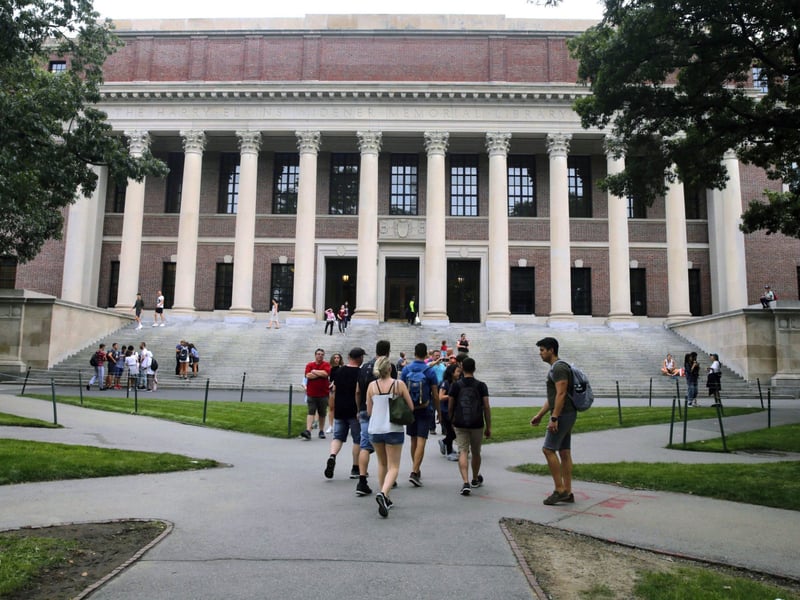
(CN) — A federal judge on Wednesday ordered the Trump administration to reverse cuts to more than $2.6 billion in Harvard University’s research funding, which she found to be retaliatory after Harvard rejected the government’s demands for policy changes.
U.S. District Judge Allison Burroughs, a Barack Obama appointee in the District of Massachusetts, issued summary judgment in Harvard’s favor and she rejected the government’s argument that it was freezing the funds to punish the Ivy League college for failing to crack down hard enough on pro-Palestine protests on campus last spring.
The administration claimed this was part of its broader goal to combat antisemitism on colleges around the country, which Burroughs lambasted.
“In fact, a review of the administrative record makes it difficult to conclude anything other than that defendants used antisemitism as a smokescreen for a targeted, ideologically motivated assault on this country’s premier universities, and did so in a way that runs afoul of the APA, the First Amendment and Title VI,” Burroughs wrote in her 84-page ruling.
Harvard sued the Trump administration this past April after the White House sent it a letter outlining 10 conditions the university must meet, or risk losing billions in research funding, which was already greenlit by the government.
Those conditions included auditing professors and programs for plagiarism and other misconduct, screening international students for their beliefs and installing administrators who are aligned with the White House’s political agenda. The government also demanded that Harvard turn over all school reports and draft reports on combatting antisemitism and anti-Muslim bias on campus.
Harvard refused to cooperate, and the Trump administration moved to freeze more than $2 billion in research grants. Those freezes later became flat cuts after Secretary of Education Linda McMahon announced that the school would be eligible for new grants and started canceling contracts with Harvard in the following weeks.
The school claims the government used the funding, which was allocated for research on cancer, infectious diseases, environmental health and other societal threats “as leverage to gain control of academic decisionmaking at Harvard.”
Burroughs ultimately agreed, finding the actions of the Trump administration “have jeopardized decades of research and the welfare of all those who could stand to benefit from that research, as well as reflect a disregard for the rights protected by the Constitution and federal statutes.”
The judge acknowledged the legitimate goal of combatting antisemitism, but cautioned the government not to do so at the expense of First Amendment rights.
“We must fight against antisemitism, but we equally need to protect our rights, including our right to free speech, and neither goal should nor needs to be sacrificed on the altar of the other,” she wrote.
A spokesperson for Harvard didn’t immediately respond to requests for comment.
It’s unclear if Harvard will start receiving the money as a result of Burrough’s ruling. The university is still in talks with the federal government to reach a settlement that would end investigations and open Harvard up to receiving federal grant funding once again.
Other schools, such as Columbia and Brown, have reached similar deals with the administration. Burroughs’ ruling could give Harvard leverage as these negotiations continue, however.
The Cambridge, Massachusetts, school hasn’t been the only school in the crosshairs of President Donald Trump in his second term. He vowed in the past to “reclaim our colleges from the communist left,” and has sparred all year with elite universities around the nation.
He’s done so largely under the guise of combatting antisemitism amid a rise in student protests against Israel’s bombing campaign in the Gaza strip, and has threatened or instituted similar sudden cuts to funding against Brown, Columbia, Cornell, Princeton, Northwestern and Trump’s own alma mater the University of Pennsylvania.
 Follow @Uebey
 Follow @uebey.bsky.social
Subscribe to our free newsletters
Our weekly newsletter Closing Arguments offers the latest about ongoing trials, major litigation and rulings in courthouses around the U.S. and the world, while the monthly Under the Lights dishes the legal dirt from Hollywood, sports, Big Tech and the arts.