
 Search Articles


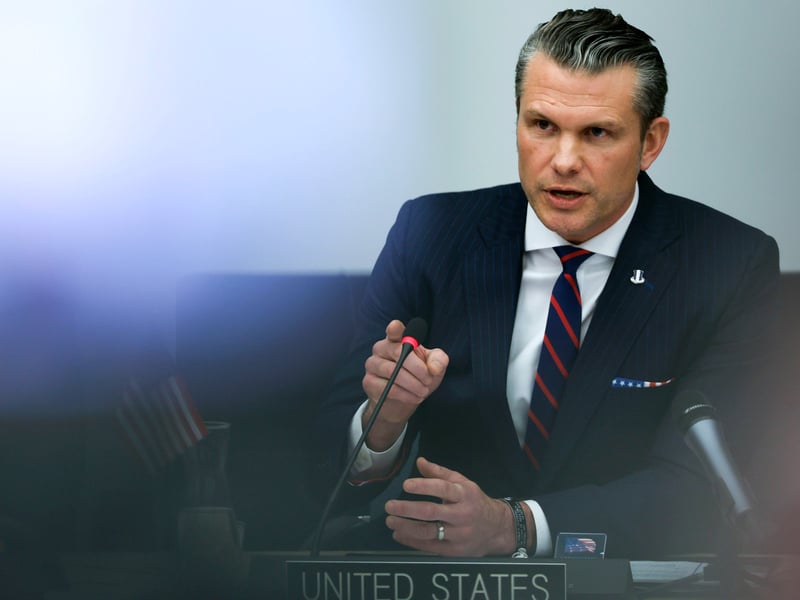
(CN) — The Department of Defense breached federal procedure when it decided to cut research grant reimbursements without so much as “a nod” to Congress, according to a federal court.
On Friday, U.S. District Judge Brian Murphy became the latest judge to denounce the Trump administration’s widespread attack on federal research funding when he granted summary judgment for universities and education groups that found the grant slashes arbitrary and capricious.
“Defendants call the academic community’s work with the Department of Defense ‘essential for the development of transformative research concepts that drive our future capabilities,’” Murphy, a Joe Biden appointee, wrote in his 58-page order. “Yet, with hardly any explanation at all, they have sought to upend nearly six decades of agency practice by announcing their refusal to reimburse wide swaths of research costs above a ‘de minimis’ amount.”
The ruling comes amid the Trump administration’s broad agenda to slash so-called “indirect costs” — which include infrastructure, equipment and custodial expenses — related to research funding throughout several of its top agencies.
In this case, the schools and education groups claim that the Department of Defense suddenly and unlawfully announced it would be chopping the rates federal grants pay for those indirect research costs — which were often between 50% and 65%, the schools say — down to a hard 15% cap.
The effect would be top universities losing out on millions of dollars in previously allocated grant funding, which would slow scientific research surrounding national defense technology, the schools argue.
Murphy ruled that the Department of Defense is relying on deception to justify the cuts.
“This case is about ‘indirect costs,’ an accounting term undoubtedly unfamiliar to most,” Murphy wrote. “Defense Secretary [Pete] Hegseth has seized on this knowledge gap to call them ‘waste’ and ‘bureaucratic fat.’ But that is entirely misleading.”
“Indirect costs are the buildings within which new materials for life-saving armor are developed,” the judge added. “They are the supercomputers that find new ways to defend our country against cyberattacks. Yes, they are also the assistants who keep things running and the custodians who come in at night. But these are not ‘waste.’ Indeed, the regulations treat them as both ‘necessary and reasonable.’”
The department never adequately argued otherwise, Murphy found. In fact, it didn’t adequately explain its decision to slash the funding at all, putting it in violation of the Administrative Procedure Act.
Additionally, the judge shut down the government’s claims of widespread waste and fraud in the federal research grants, citing the “baroque and exacting regulatory system” that meticulously scrutinizes the expenses of participating universities.
“Yet, defendants would unravel that partnership with less than a nod toward Congress’ requirement that federal agencies make reasonable choices and rationally explain them,” he wrote.
Murphy’s ruling issued a final win to colleges in their case against Hegseth and the Department of Defense. In granting summary judgment for the schools, the judge officially vacated the new grant cap rate and deemed it unlawful.
When reached for comment on Monday, a spokesperson for the Pentagon declined to comment.
The outcome was not surprising — Murphy had already issued a temporary block of the department’s cap rate in July, when he scolded the government for announcing a policy “that has consistently been deemed unlawful, without acknowledgment of its apparent illegality and without any attempt to structure the policy in a manner that fulfills the established requirements of law.”
Other agencies have also been recently prevented from implementing a 15% cap rate on the indirect costs of research funding. In March, a judge issued a scathing ruling against the National Institutes of Health for trying to impose the same limit on public health research.
U.S. District Judge Angel Kelley, another Biden appointee, wrote that the “risk of harm to research institutions and beyond is immediate, devastating and irreparable.”
 Follow @Uebey
 Follow @uebey.bsky.social
Subscribe to our free newsletters
Our weekly newsletter Closing Arguments offers the latest about ongoing trials, major litigation and rulings in courthouses around the U.S. and the world, while the monthly Under the Lights dishes the legal dirt from Hollywood, sports, Big Tech and the arts.