
 Search Articles


(CN) — A federal judge in Boston lambasted Secretary of State Marco Rubio and Homeland Security Secretary Kristi Noem on Thursday for what he called an “unconstitutional conspiracy” to target pro-Palestine students for their speech.
“These cabinet secretaries have failed in their sworn duty to uphold the Constitution,” U.S. District Judge William Young exclaimed, later invoking the Fugitive Slave Act to describe the modern-day conundrum of federal immigration enforcement.
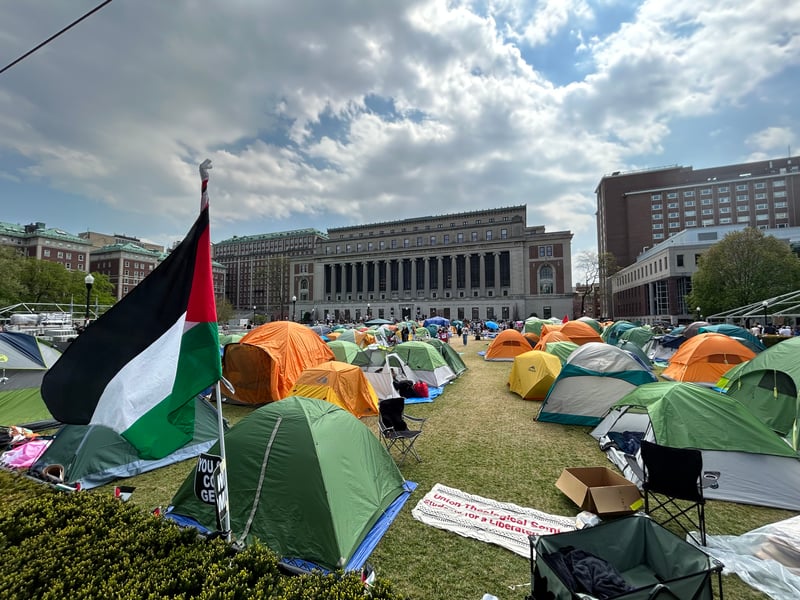
The impassioned statements came as Young mulled a remedy in a case involving the Trump administration’s attempts to deport college students and academics for protesting against Israel’s bombardment of the Gaza Strip. In a ruling from September, Young chastised the practice, which swept up the likes of former Columbia University graduate student Mahmoud Khalil, as an unlawful one designed purely “to strike fear” into demonstrators.
Months later, Young said Thursday he still found the situation “breathtaking.”
“I ask myself why, how could this happen?” Young asked. “How could our government, the highest officials in the government, seek to so infringe the rights of people lawfully here in the United States?
“The record in this case convinces me that these high officials — and I include the president of the United States — have a fearful view of freedom. A view that defines the freedom here in the United States by who’s excluded.”
The 85-year-old Ronald Reagan appointee, who has been a thorn in the side of the Trump administration for the past year, said Thursday that he’d look to restrict the government’s ability to deport campus activists for Palestine going forward.
The underlying case comes from a group of educational organizations, including the American Association of University Professors and the Middle East Studies Association, who said in a 2025 lawsuit that the arrests of students like Khalil are chilling their First Amendment rights to demonstrate.
A two week trial ensued over the summer, and Young agreed with the groups that their speech was being unlawfully suppressed. He also definitively ruled that noncitizens have the same rights as citizens when it comes to free speech.
To stop the suppression, Young said he’d issue an order that would make it far more difficult to deport the plaintiffs for expressing their First Amendment rights. Specifically Young said he’d order if any members of the plaintiff groups have their immigration status changed, it “shall be conclusively presumed to be in retribution for their participation in this lawsuit, and therefore void and of no effect” except in cases of a criminal conviction or the expiration of a visa.
It’s not exactly what the plaintiffs wanted. Their lawyer Ramya Krishnan pushed the judge to issue an injunction as a preventative measure, but Young declined.
“No injunction,” he said. “I’m sanctioning these government agencies, I’m sanctioning the United States. They are going to have to jump through these hoops to get this result, if they seek such a result.
“The big problem in this case is that the cabinet secretaries, and ostensibly the President of the United States, are not honoring the First Amendment,” the judge added.
Young made it clear that it is not his duty in this case to police the practices of the Immigration and Customs Enforcement, but to stop the suppression of free speech. The ICE issue is a difficult one on its own, Young stated.
“This is the modern Fugitive Slave Act,” the judge said before delving into the story of James Batchelder, a 24-year-old U.S. Marshal who was killed in 1854 while guarding a captured slave by a mob intent on freeing him. The incident took place less than a mile away from Young’s courthouse.
The underlying trial against the Trump administration brought to light several revelations about the government’s efforts to restrict the speech of pro-Palestinian demonstrators on college campuses. Testimony revealed Homeland Security used data from the Canary Mission, a controversial anonymously run website known for doxxing critics of Israel, to find a list of protesters to target.
In doing so, the agency pulled investigators off of units like counterterrorism and cybercrime to focus purely on the demonstrators, a move that Young on Thursday said was “appalling.”
 Follow @Uebey
 Follow @uebey.bsky.social
Subscribe to our free newsletters
Our weekly newsletter Closing Arguments offers the latest about ongoing trials, major litigation and rulings in courthouses around the U.S. and the world, while the monthly Under the Lights dishes the legal dirt from Hollywood, sports, Big Tech and the arts.