
 Search Articles


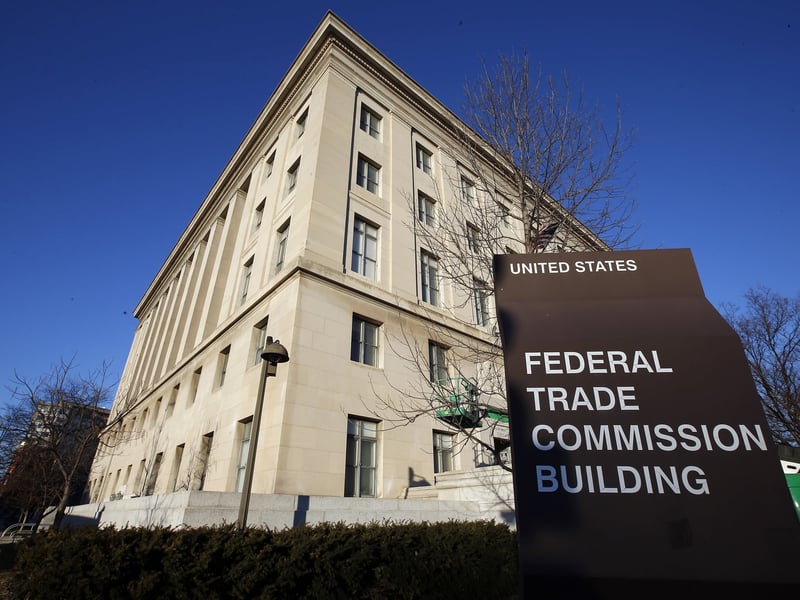
WASHINGTON (CN) — Media reliability organization NewsGuard urged a federal judge on Wednesday to block an expansive Federal Trade Commission subpoena the company argues was in retaliation for its low ratings of conservative news outlets.
U.S. District Judge Dabney Friedrich appeared unsure she could grant the organization’s requested preliminary injunction, doubtful NewsGuard could show the FTC’s civil investigative demand had caused irreparable harm and counted as a challengeable enforcement action.
The organization provides “Source Reliability Ratings” produced by expert analysts and journalists who research news sites and score them based on their journalistic standards. Conservative outlets such as Newsmax and One America News Network — favorites of President Donald Trump — have received low ratings, with One America News Network receiving 22.5 out of 100.
Friedrich, a Trump appointee, grilled Robert Corn-Revere, of the Foundation for Individual Rights and Expression and representing NewsGuard, to explain how exactly the organization had been harmed by the FTC’s documents request.
Corn-Revere said the subpoena had significantly impacted the organization’s business, both in the reputational harm the company had suffered with several advertising companies it had contracted with backing out and in the cost of legal fees.
“There is substantial harm to us right now. NewsGuard has had to spend over 30% of its total revenue to try and comply with the [civil investigative demand], and the ongoing request for information is focused on customers as well, which tends to scare them off,” Corn-Revere said.
Further, Corn-Revere said, the demands have chilled NewsGuard’s First Amendment speech, such as its rating system, as well as the organization’s relationships with advertising clients.
Friedrich asked Corn-Revere how exactly the FTC’s conduct had chilled NewsGuard’s speech, and he explained that the organization halted its publication of reports on misinformation in domestic advertisements and now only produces reports on foreign misinformation.
He pointed to the Supreme Court’s 2024 decision in NRA v. Vullo*,*where the high court unanimously held that the New York Department of Financial Services leveraged its authority to coerce the National Rifle Association’s business associates to distance themselves to suppress the group’s pro-gun speech.
FTC Chairman Andrew Ferguson’s statements, that he would use the commission’s “tremendous array of investigative tools [and] coercive power” to force publishers to “do what we say,” Corn-Revere said, clearly fit as unlawful viewpoint discrimination under Vullo.
FTC attorney Alex Potapov argued NewsGuard could not claim it was being irreparably harmed by a subpoena issued over eight months ago and could have simply moved to quash it rather than file a lawsuit and request a preliminary injunction.
Potapov added that the subpoena was part of a wider antitrust investigation regarding collusion in the digital advertising industry to withhold advertising from “disfavored media.” Ferguson has pointed to social media companies banning disinformation regarding Covid-19 and the 2020 election, as well as Trump’s ban from sites following the Jan. 6, 2021, Capitol riot.
According to Potapov, the FTC has issued 16 other civil investigative demands — including one against media watchdog Media Matters — leading Friedrich to ask whether any were as “incredibly broad” as those against NewsGuard and Media Matters. Potapov declined to speak on several nonpublic subpoenas and could only say that those two were of similar breadth.
In May 2025, the FTC targeted NewsGuard with a sweeping, 21-page subpoena demanding documents related to NewsGuard’s reliability ratings, identification of its customers and essentially all communications to or from the organization. The subpoena also seeks reporters’ notes, sources and financial documents dating back to Jan. 1, 2018.
NewsGuard said it tried to comply, providing over 40,000 pages of responsive documents, trying to explain to FTC staff how its ratings system works and submitting evidence that the company’s share of the market for advertiser brand safety tools is so low — less than 0.1% — that it could not possibly be the legitimate target of an antitrust investigation.
At a meeting last month, the FTC doubled down on demands for some of NewsGuard’s most sensitive information, including its subscribers, communications with customers, lists of all entities to receive a news rating, the particulars of each rating over time and documents showing how NewsGuard developed its methodology.
In addition to the subpoena, the FTC imposed a condition on the merger of Omnicom Group Inc. and The Interpublic Group of Companies Inc. — two of the four largest companies involved in media buying for ad agencies and advertisers — prohibiting them or their affiliates from contracting with NewsGuard or using its rating services.
In May 2025, the FTC issued an expansive subpoena seeking documents and communications related to Musk and the discovery exchanged in recent lawsuits between Media Matters and X. In a lawsuit challenging the subpoena, Media Matters argued Ferguson targeted the group out of personal animus.
 Follow @Ryan_Knappy
Subscribe to our free newsletters
Our weekly newsletter Closing Arguments offers the latest about ongoing trials, major litigation and rulings in courthouses around the U.S. and the world, while the monthly Under the Lights dishes the legal dirt from Hollywood, sports, Big Tech and the arts.