
 Search Articles


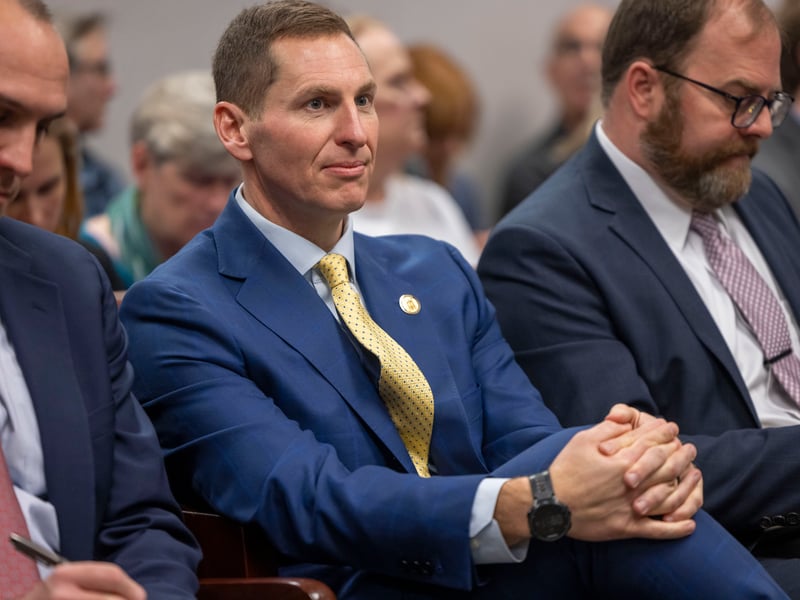
RALEIGH, N.C. (CN) — The North Carolina Court of Appeals heard arguments Friday over what has become a vicious court battle for a seat on the state Supreme Court.
The North Carolina associate justice race is the last uncertified statewide race in the country after Court of Appeals Judge Jefferson Griffin convinced the state Supreme Court to step in and prevent his election from being certified.
He strays his opponent, Associate Justice Allison Riggs, by 734 votes with over 5.5 million ballots cast in the race.
Griffin, who has not conceded, has claimed the state board of elections failed to properly follow the law and allowed ineligible voters to cast ballots. He wants as many as 65,000 ballots removed from the vote tally in his race, but has said in past filings that he doesn’t want these voters removed from the voter rolls.
Griffin takes issue with ballots cast by overseas voters, who were not required to provide photo identification — which he claims is contrary to state law mandating voters provide proof of ID — despite having voted twice absentee when he was deployed in the National Guard. He also claims that “never residents,” U.S. citizens who have never lived in America, should not be allowed to vote in statewide races, and that voters who are missing data in the state’s voter roll database should have to verify their identity to cure their ballots.
The board of elections says the state has confirmed the voting eligibility of over half of the 60,000 voters that Griffin argues have incomplete registration, but that errors occasionally occur in the system, including while the records were digitized, leading to discrepancies that Griffin is flagging as potential voting fraud. Griffin claims that this failure may have allowed non-citizens to vote, but the Republican challenger has yet to identify any voters who are not U.S. citizens.
“Judge Griffin is asking the court to enforce even-handed laws that ensure only qualified voters are allowed to vote,” said Griffin’s attorney, Craig Schauer, before the court Friday. “This case is not about changing laws after the election. It’s a case about enforcing the laws that were already on the books before the election.”
“The State Board intends to count unlawful ballots and thereby change the outcome of the election,” Griffin wrote in his brief, trading blows with opponents who have criticized Griffin for seeking to have ballots removed to flip the results of his race.
Schauer asked that the court resolve all outstanding federal issues and remand the case, instructing the board of elections to determine how many “never residents” and incomplete registrations there are, and then discount all of the disputed ballots.
A majority Republican panel heard arguments, with Republican Judges John Tyson and Fred Gore and Democrat Judge Toby Hampson present. The Court of Appeals has an overwhelming Republican majority, 12-3 — including Griffin, who recused himself — and declined a request from Riggs to hear the case en banc.
The panel appeared sympathetic to Griffin’s case Friday morning, despite Hampson’s critical approach to Griffin’s arguments, although Gore seemed concerned over the potential discounting of military ballots.
The state board of elections asked the court to uphold the decision of a Raleigh court, who affirmedthe election board’s original decision to dismiss Griffin’s election petitions.
Nicholas Brod, a deputy solicitor general at the state’s department of justice, called Griffin’s request to discount 65,000 voters “destabilizing” and pointed out that it is due to no fault of the voters that they are having their ballots challenged.
“From the voters’ perspective, they did everything that they were asked to do in order to cast a ballot,” said Brod. “I mean, the military and overseas voters, for example, they were told you don’t need to submit a photo ID. And if they had been told to submit a photo ID, they would have submitted that information.”
“It it is far too late to alter the rules of an election that has already taken place,” the board asserted in its brief, citing Supreme Court precedent that determined it is unlawful to cancel votes that were cast in compliance with official election guidance.
In her filings, Riggs called Griffin’s challenges an “unlawful attempt to change the election rules after the votes have been cast and counted,” and said the elections board correctly decided not to require photo ID for overseas voters, as the Uniform Military and Overseas Voters Act doesn’t require it. Griffin can’t establish these distant voters are ineligible, the Democratic incumbent said, nor has he presented evidence that local voters did not present the required information when they registered — or if they didn’t, that they are ineligible to vote.
“This Court should not sanction this selective disenfranchising of our military, their families, and overseas voters,” she said.
Raymond Bennett, counsel for Riggs, pointed out that domestic voters still had to verify their identity when they voted by providing photo ID, even if overseas voters did not.
“It is time for this election to come to an end for voters to know that their votes will count in this state if they follow the rules in place at the time of the election,” he said. “The state courts have the ability to provide that certainty and to strengthen the integrity of our elections by rejecting Judge Griffin’s protests on the merits under state law.”
Griffin’s election challenges have jumped from court to court, with the judge filing directly with the state Supreme Court after he failed to find success before the elections board and Raleigh court. His case was moved to federal court, then sent back to the North Carolina Supreme Court at Griffin’s request, which paused certification of his election but instructed Griffin to follow the statutory path to appeal election protests: starting in Raleigh court.
An appeal of the federal order sent the challenge to the Fourth Circuit, where a panel decided to allow state courts to resolve local issues before allowing any unresolved federal issues to be litigated afterwards. Griffin is now working his way up through the state courts, where his case is expected to exhaust the process and potentially end up before federal court again.
A representative for the North Carolina Department of Justice declined to comment. Counsel for the other parties did not immediately reply to a request for comment.
 Follow @SKHaulenbeek
 Follow @shaulenbeek.bsky.social
Subscribe to our free newsletters
Our weekly newsletter Closing Arguments offers the latest about ongoing trials, major litigation and rulings in courthouses around the U.S. and the world, while the monthly Under the Lights dishes the legal dirt from Hollywood, sports, Big Tech and the arts.