
 Search Articles


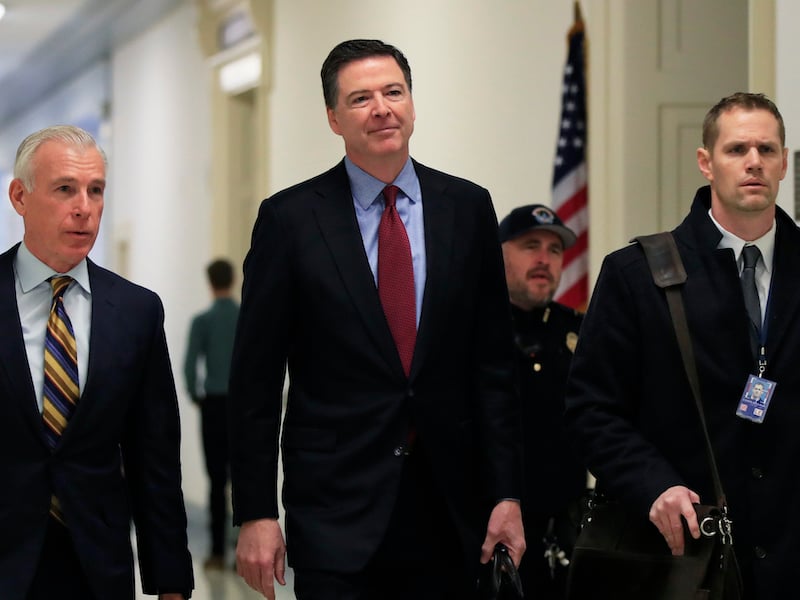
ALEXANDRIA, Va. (CN) — In a rare move, a federal judge ordered the Justice Department on Monday to turn over materials used to obtain former FBI Director James Comey’s indictment after finding investigative missteps.
“The court recognizes that the relief sought by the defense is rarely granted,” U.S. Magistrate Judge William Fitzpatrick wrote in a 24-page opinion. “However, the record points to a disturbing pattern of profound investigative missteps, missteps that led an FBI agent and a prosecutor to potentially undermine the integrity of the grand jury proceeding.”
Comey, accused of lying during a 2020 congressional hearing about his Russian election interference investigation, argues that interim U.S. Attorney for the Eastern District of Virginia Lindsey Halligan relied on tainted and improperly obtained materials to obtain a grand jury’s indictment.
Comey and New York Attorney GeneralLetitia James, who have both drawn the ire of President Donald Trump, are also pushing for dismissal of their criminal indictment over claims that Halligan’s appointment as interim U.S. attorney for the Eastern District of Virginia violated the law and that the efforts from Trump’s Justice Department constitute vindictive prosecution. The government accuses James of committing mortgage fraud with the purchase of a home in Norfolk, Virginia.
Comey accuses the government of using information obtained through an unrelated search warrant of Columbia Law School professor Daniel Richman, who was being investigated over disclosing classified information to a New York Times reporter. The government searched Richman’s devices for data stored during a time that correlates with his stint serving as Comey’s attorney. Fitzpatrick said the FBI should have filtered out any attorney-client privileged communications between the pair when scouring the data, but didn’t. The government closed Richman’s investigation in 2021 without filing any charges.
“Under longstanding Fourth Amendment precedent, the government may search for and seize only those materials expressly authorized by the terms of a search warrant issued in connection with specific predicate offenses,” Fitzpatrick said. “This cavalier attitude towards a basic tenet of the Fourth Amendment and multiple court orders left the government unchecked to rummage through all of the information seized from Mr. Richman, and apparently, in the government’s eyes, to do so again anytime they chose.”
Fitzpatrick slammed the government for not obtaining a new search warrant for Richman’s devices this year.
“Inexplicably, the government elected not to seek a new warrant for the 2025 search, even though the 2025 investigation was focused on a different person, was exploring a fundamentally different legal theory, and was predicated on an entirely different set of criminal offenses,” Fitzpatrick said.
The government’s lone witness, who testified before the grand jury in support of indicting Comey, is an unnamed FBI case agent who accessed confidential attorney-client information.
“Agent-3, rather than remove himself from the investigative team until the taint issue was resolved, proceeded into the grand jury undeterred and testified in support of the pending indictment,” Fitzpatrick said. “The government’s decision to allow an agent who was exposed to potentially privileged information to testify before a grand jury is highly irregular and a radical departure from past DOJ practice.”
After reviewing the grand jury materials himself, Fitzpatrick said the materials seized from the Richman warrants were the “cornerstone” of the government’s case. Fitzpatrick redacted two statements made by prosecutors that he believed could compromise the integrity of the indictment.
The judge also questioned whether the government committed procedural malpractice when obtaining the indictment. According to Fitzpatrick, the grand jury rejected the first indictment, which contained three counts against Comey, after finding probable cause for only two of the three counts at around 6:40 p.m. The record provided to Fitzpatrick then states that the grand jury deliberated on a second indictment, this time excluding the count for which they had not found probable cause, only seven minutes later.
“The short time span between the moment the prosecutor learned that the grand jury rejected one count in the original indictment and the time the prosecutor appeared in court to return the second indictment could not have been sufficient to draft the second indictment, sign the second indictment, present it to the grand jury, provide legal instructions to the grand jury and allow them to deliberate and render a decision on the new indictment,” Fitzpatrick said. “If this procedure did not take place, then the court is in uncharted legal territory in that the indictment returned in open court was not the same charging document presented to and deliberated upon by the grand jury.”
The government argues that the traditional policy of maintaining the secrecy of grand jury proceedings outweighs any potential legal violations.
U.S. District Judge Michael Nachmanoff, a Joe Biden appointee, is overseeing the case and assigned Fitzpatrick the job of reviewing privileged materials. The Justice Department did not respond to a request for comment, while Comey’s lead attorney, Patrick Fitzgerald, declined to comment.
Comey’s trial is slated to begin on Jan. 5, 2026.
Subscribe to our free newsletters
Our weekly newsletter Closing Arguments offers the latest about ongoing trials, major litigation and rulings in courthouses around the U.S. and the world, while the monthly Under the Lights dishes the legal dirt from Hollywood, sports, Big Tech and the arts.