
 Search Articles


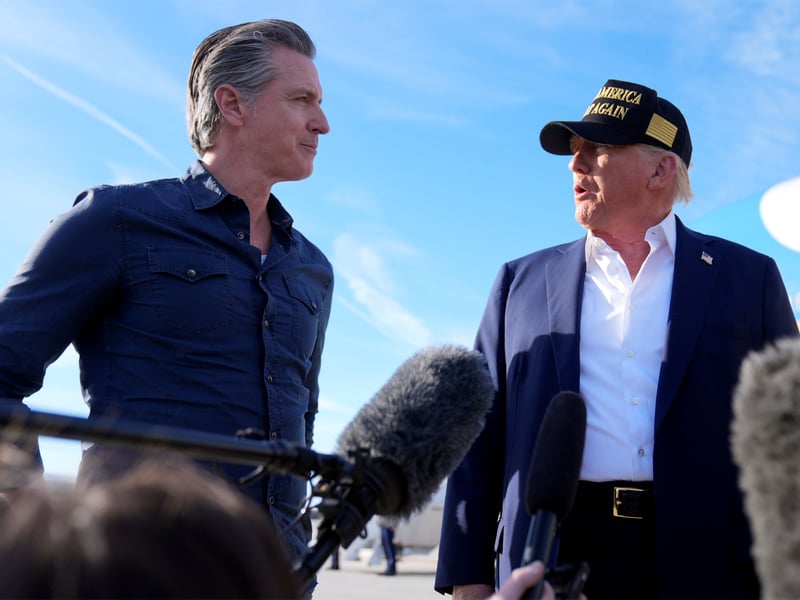
SAN FRANCISCO (CN) — How do you introduce a high-stakes lawsuit between some of the most powerful politicians in the nation, where the situation changes every day? Well, maybe open with a joke.
“So, everybody had a late night?” U.S. District Judge Charles R. Breyer said, evoking light laughter in the courtroom.
A federal judge on Friday said that although the Ninth Circuit stayed his order that would have prevented President Donald from “federalizing” the California National Guard against the Los Angeles protests, he could still possibly block the president’s orders on different grounds.
The development follows a Ninth Circuit panel’s late Thursday ruling allowing President Donald Trump to further “federalize” the California National Guard in the Los Angeles protests while a lawsuit from California Governor Gavin Newsom pends against the White House in federal court.
The decision dramatically changed the trajectory of Friday’s court hearing, which was originally set to argue a court order further blocking the president’s mobilization of troops against LA’s anti-ICE protests.
In court, Breyer said that because the Ninth Circuit’s decision expressly does not address Newsom’s claims under the Posse Comitatus Act, an injunction on those grounds could still be fair game.
The Ninth Circuit panel noted in its ruling that it was not making any decisions on California’s claims under the Posse Comitatus Act, which blocks federal troops from participating in regular civilian law enforcement except when authorized, or the Administrative Procedure Act.
“Consequently, the parties’ disputes about how federal forces are being deployed are not before us,” the panel wrote.
Thus, Breyer said it was “not clear” to him that the higher court’s ruling would still prevent him from issuing a preliminary injunction on those grounds. The judge invited both sides to submit briefs arguing whether he had the authority to even make such a ruling.
“Depending on what you say — because I’m actually interested in what authority I have — I’ll decide what to do next,” Breyer told attorneys.
Breyer said he wasn’t even sure he would have a hearing on the issue and could even decide the matter on just the papers.
By the end of the hearing, the fate of Newsom’s lawsuit was left uncertain. However, the judge vowed to uphold the Ninth Circuit’s ruling.
“Just as litigants don’t get to reject my opinions and findings, my role is to follow precisely and impartially the directions of the Ninth Circuit,” the Bill Clinton appointee stated.
The judge also acknowledged that the sudden request for briefs by Monday, June 23, would have some lawyers working through their weekend but called the issues “important.”“Sorry that I’m ruining everyone’s weekend, but here we are,” Breyer joked.
Newsom sued Trump in federal court on June 9 — just days after the protests began and the state National Guard was mobilized — arguing that Trump’s deployment of the troops violates the 10th Amendment and the Administrative Procedure Act by exceeding his constitutional authority.
Since protests began, the Trump administration has ordered as many as 4,000 California National Guard troops and 700 Marines into LA since protests erupted last week over U.S. Immigration and Customs Enforcement raids of downtown businesses and Home Depot parking lots, where day laborers gather to find work.
Newsom says that federal law requires a governor’s consent before the president can mobilize a state’s National Guard for domestic law enforcement. Without immediate court intervention, he warned, the unauthorized use of troops would harm state sovereignty, inflame tensions and fuel unrest.
Breyer issued a temporary restraining order on June 12 restoring Governor Newsom’s control of the National Guard, but it was quickly blocked the same day with an emergency stay from a Ninth Circuit panel of judges.
In its unanimous opinion on Thursday, the panel took issue with the breadth of Breyer’s temporary restraining order.
“Even if defendants failed to comply with the statute’s procedural requirement, such failure would not justify the injunctive relief imposed by the district court,” the panel said. “The proper remedy would be injunctive relief tailored to defendants’ failure to issue the order through the governor — not an injunction prohibiting the president from exercising his lawful authority to call up the National Guard.”
Although the panel ultimately disagreed with President Trump’s argument that his deployment decision was “unreviewable,” it still determined that the president was within his authority to send in the state National Guard.
This case was filed in the Northern District of California and heard at the Phillip Burton Federal Courthouse in San Francisco, California.
Subscribe to our free newsletters
Our weekly newsletter Closing Arguments offers the latest about ongoing trials, major litigation and rulings in courthouses around the U.S. and the world, while the monthly Under the Lights dishes the legal dirt from Hollywood, sports, Big Tech and the arts.