
 Search Articles


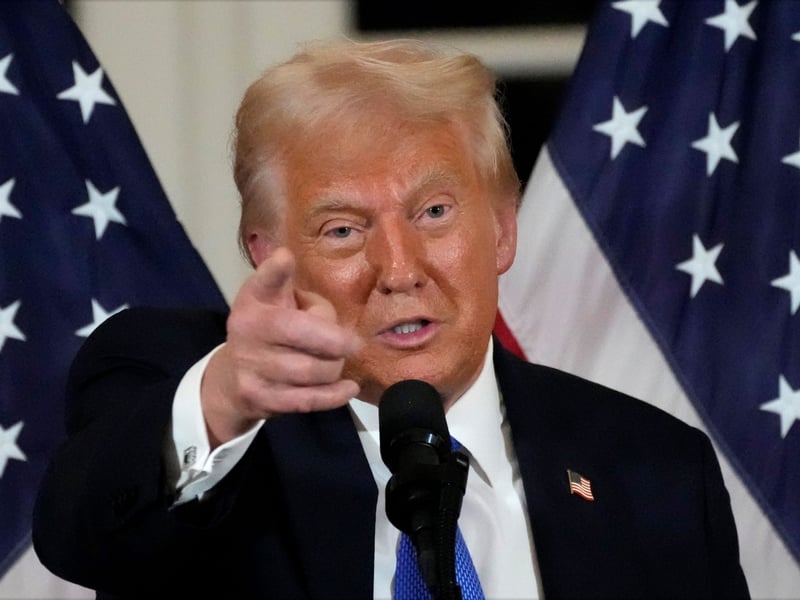
WASHINGTON (CN) — A federal judge ruled on Tuesday that President Donald Trump’s termination of Merit Systems Protection Board Chairman Cathy Harris was illegal and ordered her to be reinstated to her position.
The decision is the latest legal blow to Trump’s effort to terminate top officials at independent government agencies without due process and is likely to reach the Supreme Court.
U.S. District Judge Rudolph Contreras determined that Trump could not remove Harris, one of three members on the employee appeals board, without just causes as defined by Congress when it formed the appeals board.
“The president thus lacks the power to remove Harris from office at will,” the Barack Obama appointee said. “Because the president did not indicate that he sought to remove Harris for inefficiency, neglect of duty or malfeasance in office, his attempt to terminate her was unlawful and exceeded the scope of his authority.”
Trump terminated Harris on Feb. 10 with a two-sentence email that provided no reason for her immediate termination. She then sued on Feb. 11, where Contreras granted a temporary restraining order preventing her removal on Feb. 18.
Contreras wrote in his 35-page order that the appeals board — which Congress created to regulate the civil service and address discrimination, loyalty oaths, political coercion, and whistleblower retaliation — needed to be independent.
“Direct political control over the MSPB would have limited effect on the president’s implementation of his policy agenda,” Contreras wrote. “It would instead neuter the Civil Service Reform Act’s statutory scheme by allowing high-ranking government officials to engage in prohibited practices then pressure the MSPB into inaction.”
The government defended the termination and argued that the appeals board wielded “significant executive power” and thus its members should be removable at the president’s will.
Contreras cited the landmark 1935 case Humphrey’s Executor v. United States, which has long limited the president’s ability to remove independent agency heads without just cause.
He determined that the appeals board was clearly covered by Humphrey’s Executor, which dealt with President Franklin D. Roosevelt’s effort to force William Humphrey, the conservative commissioner of the Federal Trade Commission, over his opposition to the New Deal.
Harris, who was two years into a seven-year term, was appointed in 2022 by former President Joe Biden and confirmed by the Senate, who later corned her as chairman of the appeals board in March 2024. Her term was set to expire on March 1, 2028.
After fellow Democrat and Biden appointee Raymond Limon announced his retirement on Friday, there is currently one remaining member on the board — Henry Kerner, a Republican appointed by Biden in 2024. After trying to terminate Harris, the Trump administration announced Kerner would serve as acting chair.
Harris’ is one of several high-profile independent agency terminations to be challenged in the federal courthouse in Washington.
Trump moved to fire Hampton Dellinger, head of the Office of Special Counsel, and members of the Federal Labor Relations Authority, the National Labor Relations Board, and the U.S. Privacy and Civil Liberties Oversight Board since Jan. 20.
U.S. District Judge Amy Berman Jackson, an Obama appointee, ruled Saturday that Dellinger’s termination was unlawful for the same reasons as Harris’ and barred any removal without clear cause.
The Trump administration appealed Jackson’s decision to the D.C. Circuit Court of Appeals, where a three-judge panel is expected to uphold her ruling.
While the government has yet to appeal Contreras’ final ruling on Tuesday, there is an outstanding appeal of his temporary restraining order at the D.C. Circuit.
Dellinger’s case, where the government already tried to appeal previous temporary restraining orders to the Supreme Court, is expected to reach the high court again and present an opportunity to either overturn or strengthen Humphrey’s Executor.
Trump also terminated 17 inspectors general across federal agencies like the Departments of Defense, State, Education, Labor, Agriculture, Veterans Affairs, Health and Human Services, and others, eight of whom sued him on Feb. 12.
 Follow @Ryan_Knappy
Subscribe to our free newsletters
Our weekly newsletter Closing Arguments offers the latest about ongoing trials, major litigation and rulings in courthouses around the U.S. and the world, while the monthly Under the Lights dishes the legal dirt from Hollywood, sports, Big Tech and the arts.