
 Search Articles


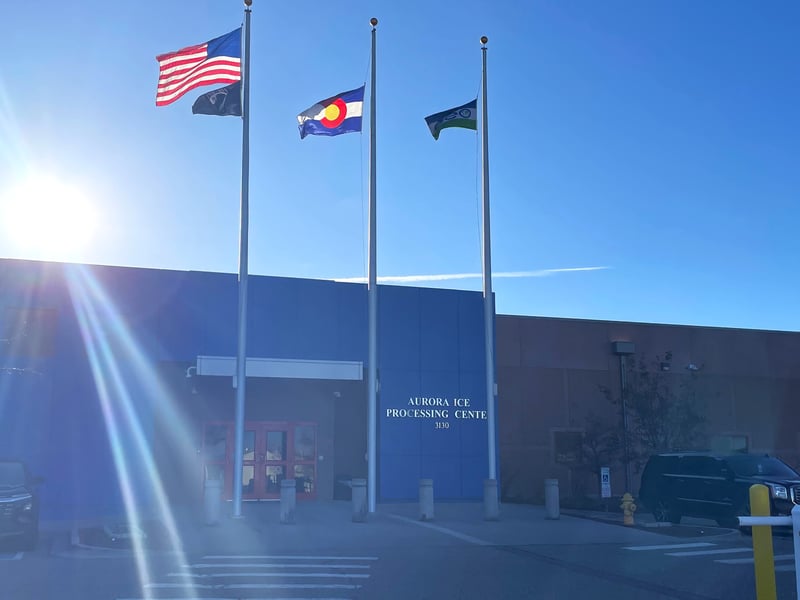
DENVER (CN) — Finding states have no obligation to help enforce federal immigration law, a federal judge dismissed Tuesday the Trump administration’s lawsuit challenging several Colorado “sanctuary” laws aimed at protecting immigrants by barring coordination between local law enforcement and federal immigration authorities.
“The Supremacy Clause undoubtedly prevents states from contradicting or obstructing the federal immigration scheme, but it does not go so far as to compel state assistance. The decision to implement the federal immigration scheme is reserved to the states,” wrote U.S. District Judge Gordon Gallagher in a 13-page opinion.
The U.S. Department of Justice sued the state of Colorado, along with the city and county of Denver, in federal court last May, challenging a suite of “sanctuary” laws passed in recent years to protect immigrants by limiting coordination between local law enforcement and federal immigration authorities.
One such law, signed by Democratic Governor Jared Polis in 2019, promised to “Protect Colorado Residents From Federal Government Overreach,” effectively preventing local law enforcement from carrying out arrests on behalf of ICE.
Besides depriving ICE of aid from local law enforcement and preventing the federal government from accessing immigrants’ personal information from state databases, U.S. attorneys had argued Colorado’s refusal to house immigrants in local jails left ICE with just one facility, located in Aurora, in a state spanning 104,000 square miles.
In addition to the Federal Government Overreach law, U.S. attorneys also targeted SB21-131, “Protect Personal Identifying Information Kept By State,” and HB23-1100, “Restrict Government Involvement in Immigration Detention.”
In April 2024, several conservative counties sued the state over two of these laws, arguing their local sheriffs wanted to help curb illegal immigration and support ICE. After a Denver judge dismissed, the counties appealed.
While U.S. attorneys argued the state laws violated the Constitution’s supremacy clause, Colorado countered with the 10th Amendment, which protects state sovereignty.
“Our nation was founded on a system of ‘dual sovereignty’ in which citizens would have two political capacities, one state and one federal, each protected from incursion by the other,” Gallagher wrote in the opinion. “To preserve such a system, state legislatures must necessarily be free to govern according to the interests and will of their constituents, not Congress.”
To find otherwise, the Joe Biden appointee said, would force Colorado to carry the burden of implementing the federal immigration scheme, from the time spent researching and communicating individuals’ immigration status to federal officers to the resources required to house immigrant detainees in state detention facilities.
“Not only would this outcome compel Colorado and Denver to ‘bear the expense’ of the federal civil immigration scheme by forcing them to pay officials performing functions solely for the purpose of a federal regulatory program, it would also remove authority over these officials from Colorado and Denver to the federal government,” Gallagher wrote in the opinion.
Calling the Trump lawsuit an attack on state sovereignty, Colorado Attorney General Phil Weiser applauded the dismissal.
“The 10th Amendment protects states’ rights to make our own decisions about how our personnel protect public safety,” Weiser told Courthouse News over email. “Today’s court ruling is a win for public safety and a win for Coloradans’ rights. The Trump administration needs to stop singling out Colorado for punishment.”
Representatives for the U.S. Department of Justice did not immediately respond to an inquiry for comment.
 Follow @bright_lamp
Subscribe to our free newsletters
Our weekly newsletter Closing Arguments offers the latest about ongoing trials, major litigation and rulings in courthouses around the U.S. and the world, while the monthly Under the Lights dishes the legal dirt from Hollywood, sports, Big Tech and the arts.