
 Search Articles


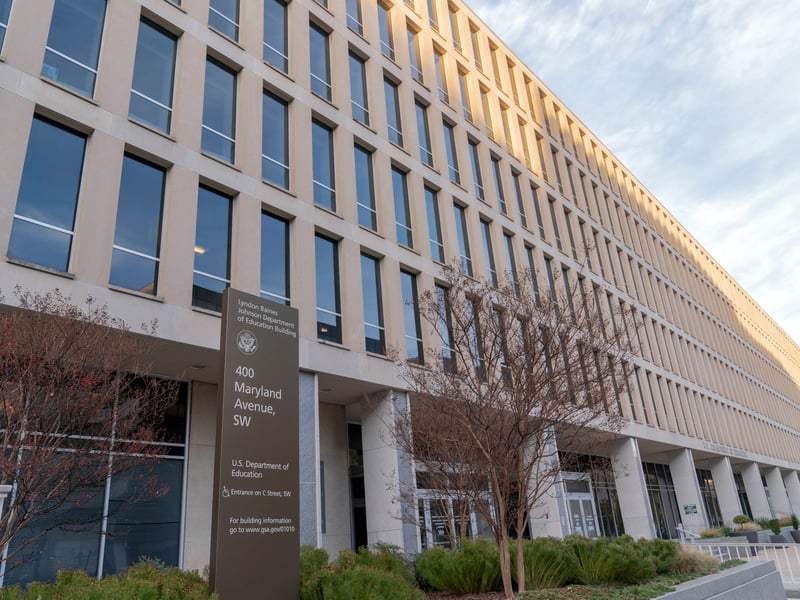
WASHINGTON (CN) — A federal judge on Monday denied a California student association’s request to temporarily bar agents of Elon Musk’s so-called Department of Governmental Efficiency from gaining access to Department of Education data.
U.S. District Judge Randolph Moss, a Barack Obama appointee, ruled in a 13-page opinion that the “mere access” of student data by six DOGE agents would not irreparably harm to and warrant a temporary restraining order.
“What University of California Student Association overlooks is that the context of the dissemination matters,” Moss wrote. “Courts find dissemination of information to be an irreparable injury where, for example, highly sensitive information will be made public, or ends up in the hands of someone with no obligation to keep it confidential.”
Moss added that courts have not found irreparable injury with non-public disclosures to individuals required to keep the information confidential, which appeared to be the case with the DOGE agents.
The student association, representing more than 230,000 students across nine campuses in California, argued in its lawsuit that disclosing their data violated the 1974 Privacy Act, which bars the federal government from disclosing or misusing sensitive personal and financial information.
Further, any disclosure would violate confidentiality provisions of the Internal Revenue Code by exposing records containing tax information to DOGE agents, the association argued.
The ruling is the latest example of federal judges rejecting emergency relief to bar DOGE agents from embedding themselvesacross the federal government, including at the Departments of Labor and Health and Human Services as well as the Consumer Financial Protection Bureau.
On Friday, U.S. District Judge John Bates, a George W. Bush appointee, denied a temporary restraining order requested by a union coalition representing employees at each agency, similarly finding no irreparable harm.
Bates wrote in his order that he had serious concerns about the privacy issues raised in the case.
“Those concerns are all the graver now that the data includes information on all American who rely on Medicare and Medicaid, as well as countless consumers,” Bates said. “However, on the record before it, the court does not conclude that plaintiffs are entitled to the extraordinary relief of a temporary restraining order.”
In a parallel case challenging DOGE access to the Treasury Department, U.S. District Judge Colleen Kollar-Kotelly, a Bill Clinton appointee, approved a consent order between the Treasury Department and employee unions preventing anyone beyond two DOGE employees detailed to the Treasury from accessing the systems.
Since her ruling, one of the two employees — Marko Elez — resigned from DOGE and the Treasury after a series of racist tweets posted by the 25-year-old were uncovered. Her order now pertains to just Tom Krause, CEO of the Cloud Software Group.
Musk and DOGE have become targets for ever-increasing litigation over efforts to gut entire agencies like the U.S. Agency for International Development and to terminate federal employees across the government en masse.
A coalition of 14 state attorneys general sued Musk directly on Thursday, challenging his “virtually unchecked authority” within the White House as a “special government employee.”
They argue that Musk had no constitutional power and asked U.S. District Judge Tanya Chutkan to “restore constitutional order” by enjoining Musk from issuing orders to anyone in the executive branch outside of DOGE itself and declare all his actions to date as illegal and without effect.
Chutkan, an Obama appointee, expressed doubt in a hearing on Monday that she could immediately bar Musk or DOGE agents from gaining access without further evidence of irreparable harm.
“I’m not seeing it so far,” said Chutkan, who presided over Trump’s election interference criminal case. “It’s sort of like a prophylactic TRO and that’s not allowed.”
Joshua Fisher, director of the Office of Administration within the Executive Office of the President, clarified Musk’s position in a declaration to Chutkan.
Fisher wrote that Musk is merely an adviser to the president, much like Anita Dunn was during former President Biden’s administration and thus had no authority to make government decisions himself.
He further clarified that Musk had no official ties to DOGE, despite Musk frequently posting on X, formerly Twitter, about the group’s activities and defending its conduct to the press in the Oval Office last week.
“He is not an employee of the U.S. DOGE Service or U.S. DOGE Service temporary organization,” Fisher said. “Mr. Musk is not the U.S. DOGE Service administrator.”
 Follow @Ryan_Knappy
Subscribe to our free newsletters
Our weekly newsletter Closing Arguments offers the latest about ongoing trials, major litigation and rulings in courthouses around the U.S. and the world, while the monthly Under the Lights dishes the legal dirt from Hollywood, sports, Big Tech and the arts.