
 Search Articles


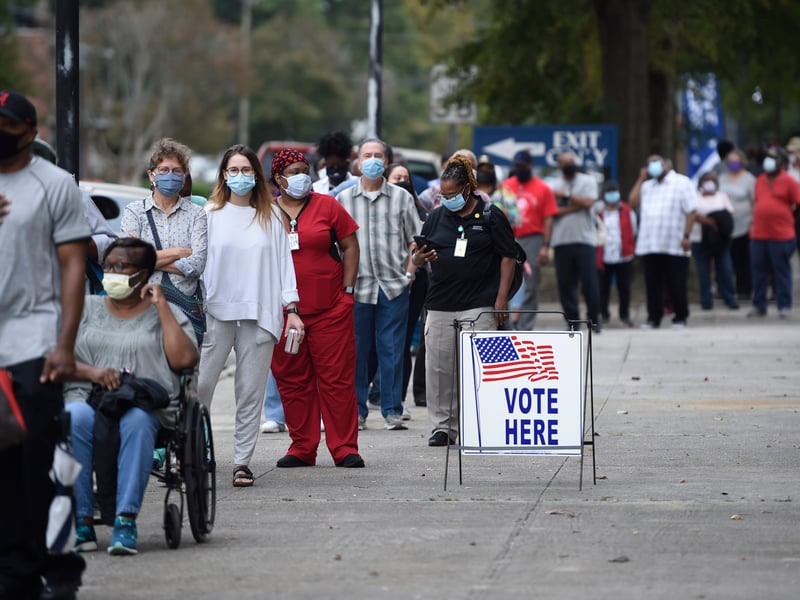
ATLANTA (CN) — A Georgia federal judge refused late Wednesday to block portions of the state’s new voting law, citing concerns about changes to election administration rules mere days before runoff races in two special elections.
U.S. District Judge J.P. Boulee rejected election integrity activists’ request for a preliminary injunction blocking the implementation of parts of Georgia’s controversial elections law, Senate Bill 202, which went into effect July 1.
Boulee, a Donald Trump appointee, wrote that he would not “change the law in the ninth inning.”
Citing “the risk of disrupting the administration of an ongoing election,” the judge ruled that the public interest in holding orderly elections on July 13 outweighed the need for an injunction.
Since the underlying elections that led to the runoffs have already occurred, an order mandating different rules for the runoffs would force election administrators “to grapple with a different set of rules in the middle of an election,” Boulee wrote in an 11-page order.
Early voting is currently underway in two state House of Representatives runoff races that will conclude Tuesday. The contests in Cobb County and South Georgia will seat two new state representatives to replace Republicans who resigned earlier this year.
Wednesday’s decision was in response to a motion filed by the Coalition for Good Governance, an election security group, asking the judge to block enforcement of five provisions of SB 202. The challenged provisions include a requirement that voters request absentee ballots at least 11 days before a runoff.
The motion also asked the court to intervene to stop provisions prohibiting observers from reporting problems to anyone but election officials, prohibiting the intentional observation of an elector while casting a ballot, preventing observers from estimating absentee ballots cast before polls are closed, and banning the photographing of voted ballots.
The law is currently being challenged in eight federal lawsuits, including one filed by the U.S. Department of Justice. However, the lawsuit filed by the DOJ on June 25 opposes different aspects of the law, including new voter ID requirements, ballot drop box limits, provisional ballot rejections, and a ban on handing out food and water to voters waiting in line.
“This is just another in the line of frivolous lawsuits against Georgia’s election law based on misinformation and lies. We will continue to meet them and beat them in court,” Secretary of State Brad Raffensperger said in a statement Thursday.
A spokesperson for Georgia Governor Brian Kemp, a Republican like Raffensperger, said he does not typically comment on pending litigation.
Wednesday’s narrow ruling did not weigh in on the plaintiffs’ allegations that the law is unconstitutional and violates the Voting Rights Act.
Marilyn Marks, executive director of the Coalition for Good Governance, said in a statement Thursday that the organization was “disappointed that the unconstitutional measures in SB202 will control the July 13 runoff, with all the dangers they bring to the integrity and transparency of that election.”
Marks said the organization is “concerned about the voter confusion that will no doubt occur with these little-known rapid changes to the rules.”
Although Boulee ruled against the request for an immediate preliminary injunction, the underlying complaint challenging the law is still pending in federal court.
Follow Kayla Goggin on Twitter
 Follow @KaylaGoggin_CNS
Subscribe to our free newsletters
Our weekly newsletter Closing Arguments offers the latest about ongoing trials, major litigation and rulings in courthouses around the U.S. and the world, while the monthly Under the Lights dishes the legal dirt from Hollywood, sports, Big Tech and the arts.