
 Search Articles


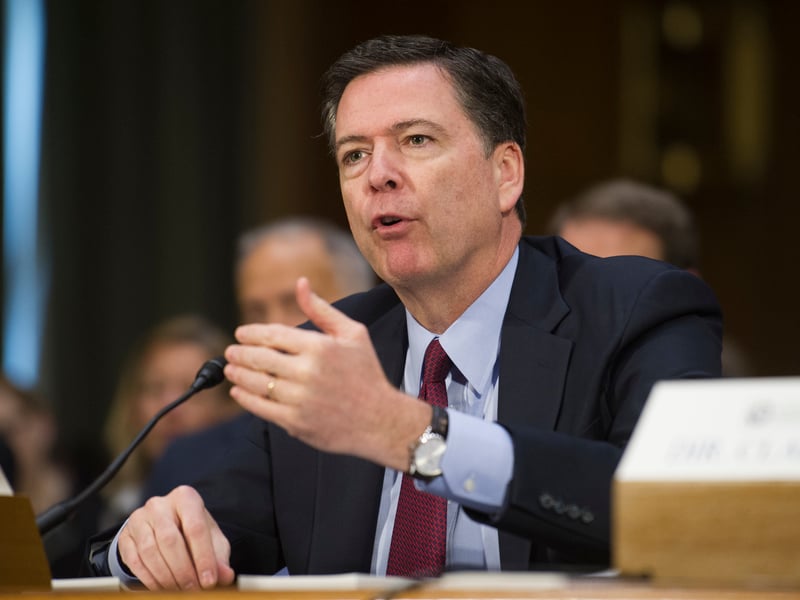
ALEXANDRIA, Va. (CN) — The grand jury that charged former FBI Director James Comey never saw the final indictment, an attorney for the government confirmed during a hearing on the case Wednesday.
The admission from attorneys for the U.S. Department of Justice came during a hearing theoretically focused on a different aspect of the case — whether an interim prosecutor was acting at the behest of President Donald Trump.
“But for the president’s animosity, we would not be here today,” said attorney Michael Dreeben, who represented Comey during the hearing. The charges — lying during a Senate hearing and obstructing a government proceeding — represent an abuse of power and should be dismissed with prejudice, he argued.
But U.S. District Court Judge Michael Nachmanoff interrupted with questions focused on Lindsey Halligan, interim U.S. attorney for the Eastern District of Virginia, who led the case.
The original copy of the Comey indictment had three charges — two of which were true-billed by the jury. The indictment was redrafted to reflect the change.
Nachmanoff, a Joe Biden appointee, called upon Halligan, who sat silently throughout the hearing, to address the court about whether the entire grand jury saw the final draft. Standing, she confirmed that the foreperson and another grand juror were also present.
“The second indictment, the operative indictment, was never shown to the entire grand jury,” Nachmanoff concluded.
“Yes, that is my understanding,” confirmed N. Tyler Lemons, an attorney for the Department of Justice.
Dreeben later remarked that this was an additional basis to dismiss the case.
The hearing was originally focused on whether the prosecution had been driven by the fury of Trump, who has described Comey as a bad cop. For his part, Comey accused Trump of being unfit for office.
Lemons countered that Comey was not indicted because the president doesn’t like him. “He was indicted because he lied,” he said.
Criticism of the case began at its inception and concentrated on the unhidden rancor between Trump and Comey. On Sept. 20, Trump posted a memo to Attorney General Pamela Bondi making clear that he wanted to see cases brought against Comey, New York Attorney General Letitia James and Senator Adam Schiff, a California Democrat.
“We can’t delay any longer, it’s killing our reputation and credibility,” Trump asserted in the post. He then described his aide, Halligan, an insurance attorney, as a good lawyer.
Likening the post to the words to King Henry II of England, “Will no one rid me of this meddlesome priest,” Dreeben argued that the memo represented marching orders for Trump’s aides.
Less than two days later, Halligan was sworn in as interim U.S. attorney for the Eastern District of Virginia. On Sept. 25, her fourth day on the job, a grand jury indicted Comey on charges of lying during a Senate hearing that took place five years ago.
Nachmanoff also leaned into questions about whether Lemons had seen a declination memo — which would indicate why other prosecutors had declined the case. Lemons said such a memo may be considered a confidential work product.
While a trial has been scheduled for January, Nachmanoff took the matter of whether to dismiss the case under advisement and will rule later. Another judge — Senior U.S. District Judge Cameron McGowan Currie, a Bill Clinton appointee — is also weighing a dismissal motion specifically regarding the appointment of Halligan. During a recent hearing, Currie complained that a portion of the grand jury’s transcript was missing. A DOJ spokesperson denied this.
Additionally, U.S. Magistrate Judge William Fitzpatrick, overseeing a portion of the case that centered on classified documents, ordered the government to give Comey’s legal team materials used to obtain the indictment.
In a separate case, James, another prominent Trump critic, was charged with mortgage fraud. Both she and Comey have entered not guilty pleas.
Subscribe to our free newsletters
Our weekly newsletter Closing Arguments offers the latest about ongoing trials, major litigation and rulings in courthouses around the U.S. and the world, while the monthly Under the Lights dishes the legal dirt from Hollywood, sports, Big Tech and the arts.