
 Search Articles


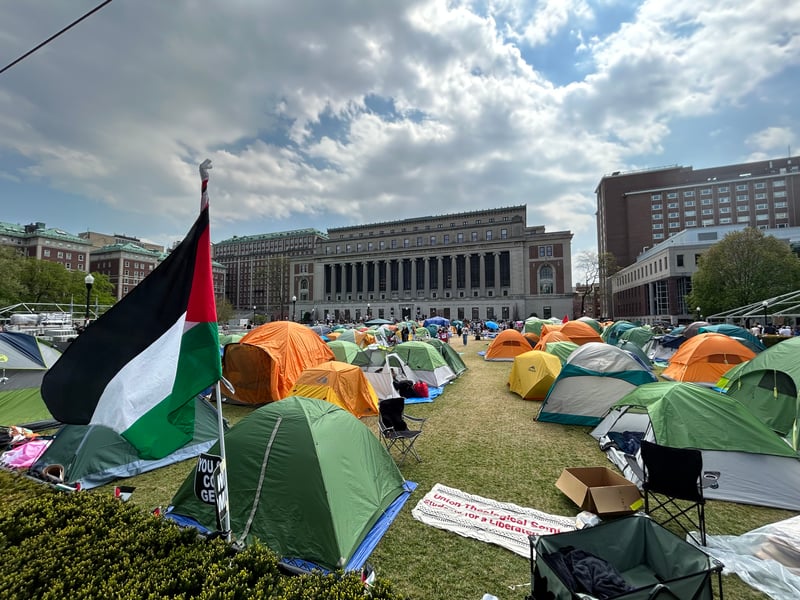
MANHATTAN (CN) — A federal judge in New York heard arguments on Tuesday in a case brought by Columbia University students, who are seeking a court order to prevent the Ivy League college from sharing the identities and records of pro-Palestinian protesters with the Republican-led Committee on Education and the Workforce in the House of Representatives.
U.S. District Judge Arun Subramanian, a Joe Biden appointee in the Southern District of New York, already temporarily blocked the school from disclosing those records but will now decide whether to extend that block or allow Columbia to cooperate with the congressional committee.
On Tuesday, Subramanian probed a congressional lawyer on the intended use of those records should the committee come into their possession. The lawyer, Todd Tatelman, told the judge that he doesn’t believe the students’ identities will be publicly shared for the sake of disclosure. But he couldn’t rule out the possibility that the records would be turned over to “an administrative agency for some kind of enforcement effort.”
“At this point, I cannot rule anything out, your honor,” Tatelman said.
It’s a significant question, considering one of the named plaintiffs in the lawsuit is Mahmoud Khalil, the Palestinian activist and Columbia graduate who was detained earlier this month by federal immigration authorities for his outspoken criticism of the Israeli government’s ongoing bombing campaign in the Gaza Strip.
Khalil is fighting his deportation in a separate case, as the Trump administration remains determined to rescind his green card, which gives him lawful permanent resident status. He remains in an immigration holding facility in Louisiana, more than 1,000 miles away from his New York City home and eight-month pregnant wife.
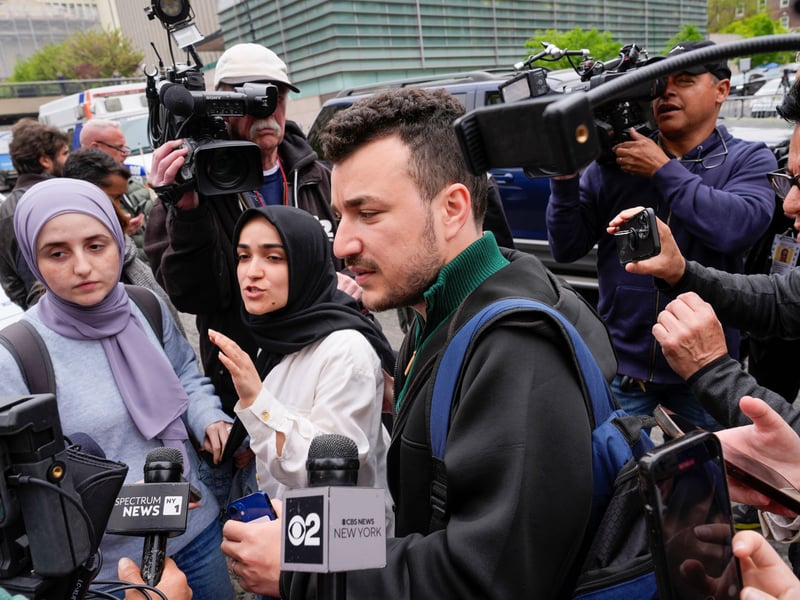
Khalil is one of eight students — the other seven being pseudonymous — named in the class action to keep student protesters’ records out of the hands of the congressional committee amid the federal government’s push to silence pro-Palestinian voices on college campuses and beyond.
The students filed the lawsuit against Columbia and the congressional committee on March 13, the same day the Trump administration threatened to withhold $400 million in federal funds from Columbia if it didn’t comply with several demands to tackle “antisemitism,” including a mask ban on campus and limiting the school’s Middle East Studies department. The school has since ceded to the administration’s orders.
Columbia also shared limited information on student protests with the Committee on Education and the Workforce before the judge ordered it not to, the university’s lawyer said in court on Tuesday. He claimed that identities were not yet revealed, though they could be shared in the future if Judge Subramanian deems it lawful.
That would have a “profound,” chilling effect on the free speech of all Columbia attendees, the students’ lawyers said Tuesday. Amy Greer, who represents the students, as well as Khalil in his personal immigration fight, told the judge that some students are afraid to wear keffiyehs on campus, fearing they’ll be falsely flagged as antisemites to the congressional committee.
“It does chill speech, they feel targeted,” Greer said of the committee’s demand for student data. “They are frightened when they see their own identities are vilified.”
Greer added that the committee and the Trump administration as a whole are intentionally using an overly broad definition of antisemitism to target speech that they don’t like.
“They’re trying to prohibit certain kinds of criticisms of Israel,” Gadeir Abbas, another lawyer for the students, said Tuesday.
Columbia has become a key target of the Trump administration after its pro-Palestine protests last spring gained national attention. President Donald Trump has called the protests antisemitic and pledged to punish the university for failing to quell them sooner.
The school’s attorney Marshall Miller told the judge on Tuesday that the school is looking to remain as unencumbered as possible to comply with both the courts and the federal government.
“If there were to be an injunction here against one of the governmental parties, of course we would be charged with obeying that injunction,” Miller said. “We just want to make sure we don’t get put in the position where we’d be in contempt of Congress … and at the same time potentially run afoul of the court. That’s the conundrum we most want to avoid.”
Subramanian didn’t immediately issue a ruling from the bench on Tuesday and directed further briefing from the parties.
 Follow @Uebey
 Follow @uebey.bsky.social
Subscribe to our free newsletters
Our weekly newsletter Closing Arguments offers the latest about ongoing trials, major litigation and rulings in courthouses around the U.S. and the world, while the monthly Under the Lights dishes the legal dirt from Hollywood, sports, Big Tech and the arts.