
 Search Articles


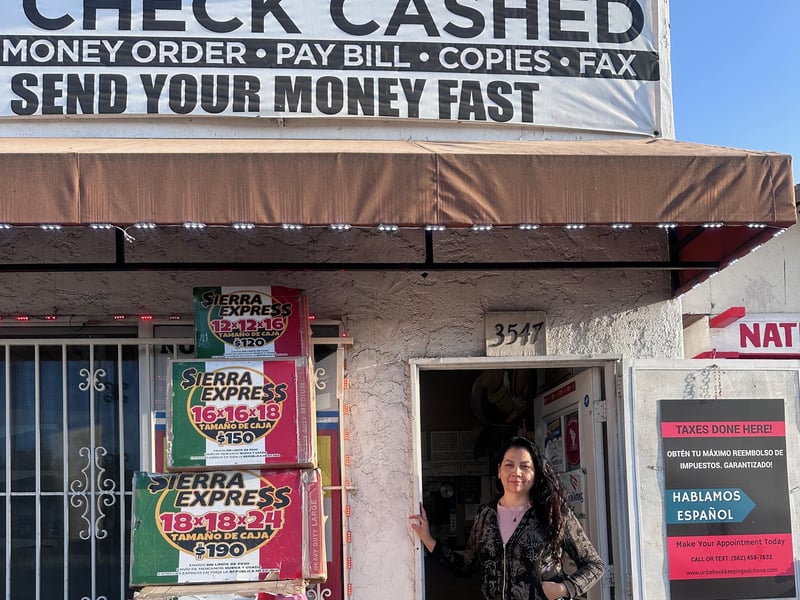
(CN) — A federal judge on Tuesday halted enforcement of a new requirement by the Treasury Department’s Financial Crimes Enforcement Network that check cashers, currency exchangers and other money service businesses in 30 ZIP codes along the Mexican border report all cash transactions over $200 to federal law enforcement.
U.S. District Judge Janis Sammartino in San Diego issued a temporary restraining order that only applies to counties that are under her jurisdiction within the Southern District of California.
The judge said the plaintiff, a small money transferring business in San Diego, had a substantial likelihood of success on the merits of their claims that the so-called Geographic Targeting Order was unlawfully issued without undergoing the required notice-and-comment procedures and that it is arbitrary and capricious.
The judge set a May 15 hearing to decide on a more thoroughly argued basis whether to issue a preliminary injunction against enforcement of the requirement.
A spokesperson for the U.S. attorney’s office in San Diego, which is representing the Financial Crimes Enforcement Network in the litigation, declined to comment on the ruling.
The Financial Crimes Enforcement Network, or FinCEN, has said the rule was enacted to uncover evidence of money laundering and other financial transactions by Mexican drug cartels.
But Esperanza Gomez Escobar, the owner of Novedades y Servicios, said in a complaint filed last week that the requirement will not only burden the business with mountains of unnecessary paperwork but also force them to surveil their customers without the government providing any probable cause to suspect them of any wrongdoing.
Gomez Escobar describes her business as a small and independently run shop that provides money transfers, money orders and check cashing services to local San Diegans to do perfectly legal things, like cash payroll checks, pay rent or send money to family.
Before the FinCEN order went into effect on April 14, money service businesses like Gomez Escobar’s had to collect customers’ information for transactions over $3,000 and report all cash transactions over $10,000 to FinCEN using a form called a Currency Transaction Report.
Most customers’ financial transactions range from $300 to $450, Gomez Escobar argues. With each report taking approximately 24 minutes to complete, she might have to hire a full-time employee just to prepare reports, which she can’t afford, she claims.
In the meantime, she fears customers will just use another money service business in a nearby ZIP code that wasn’t included in the enforcement zone.
Of the 30 ZIP codes included in the order, 19 are in Texas, while 11 are in California, affecting 1.2 million people who live in that area.
Because the ZIP codes are noncontiguous and noticeably excludes any ZIP codes in border communities in Arizona or New Mexico, the idea that the government enacted this rule to ferret out cartel money laundering in increments of $200 is implausible since cartel members could just travel to money service businesses in another ZIP code to skirt the new rule, said Robert Johnson of the Institute for Justice, one of Gomez Escobar’s attorneys.
“Burying legitimate businesses in mountains of paperwork isn’t a legitimate way to fight crime,” added Betsy Sanz of the Institute For Justice, another one of Gomez Escobar’s attorneys.
Neither is “reaching into very personal information of very average people in this very sweeping way… particularly when there isn’t any suspicion; here, it’s just a dragnet,” she added.
 Follow @edpettersson
Subscribe to our free newsletters
Our weekly newsletter Closing Arguments offers the latest about ongoing trials, major litigation and rulings in courthouses around the U.S. and the world, while the monthly Under the Lights dishes the legal dirt from Hollywood, sports, Big Tech and the arts.