Search Articles


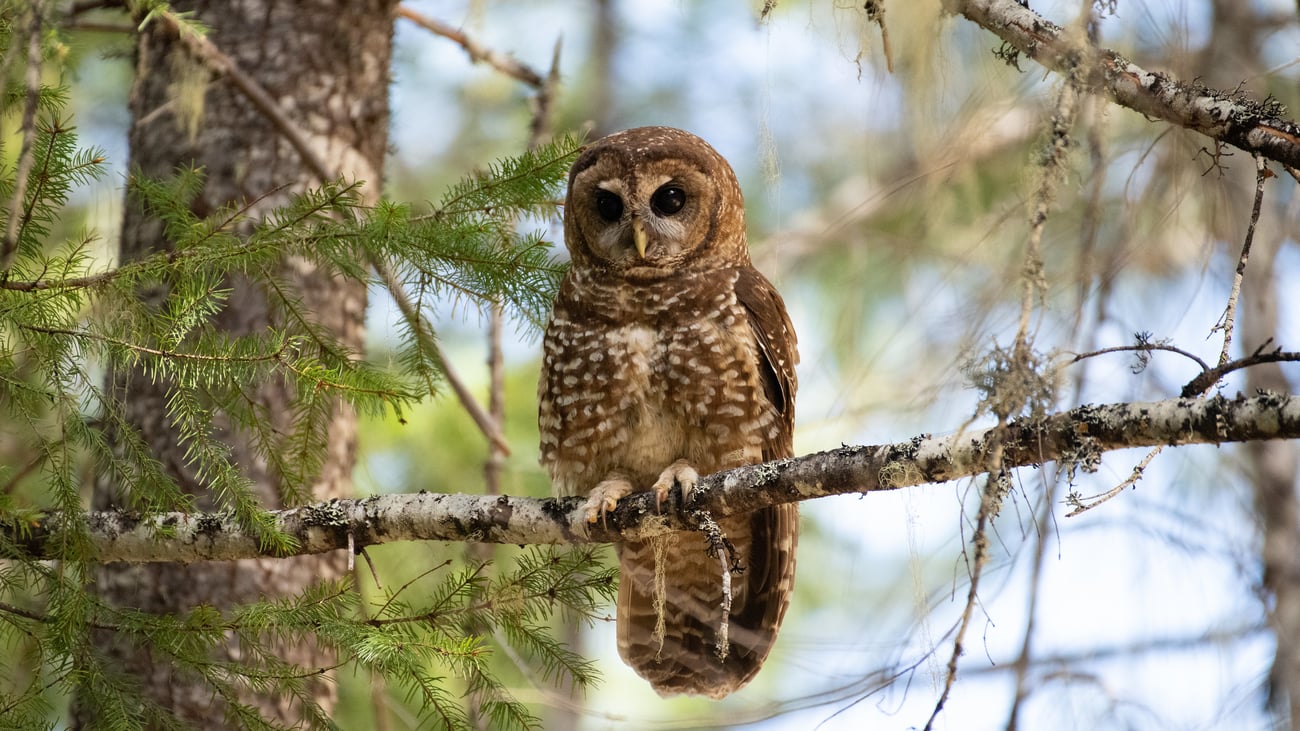
(CN) — A federal judge on Friday halted in part a logging project in Oregon approved by the U.S. Bureau of Land Management to the extent that it conflicts with the bureau’s existing standards for protecting the habitat of the threatened northern spotted owl.
U.S. District Judge Mustafa Kasubhai in Eugene, Oregon, issued a preliminary injunction at the request of three environmental nonprofits, pausing the Bureau of Land Management’s approval of the 42 Divide Project as it applies to older forest stands in late successional reserves until the lawsuit is resolved.
Kasubhai, a Joe Biden appointee, found the nonprofits raised serious questions about whether the BLM authorized logging in violation of the “20-year standard” for developing northern spotted owl nesting and roosting habitat under the 2016 Southwestern Oregon resource management plan, which covers 1.2 million acres of BLM-managed land.
The standard limits logging that would delay development of northern spotted owl nesting and roosting habitat by 20 years or more in a forest stand or adjacent stands. Because the species requires at least 60% canopy cover for nesting habitat, logging that delays recovery to that threshold for more than 20 years is prohibited.
Kasubhai’s ruling cited a similar case before a U.S. magistrate judge in Oregon, which found that BLM had failed to support its conclusion that another logging project didn’t run afoul of the 20-year standard to protect northern spotted owl habitat.
“The court agrees that plaintiffs have at least raised serious questions as to whether BLM demonstrated compliance with the 20-year standard,” the judge wrote. “In particular, the court is troubled by the assumptions built into the modeling that do not appear to be supported anywhere in the record.”
“Given prior BLM modeling showing that similar treatments in other projects would not meet the 20-year standard,” the judge added, “BLM’s decision as to the 42 Divide Project is arbitrary and capricious because BLM failed to demonstrate how or why this project is different.”
Cascadia Wildlands, Oregon Wild, and Umpqua Watersheds sued the Bureau of Land Management at the beginning of 2026, accusing the agency of violating multiple federal environmental laws by authorizing the 42 Divide Forest Management Plan.
The project is a multi-decade logging effort covering nearly 7,000 acres of public land in Camas Valley. The area includes forests and waterways that provide habitat for the federally protected northern spotted owl, Oregon Coast coho salmon, marbled murrelet and western pond turtle.
Commercial logging was scheduled to begin as early as July 15 under as many as six timber sale contracts tied to the project.
At a hearing last month, the BLM argued it complied with the 2016 resource management plan and said the challenged treatments are intended to improve long-term forest health and reduce wildfire risk.
Representatives of the nonprofits and the U.S. Justice Department, which represents BLM in the litigation, didn’t immediately respond to requests for comment.
A spokesperson for the American Forest Resource Council, which intervened in the lawsuit to oppose the nonprofits’ claims, said they appreciated the judge’s decision to decline to halt the project entirely and to allow several timber sales and important forest management activities to proceed while the litigation continues.
“We respectfully disagree with the court’s decision to enjoin treatments in late successional reserve stands,” the spokesperson said. “This ruling makes it more difficult to actively manage overstocked dry forests that the plan specifically identifies for treatment, while delaying important work to reduce hazardous fuels and improve forest health.”
 Follow @edpettersson
Subscribe to our free newsletters
Our weekly newsletter Closing Arguments offers the latest about ongoing trials, major litigation and rulings in courthouses around the U.S. and the world, while the monthly Under the Lights dishes the legal dirt from Hollywood, sports, Big Tech and the arts.
Additional Reads
 Faceoff brewing over Paramount-Warner Bros. merger July 17, 2026