
 Search Articles


(CN) — A federal judge allowed a health clinic’s free speech challenge against California’s attorney general to move forward Friday, in a closely watched case over so-called abortion pill reversal treatments.
U.S. District Judge Gonzalo Curiel ruled that Culture of Life Family Services, based in Escondido, can proceed with its claim that the state is unconstitutionally targeting groups promoting the procedure. But he dismissed several of the clinic’s other claims, including those based on religious freedom and patients’ rights.
He also denied the clinic’s motion for a preliminary injunction that would have temporarily blocked the attorney general from enforcing state consumer protection laws against its abortion pill reversal statements.
He found that Culture of Life didn’t demonstrate it was likely to succeed on the merits of its First Amendment claim, concluding that the clinic’s statements about the treatment constituted commercial speech that was either “inherently false or potentially misleading.”
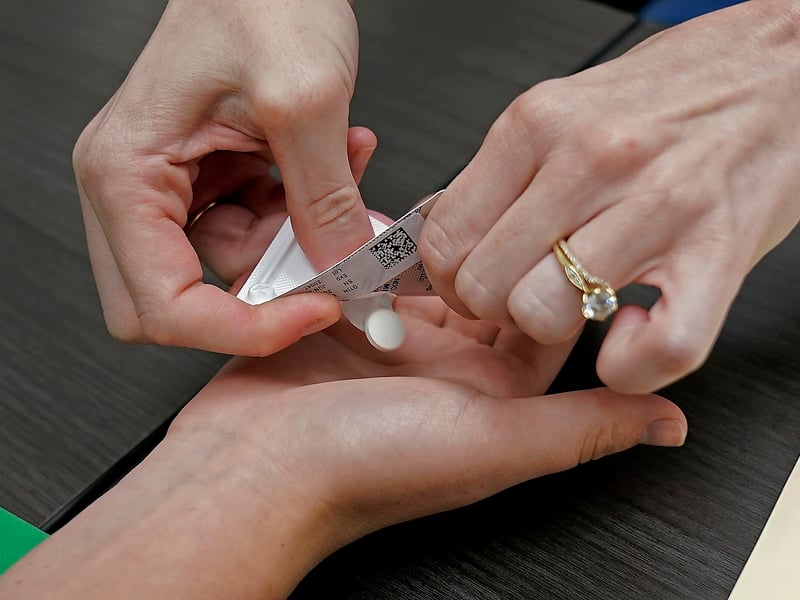
The case is among the first federal challenges to restrictions on abortion pill reversal claims. This regimen involves administering progesterone after taking mifepristone, the first drug in a two-pill abortion regimen, in an effort to stop the abortion process and preserve the pregnancy.
During a hearing this past February, attorney Paul Jonna, representing the clinic, said Culture of Life offers the treatment for free and does not profit from its promotion.
In his ruling, Curiel sided with the Catholic health clinic on that point — for now — writing that it had “sufficiently alleged that the APR statements constitute protectible noncommercial speech.” He added that it would be premature to weigh scientific evidence at this early stage.
The Catholic health clinic describes the treatment as “a life-saving protocol” and has offered it since 2012. Its medical director, Dr. George Delgado, developed the method and claims it has a 48% success rate, with higher success under certain dosing regimens.
In court filings, the clinic pointed to a 2006 case in which a woman reportedly went on to deliver a healthy baby after receiving the treatment.
But mainstream medical groups and studies have questioned the procedure’s safety and efficacy. A study funded by mifepristone manufacturer Danco Laboratories was halted early after three women experienced severe bleeding — one of whom received progesterone.
The judge also rejected the clinic’s religious freedom claim, saying California’s consumer protection laws are neutral and generally applied, and that secular organizations are also subject to enforcement.
He also dismissed claims that patients have a constitutional right to receive information about the treatment, saying the clinic did not show how patients had been harmed by speech restrictions.
“COLFS makes no allegations showing that COLFS’s patients have been injured by the alleged suppression of this speech or even what the nature of their injury would be,” Curiel wrote.
The ruling allows the clinic to move forward with its First Amendment claim and revise its other claims in an amended complaint.
It adds to a growing legal battleground over how far states can go in regulating abortion-related speech, especially in the wake of the Supreme Court’s decision to overturn Roe v. Wade in 2022.
The legal dispute began last year when California Attorney General Rob Bonta sued Heartbeat International, a national anti-abortion group, for reportedly making false claims about the safety and effectiveness of abortion pill reversal. Bonta argued the practice is unsupported by scientific evidence and could endanger patients.
Culture of Life, which transferred its APR network to Heartbeat in 2018, filed a preemptive lawsuit claiming Bonta’s actions chilled its own ability to speak publicly about the treatment.
“Bonta’s attack on APR is chock full of constitutional implications,” the clinic said in court filings.
Deputy Attorney General Erica Connolly countered in the February hearing that the clinic’s statements still qualify as commercial speech since they solicit clients and serve fundraising purposes.
“In our view, they have the burden to show that their speech is noncommercial and/or true,” Connolly said. “And we believe that we have shown that their statements are not medically true.”
 Follow @JeremyYurow
Subscribe to our free newsletters
Our weekly newsletter Closing Arguments offers the latest about ongoing trials, major litigation and rulings in courthouses around the U.S. and the world, while the monthly Under the Lights dishes the legal dirt from Hollywood, sports, Big Tech and the arts.