
 Search Articles


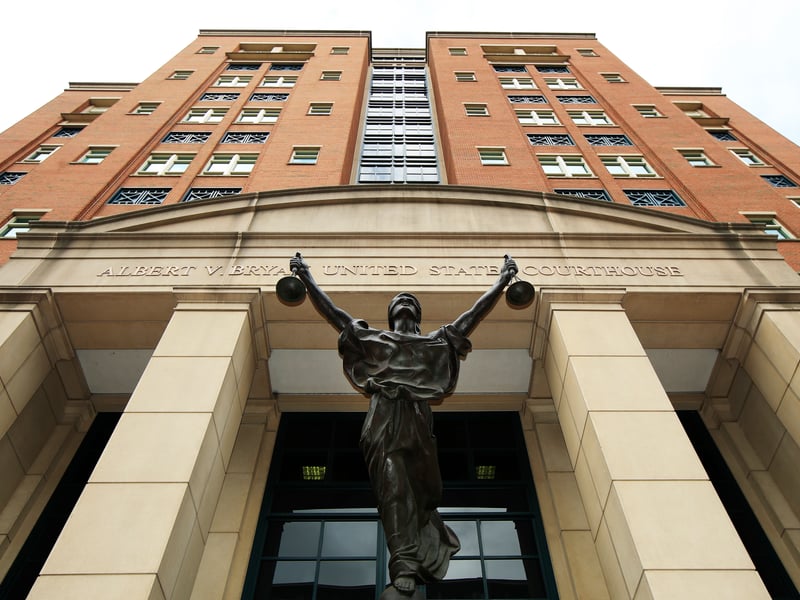
ALEXANDRIA, Va. (CN) – A U.S. district court judge on Thursday demanded answers from government attorneys about the detention of Badar Khan Suri, a Georgetown professor arrested and transported more than 1,000 miles from his Virginia home.
“He lived here,” said U.S. District Court Judge Patricia Tolliver Giles, a Joe Biden appointee. “His residence is here. His family is here.”
She presides over a federal lawsuit brought by the professor’s attorneys in which President Donald Trump is named as the chief defendant. The case stems from the arrest of Khan Suri, taken into custody on March 17 as he was returning to his Northern Virginia home. Homeland Security agents told him that the government had revoked his visa, according to court filings. Khan Suri called his wife, who brought her husband his passport and other documents.
The agents took the passport and transported him to a field office in Chantilly, Virginia, where he was fingerprinted. They then sent him to a detention center in Farmville, Virginia, where he arrived in the middle of the night. Next, he was taken to Richmond, where he was shackled, made to sit on a small bench and denied food and water. He was then flown to Louisiana. After a three-day stay at a facility there, he was driven to Texas.
If the case is not dismissed — as government attorneys wish — it should be adjudicated in Texas, argued David Byerley, an attorney for the U.S. Department of Justice.
But Giles interrupted him, questioning the manner in which government officials moved Khan Suri — from Farmville to Richmond to Louisiana and then to Texas.
“How many beds were available at Farmville? Are they (prisoners) moved like that in the middle of the night?” the judge asked. “Is that normal?”
She gave government attorneys until Friday night to deliver answers.
Khan Suri’s legal team accused the government of forum shopping, spiriting the professor to a conservative district. In a lawsuit filed in the U.S. District Court for the Eastern District of Virginia — Badar Khan Suri v. Donald Trump — attorneys charge that the arrest was retaliatory based on his family connections and constitutionally protected free speech. Specifically, they are referring to his wife’s father, once an political advisor of the prime minister in Gaza, and social media posts supportive of the Palestinians.
“We have the right to speak out for people [the Palestinians] under siege, facing death day and night,” said his wife, Maphaz Ahmad Yousef, who attended the hearing. She believes her husband will be set free eventually. “I believe in justice,” she said.
Georgetown officials have expressed puzzlement at his arrest. During his time at Georgetown, Khan Suri has not engaged in any illegal activity or posed a threat to campus security, said Joel Hellman, dean of the Walsh School of Foreign Service at Georgetown, in a statement on the school’s website.
“As an individual, I am deeply concerned for the welfare of a member of our community and his family,” Hellman said. “As dean, I am deeply troubled by the chilling effect such events could have on freedom of expression on this campus, which is, of course, at the very core of our mission."
Khan Suri is a postdoctoral fellow at the Alwaleed Bin Talal Center for Muslim-Christian Understanding at Georgetown’s foreign service program. He completed his PhD in peace and conflict studies from the Nelson Mandela Center for Peace and Conflict Resolution at Jamia Millia Islamia in New Delhi, India, in 2020.
State Representative Don Beyer, a Democrat, attended the hearing and described the case as “Kafkaesque.” Khan Suri was targeted, he added. “He did nothing wrong.”
Subscribe to our free newsletters
Our weekly newsletter Closing Arguments offers the latest about ongoing trials, major litigation and rulings in courthouses around the U.S. and the world, while the monthly Under the Lights dishes the legal dirt from Hollywood, sports, Big Tech and the arts.