
 Search Articles


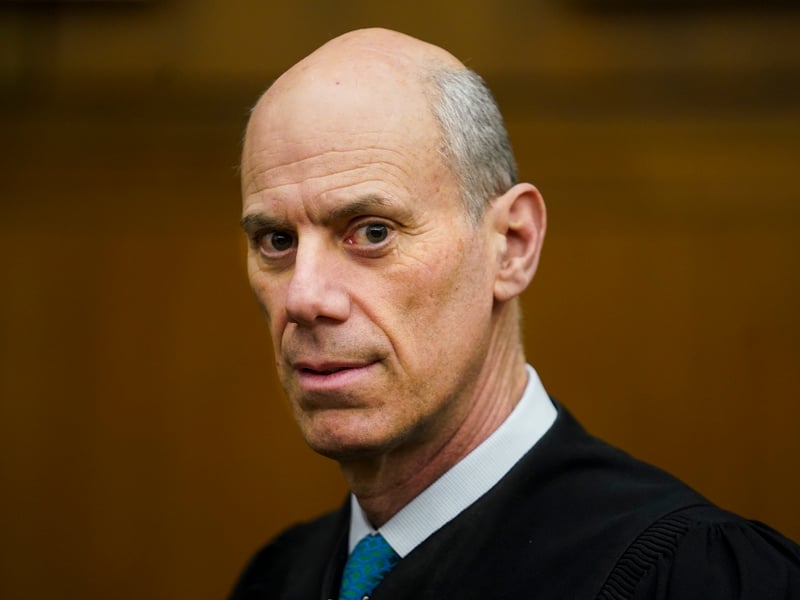
WASHINGTON (CN) — A federal judge on Monday pressed the American Civil Liberties Union and the Justice Department to determine how 137 Venezuelan men summarily deported to El Salvador last March could revive their immigration cases and return to the United States.
Chief U.S. District Judge James Boasberg ultimately laid out three potential options for the class of deportees: They could challenge their designation as Tren de Aragua gang members and pursue a remote hearing; they could return to a port of entry; or the government could provide them boarding letters to return to the country.
However, the Barack Obama appointee emphasized the fact that in each scenario the immigrants would be placed back into immigration custody rather than released into the country on parole, and they could be legally deported after pressing their claims.
ACLU attorney Lee Gelernt, representing the immigrants, said his clients have made clear they would prefer being in custody than released back in Venezuela, where they were returned in a prisoner swap with El Salvador last summer, as they have gone into hiding.
If returned to the U.S., the immigrants could pursue their asylum claims once again, Gelernt explained.
He noted that several immigrants have already left Venezuela to surrounding nations, where they could resume their habeas claims via petitions challenging their designations and attend virtual immigration hearings.
Boasberg expressed some doubt that filing papers and virtual hearings would be the easiest route.
“It would be surprising if none of the 137 are Tren de Aragua, that would be quite something,” Boasberg said. “If arguments are on the papers, that this person is not a Tren de Aragua member, wouldn’t those raise quintessential factual questions?”
Gelernt pointed to Kilmar Ábrego García’s case— who was wrongfully deported to El Salvador in March 2025 based on a false MS-13 designation and returned in June 2025 under court order — and how easily the government’s purported proof, his tattoos and Chicago Bulls hat, fell apart.
“There will be people the government literally can’t say anything about,” Gelernt said. “And if someone is actually a Tren de Aragua member, they won’t jump at the chance to file a petition.”
The Justice Department has vehemently pushed back against the ACLU’s proposal, arguing that virtual hearings are both legally and practically impossible, stating in a reply brief last week that the U.S. would have no legal jurisdiction over their habeas claims.
Justice Department attorney Tiberius Davis said Monday any paper filings or virtual hearings also carried significant factual and procedural issues, including concerns that the immigrants could perjure themselves without any method for the court to address it.
Monday’s hearing marks 331 days since the 137 men, who the Department of Homeland Security deported under President Donald Trump’s invocation of the Alien Enemies Act, were removed on March 15, 2025.
On Dec. 22, 2025, Boasberg granted the ACLU’s motion for summary judgment, finding the U.S. maintained “constructive custody” over the deported immigrants while they were imprisoned in El Salvador and the government had denied them due process during their summary deportations.
Boasberg noted that the military’s capture and extradition of Venezuelan President Nicolás Maduro on Jan. 3 has changed conditions in the country — including the resumption of commercial flights and deportation flights between the two countries — and asked whether conditions there would permit class members in hiding to pursue their habeas claims.
Gelernt said the U.S. had established a temporary embassy in Venezuela following Maduro’s capture and suggested there’s no reason his clients could not begin the process there.
He added, however, that Maduro’s capture did little to alleviate their fear from the government, stating there’s “not that huge a gap” between interim president Delcy Rodríguez and Maduro.
The Justice Department has vehemently pushed back against the ACLU’s proposal, arguing that virtual hearings are both legally and practically impossible, stating in a reply brief last week the U.S. would have no legal jurisdiction over their habeas claims.
Justice Department attorney Tiberius Davis said Monday that any paper filings or virtual hearings additionally carried significant factual and procedural issues, including concerns that the immigrants could perjure themselves without any method for the court to address it.
Boasberg asked why the government couldn’t facilitate the 137 immigrants’ return to the U.S. as it did for Ábrego García, who U.S. District Judge Paula Xinis in Maryland ruled had also been unlawfully deported.
Davis argued that many of the 137 still have a “foreign terrorist organization” designation that would pose significant legal hurdles to their return, and said Ábrego García’s case was unique as it only required his return, not hundreds of returns.
However, Davis agreed that the government could provide boarding letters to the immigrants if Boasberg ordered that solution.
Boasberg indicated he would rule sometime next week, joking that he anticipated the government to immediately appeal.
 Follow @Ryan_Knappy
Subscribe to our free newsletters
Our weekly newsletter Closing Arguments offers the latest about ongoing trials, major litigation and rulings in courthouses around the U.S. and the world, while the monthly Under the Lights dishes the legal dirt from Hollywood, sports, Big Tech and the arts.