
 Search Articles


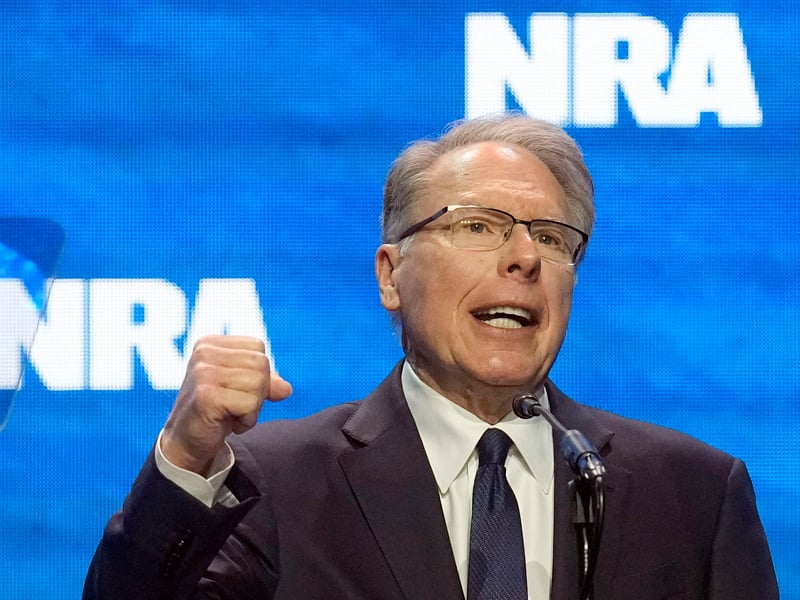
MANHATTAN (CN) — A New York judge on Monday shot down the state attorney general’s bid for a court-appointed monitor for the National Rifle Association, opting instead for less intrusive relief options against the embattled New York nonprofit.
Issuing a ruling from the bench, New York Supreme Court Justice Joel Cohen lambasted the NRA for its “stunning lack of accountability” after it was found to have violated state nonprofit law in a jury trial this year. But Cohen ultimately found that court oversight was not the solution to the NRA’s compliance concerns.
“It should be, in my view, a last resort, not the first,” Cohen said Monday.
Cohen’s ruling came after a 10-day bench trial — the second stage of the NRA’s legal battle with New York Attorney General Letitia James. The first stage took place earlier this year, when a Manhattan jury ruled the NRA breached state whistleblower and tax laws by failing to hold its executives accountable for spending donor cash on luxurious personal expenses.
In his Monday ruling, Cohen said it worried him that the NRA — both in and out of court — “failed to fully acknowledge the jury’s verdict” from February. He chided the group’s leadership for its “simply false” spin of that decision as a positive one for the NRA.
Still, Cohen held that a court-appointed monitorship would be too time consuming, disruptive and costly to be effective for the NRA. He proposed a list of more targeted relief that he asked the parties to negotiate on post-trial, including a shuffling of the NRA’s audit committee, retaining a compliance consultant and putting a bylaw up for vote to shrink the size of the NRA board.
The judge added that he was encouraged by the newest board members and the work of the NRA’s newly-appointed compliance team.
“I think the NRA is serious about turning a corner here,” Cohen said.
It’s a win for the NRA and its close-knit legal team, which successfully thwarted the state’s monitor bid despite the court’s concerns. Wayne LaPierre, the longtime NRA frontman who was found to have misspent more than $5 million of donor funds on personal expenses, wasn’t so lucky.
Cohen ruled Monday that LaPierre should be banned from the organization for 10 years — a significant punishment for the 74-year-old, but a far cry from the lifetime ban sought by the attorney general.
LaPierre testified Monday morning that any such ban would be a violation of his First Amendment rights and kneecap the NRA’s ability to fundraise off his name. The judge seemed skeptical of that argument, noting that the attorney general was only seeking to limit his ability to hold a paid position at the NRA; it wouldn’t stop him from voluntarily fundraising.
“I still think it’s wrong,” LaPierre said of the ban. “I would be very offended by that.”
The 74-year-old resigned as the group’s chief executive on the eve of trial in January, citing health issues. LaPierre held that he was fighting the ban on principle alone, telling the court that he is “very sick with Lyme disease right now” and currently “working on my health,” with no plans to return to NRA leadership.
LaPierre simultaneously lamented how a ban would affect his ability to be a vocal leader of the NRA.
“A bar would essentially prevent me from being a voice of this organization in terms of political advocacy,” LaPierre said Monday. “I have a bond with folks and I believe they still believe in me. I think they still listen to me and I have the ability to have influence.”
In his ruling, Cohen said that he took LaPierre’s First Amendment concerns seriously. But he decided that the imposed ban “does not in any way restrict his speech.”
A jury ruled in February that LaPierre owed the NRA $4.4 million for the cash he errantly spent on private flights, luxury vacations and designer suits. LaPierre on Monday didn’t once mention the cash he misused, which state lawyers took as just another sign of LaPierre and the NRA’s efforts to minimize damage and “shift blame.”
“The NRA and its senior leaders broke the law, and funneled millions of dollars in cash and lavish perks to themselves, their families, and NRA insiders,” New York Attorney General Letitia James said in a statement. “As a result of this case, Wayne LaPierre will be banned from the NRA for 10 years for spearheading this fraud, and the court called for additional proposed reforms to the NRA. After years of corruption, the NRA and its senior leaders are finally being held accountable.”
LaPierre’s successor Doug Hamlin said in a statement Monday that the NRA is “moving forward full speed ahead” after this trial.
“We have a mission to fulfill and elections to win up and down the ballot,” Hamlin added. “This is a major step toward rebuilding the trust of the members, donors, industry, and our staff.”
Cohen’s ruling puts a tentative end to a four-year legal battle between the NRA and James, who brought this civil suit in 2020 amid headlines questioning LaPierre’s gaudy spending.
 Follow @Uebey
 Follow @uebey.bsky.social
Subscribe to our free newsletters
Our weekly newsletter Closing Arguments offers the latest about ongoing trials, major litigation and rulings in courthouses around the U.S. and the world, while the monthly Under the Lights dishes the legal dirt from Hollywood, sports, Big Tech and the arts.