
 Search Articles


(CN) — A Southern California middle school student who was suspended for purportedly wearing “blackface” at a football game can’t claim that his First Amendment rights were violated, a federal judge has ruled.
Not only does the First Amendment not cover school children’s speech and conduct to the same extent as it does that of adults, U.S. District Judge Linda Lopez found, the student had not made a plausible case that wearing eye black on his face was somehow constitutionally protected expressive conduct.
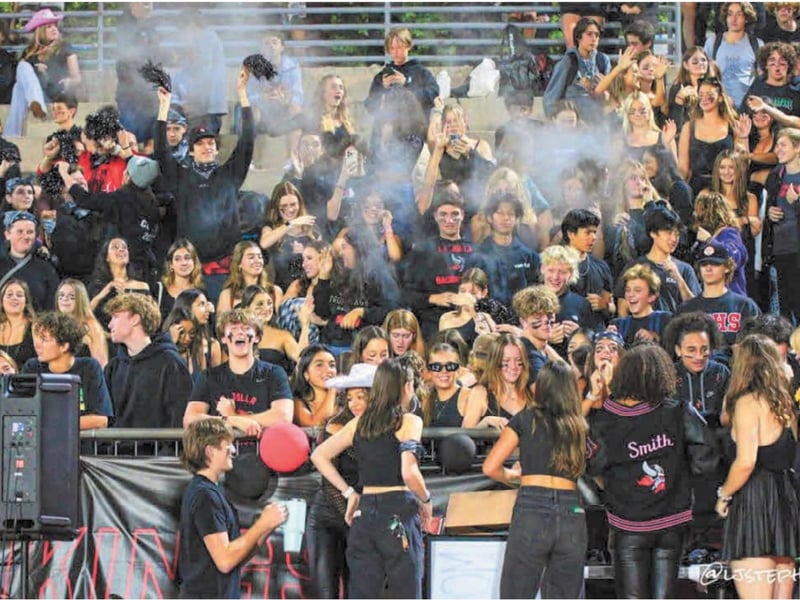
J.A., at the time an eighth grade student at Muirlands Middle School in San Diego, was suspended for two days in 2023 after he and some of his friends were seen wearing eye black, which athletes use to reduce sun glare, over much of their faces and purportedly uttering racial slurs in front of the fans of the opposing team at a La Jolla High School football game.
The student and his parents sued the school’s principal and the school district and sought a preliminary injunction to undo his punishment and expunge the incident from J.A.’s school records because, they argued, he only wore a common face paint design called Warrior eye black to express spirit and support at a high school football game.
They denied that he made any racial slurs at the game.
But the fact that J.A., who previously was disciplined for making racist comments to a Black classmate, had half his face painted black undermines his explanation, according to the judge.
“Internet searches reveal that there are photographs of fans wearing black paint on their faces in various designs during other LJHS football games, but nothing as pronounced as the black paint on plaintiff’s face during the game in question,” Lopez wrote in her decision Monday. “Regardless of just how common certain colors and designs of face paint are for fans to wear during LJHS football games, the focus remains on plaintiff’s conduct during this particular game and how that audience would have understood it.”
In this regard, the judge pointed to the school district’s findings that a cheer coach and students of the opposing team, Morse High School, saw and heard particularly young boys running around saying “n—a” this and “n—a” that on their side of the field, and someone with a lot of eye black on his face yelling “I can say it now.”
The surveillance video confirms that the place of this incident matches where J.A. and his friends were on Morse High School’s side of the field and that J.A. had eye black on about half of his face, according to Lopez.
In addition, the judge noted, J.A. had only eye black put on his face toward the end of the game when he and his friends were on the opposing team’s side of the field, and he doesn’t appear to be watching the game.
“The court’s opinion overlooked several key constitutional issues in this case,” said Karin Sweigart, an attorney for J.A. and his parents. “While it acknowledged that schools have limited authority over off-campus speech, it failed to explain why this school was allowed to regulate my client’s speech, especially since none of the usual aggravating factors were present.”
Sweigart added: “It’s also disappointing that the court seemed to credit the district’s claims without holding an evidentiary hearing to assess the facts. We are eager for a jury to thoroughly review the evidence and clear our client’s name.”
 Follow @edpettersson
Subscribe to our free newsletters
Our weekly newsletter Closing Arguments offers the latest about ongoing trials, major litigation and rulings in courthouses around the U.S. and the world, while the monthly Under the Lights dishes the legal dirt from Hollywood, sports, Big Tech and the arts.